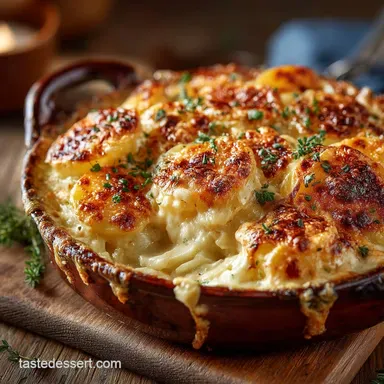
The Great British Gratin Ultimate Creamy Scalloped Potatoes

Defining the Ultimate Comfort Side Dish
There are few dishes that evoke instant feelings of warmth and nostalgia quite like a well-executed potato gratin. This specific preparation, resulting in the Best Scalloped Potatoes, transforms humble ingredients, potatoes, milk, butter, and seasonings, into an ethereal, bubbling masterpiece.
When we talk about the ultimate version, we are aiming for a dish that is deeply flavoured, holds its structure when served, and boasts an impossibly tender interior beneath a gloriously golden-brown crust.
This is the cornerstone side dish for any serious holiday table, earning its place among essential Thanksgiving Dinner Recipes Sides.
The Difference Between Au Gratin and True Scalloped Potatoes
Although the terms are often used interchangeably in American kitchens, there is a technical distinction between classic scalloped potatoes and the preparation known as scalloped potatoes au gratin .
Traditionally, true scalloped potatoes rely solely on a thickened white sauce (like a Béchamel) to coat and cook the thin potato slices, producing a rich, comforting dish devoid of cheese.
The term au gratin literally translates to "with a crust," and typically signifies the addition of cheese (often Gruyère or strong cheddar, as used in our recommended topping) or breadcrumbs sprinkled over the final layer to create a crisp, browned texture.
Our recipe, while structurally based on the classic method, incorporates the optional cheese topping to capture the best elements of both, delivering textural contrast alongside deep flavour.
Elevating the Sauce: Why Béchamel is Superior to Plain Cream
Many quick and easy scalloped potatoes recipes simply pour heavy cream or half-and-half straight over the raw potatoes. While this works in a pinch, it often results in a runny, unstable sauce that can weep or split during the long baking process.
Our method utilizes a simplified Béchamel, starting with a roux, a cooked paste of butter and flour. This simple step is absolutely transformative. By whisking 4 tablespoons of butter with 4 tablespoons of flour to form the roux, we create a stable emulsifier that ensures the 3 cups of milk and 1 cup of heavy cream remain perfectly bound throughout the 75-minute bake.
This creamy base guarantees a velvety smooth texture that clings beautifully to every slice, making this truly a recipe for Creamy Scalloped Potatoes.
Mastering the Golden Ratio: Starch, Fat, and Seasoning
The perfection of this dish relies on a careful balance between starch release, dairy fat content, and seasoning calibration. We utilize nearly two kilograms (4.4 lbs) of starchy potatoes, which release natural starches that interact with the Béchamel, further thickening and stabilizing the sauce.
The heavy dairy fat (full-fat milk and heavy cream) provides the richness necessary for succulence. Crucially, the seasoning must be robust. Because the potatoes absorb a tremendous amount of salt during cooking, the cream mixture must taste slightly oversalted before it is poured over the layers.
The inclusion of freshly grated nutmeg and minced garlic isn't merely flavouring; it is essential to the authentic, deeply savoury profile of this classic preparation.
Sourcing the Perfect Components for Creamy Scalloped Potatoes

Success begins long before the oven is preheated. Selecting the correct ingredients and utilizing the right tools are paramount to achieving that tender, non-mushy result we desire.
The Potato Paradox: Choosing Between Russet, Yukon Gold, or Red
For this particular gratin, starchy potatoes such as Russets (or UK equivalents like Maris Piper or King Edward) are the non-negotiable choice. While waxy varieties like Red Bliss or Charlotte hold their shape perfectly, they release less starch.
The starches in Russets, once rinsed and patted dry, are essential partners to the Béchamel, helping to bind the entire dish together into a cohesive, sliceable masterpiece upon cooling. When prepping the 4.4 pounds of potatoes, ensuring they are peeled and ready for uniform slicing is the first practical step.
Essential Kitchen Tools for Thin, Even Slicing (Mandoline vs. Knife)
The single most critical factor in achieving evenly cooked, perfectly tender Scalloped Potatoes is uniformity of the slice. We aim for slices between 1.5 mm and 2 mm (about 1/16th inch). If some slices are thick and others are paper-thin, you will inevitably end up with sections that are raw and others that are mushy.
Therefore, a mandoline slicer is highly recommended, as it delivers precise consistency effortlessly. If you opt for a sharp chef’s knife, ensure you take the time to measure your cuts, this attention to detail will prevent disappointment.
After slicing, a quick rinse and thorough pat-down to remove excess surface starch is advised to ensure the sauce adheres properly and doesn't become diluted.
Dairy Choices: Full Cream, Half-and-Half, or Milk?
To achieve the silkiest texture and richest flavour, the combination of 700 ml of full-fat milk and 240 ml of heavy cream is necessary. The higher fat content prevents splitting and ensures the sauce remains lush and unctuous.
While substitutions are possible, swapping out some heavy cream for half-and-half, doing so will slightly compromise the luxurious mouthfeel and overall richness that defines the Best Scalloped Potatoes. For this benchmark recipe, commit to the full-fat dairy components.
Related Recipes Worth Trying
- The Ultimate Crispy Cheesy Smashed Potatoes Recipe — Forget soggy spudsthis recipe delivers the best cheesy smashed potatoes fiercely crisp edges and a fluffy middle Perfect for your next Sunday roast Get the...
- The Best Crispy Skin Air Fryer Baked Potatoes Recipe — Stop waiting for the oven Learn the best air fryer baked potato time and temperature for steakhousestyle fluffy insides and shatteringly crisp skin
- Easy Boiled Potatoes Recipe The Foolproof Simmer for Fluffy Spuds — Stop serving watery potatoes This simple boiled potatoes recipe guarantees perfectly seasoned results every time Learn the secret steamdry finish
The step-by-step Culinary Blueprint
Moving into the assembly phase requires two key elements: the flawless sauce and the careful layering. This scalloped potatoes recipe easy process begins with preheating the oven to 350° F ( 180° C) and prepping a 9x13 inch baking dish.
Crafting the Silky, Nutmeg-Infused Béchamel
The heart of this dish is the sauce. Begin by melting 4 tablespoons of unsalted butter in a large saucepan over medium heat, then whisking in the flour for one minute to create the roux. Next, introduce the 3 cups of milk gradually, whisking vigorously until the mixture is smooth and begins to thicken slightly.
Remove the pan from the heat immediately. This is the moment to whisk in the heavy cream, the finely minced garlic, salt, white pepper, and, vitally, the ½ teaspoon of freshly grated nutmeg.
The use of fresh nutmeg is non-negotiable; it contributes a complex, warm depth that truly elevates the Béchamel, ensuring the sauce is robust enough to season the 4.4 pounds of potato slices effectively.
Precision Layering: Arranging the Slices for Uniform Baking
With the fully seasoned sauce ready and the potatoes thinly sliced, we begin assembly. Start by arranging one-third of the dry, sliced potatoes in slightly overlapping rows in the prepared baking dish. This creates an attractive pattern and ensures consistent heat exposure.
Lightly season this layer with salt and pepper, then pour one-third of the cream sauce over the top, making sure it seeps into the corners. Repeat this step twice more, finishing the top layer with the final potato slices and pouring over all remaining sauce.
Gently press down on the layers to ensure the potatoes are fully submerged. If using the optional 100g of Gruyère cheese, sprinkle it evenly over the top layer now.
The Critical Baking Phase: Achieving Tenderness and a Golden Crust
The baking phase is split into two crucial stages. First, cover the dish tightly with aluminum foil. This traps the moisture, essentially steaming the potato slices and promoting rapid, even tenderisation without drying out the edges. Bake at 350° F for 45 minutes.
After this time, remove the foil, increase the oven temperature to 375° F ( 190° C), and bake for an additional 20–30 minutes.
This uncovered bake achieves the deep golden-brown crust and bubbling, luscious texture that defines the perfect scalloped potatoes. Once removed from the oven, the dish must rest, uncovered, for a critical 15 minutes.
This rest allows the starches and fats to settle, preventing the dish from becoming watery or collapsing when spooned out.
Troubleshooting and Serving Secrets for Scalloped Potatoes
Even the most meticulous chef needs contingency plans. Understanding how to manage leftovers and avoid common pitfalls ensures consistent excellence.
Reheating Without Drying Out (Storage Tips)
The rich dairy content of Creamy Scalloped Potatoes means they store well in the refrigerator for up to four days. To reheat without drying out the surface, cover the portions tightly with foil and warm them gently in a 300° F oven until heated through.
Alternatively, while this oven method yields the superior texture, if you are looking for ways to handle large batch cooking, recipes for scalloped potatoes in crock pot exist, though they often trade the firm structural integrity for convenience, yielding a softer texture.
Preventing Curdling: Tips for Acidic Ingredients and Temperature Control
Curdling occurs when high-fat dairy is rapidly heated, or when it comes into contact with an acidic component at high temperatures. To prevent this, ensure your Béchamel is removed from the heat before adding the heavy cream.
If you introduce acidic additions (like wine or tomatoes, though not recommended for this classic version), they must be incorporated slowly and heated gently. Also, when adding the Gruyère topping, ensure the sauce layers beneath are warm, not boiling hot.
Delicious Variations: Adding Cheese, Herbs, or Meat to the Base Dish
While the classic preparation is unparalleled, the structure lends itself well to delicious customization. For a heartier dish, sauté 100g of smoked bacon lardons and sprinkle them between the layers, creating a magnificent scalloped potatoes and ham profile.
For a herbaceous twist, infuse the simmering milk with fresh thyme and a bay leaf, removing the bay leaf before layering. If you want to cut down on starch, substitute half the potato volume with thinly sliced celeriac or parsnip for a root vegetable gratin that retains the creamy texture but offers a different earthy note.
Nutrition Profile and Pairing Suggestions
This is undeniably a rich, comfort-focused side dish, estimated to contain between 450–550 kcal per serving, depending on the optional cheese topping and size of the potato slices. Given its decadent texture, the scalloped potatoes are best paired with strong, contrasting main courses.
They function perfectly as traditional Side Dishes For Ham, complementing the salty richness of a holiday roast, or alongside a classic prime rib or roasted chicken. To balance the meal, always serve the gratin with something fresh and slightly acidic, such as blanched green beans or a light salad dressed with vinaigrette, ensuring the overall meal remains perfectly harmonized.
Recipe FAQs
Why are my Scalloped Potatoes still crunchy in the middle after an hour?
The culprit is usually uneven slicing. If some slices are thicker than others, they simply won't cook at the same pace. You need uniformity, think 1.5mm to 2mm, which is why a mandoline is a lifesaver here, saving you a lot of faff.
Also, ensure you cover the dish tightly with foil for the first 45 minutes of baking. This steams the potatoes thoroughly before the final crisping stage, guaranteeing a tender result throughout the whole dish.
My sauce looks like the River Thames, far too runny! How do I fix watery scalloped potatoes?
Wateriness often stems from too much moisture on the raw potatoes. Make sure you pat them dry after any quick rinse, and don't skip the careful thickening of the Béchamel sauce before layering.
Crucially, that 15-minute rest period is non-negotiable! During this time, the starches released by the potatoes cool down and properly set the sauce, turning it from a messy liquid into the silky, cohesive gratin structure you’re aiming for.
Does the type of spud really matter for achieving that perfect creamy texture?
Absolutely, the spud choice is vital! Starchy varieties like Maris Piper, King Edward, or Russet are the perfect choice for this recipe. They naturally release more starch while baking, helping to bind the creamy sauce and making the whole dish lusciously thick without needing extra flour.
If you use waxy potatoes (like Charlotte), the texture will hold up better, but the gratin will likely be looser, so you might need to slightly reduce the milk content in the sauce.
Can I assemble the whole dish the day before my big Sunday roast?
Yes, prepping ahead is a brilliant time-saver! Assemble the layers completely, cover the dish tightly with cling film, and refrigerate immediately for up to 24 hours. Allowing it to chill helps the potatoes absorb some of the seasoning.
When ready to bake, let the dish sit at room temperature for 30 minutes while the oven preheats, and then add about 15 minutes to the total covered baking time, as you are starting from cold.
What’s the best way to store leftovers and can I freeze them?
Leftovers should be stored in an airtight container in the fridge for up to three days. To reheat, scoop out portions and microwave, or place the whole dish (covered) in a moderate oven until piping hot throughout.
We wouldn't recommend freezing this gratin, if we're being honest. Freezing and thawing dairy-rich potato dishes tends to separate the sauce, resulting in a grainy texture and a mushy potato consistency, it’s just not worth the disappointment!
Ultimate Creamy Scalloped Potatoes Gratin The Perfect Side Dish