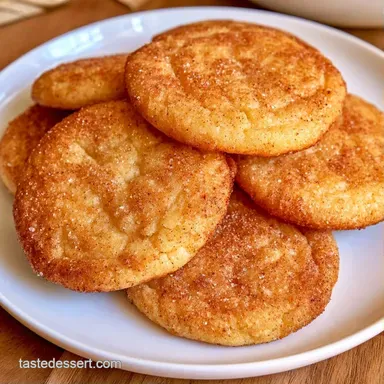
Buttery Crispy Sugar Cookies with Cinnamon

- Time: 10 min active + 1 h 15 min cooking + 30 min resting
- Taste: Buttery, caramelized sugar, and warm cinnamon
- Best for: Holiday dessert platters or a coffee break
Crispy Sugar Cookies
Butter is the hero here. It carries the vanilla and sugar, but the temperature of that fat decides if you get a flat pancake or a cookie with a shattering crust. When the butter stays firm during the first few minutes of baking, the cookie holds its shape and develops a concentrated, toasted sweetness.
Making crispy sugar cookies is about balance. You want a high sugar-to-flour ratio so the edges caramelize, but enough structure to prevent them from melting into one big sheet.
The result is a treat that feels nostalgic. It has a distinct crunch that holds up if you like to dip them in tea or use them as a base for icing.
Recipe Details
| Chill Method | Time | Texture | Best For |
|---|---|---|---|
| Rapid Freezer Chill | 20 mins | High snap | Quick cravings |
| Classic Fridge Chill | 30 mins | High snap | Standard baking |
Gathering Your Essentials
The flour establishes the cookie's framework, while the baking soda provides just enough leavening to keep it from becoming a dense disc. I enjoy adding a touch of cinnamon to the topping for a warm, woody quality that offsets the sugar.
- 1 cup (230g) unsalted butter, softened Why this? Provides the rich, decadent base
- 1½ cups (300g) granulated sugar Why this? Essential for the crisp texture
- 2 large eggs (100g) Why this? Binds the dough together
- 2 tsp (10ml) vanilla extract Why this? Adds a deep, floral aroma
- 4 cups (500g) plain flour Why this? Creates the necessary structure
- 6g baking soda Why this? Adds a tiny bit of lift
- 3g salt Why this? Balances the sweetness
- 50g granulated sugar (for topping)
- 2g ground cinnamon (for topping)
| Original Ingredient | Substitute | Why It Works |
|---|---|---|
| Unsalted Butter | Coconut Oil | Similar fat. Note: Adds a tropical coconut flavor |
Gear for This Recipe
You don't need much for these, but a stand mixer such as KitchenAid helps get the butter and sugar truly fluffy. Parchment paper is a must, as these cookies have enough sugar to stick to a bare pan. A wire rack helps them cool without steaming, which keeps the bottoms from getting soft.
Key Steps
Stage 1: The Base
Using a high speed setting, beat the softened butter and sugar for about 2 minutes until the mixture is pale and fluffy.

Stage 2: The Wet
Mix in the eggs and vanilla extract, beating until the batter is smooth.
Stage 3: The Dry
Gradually fold in the salt, baking soda, and flour. Mix only until the white streaks of flour disappear; over-mixing at this point will make the cookies tough.
Stage 4: The Chill
Shape the dough into a disk and wrap it in plastic wrap. To ensure no-spread sugar cookies, let the butter firm up in the freezer for 20 minutes or the refrigerator for 30 minutes.

Stage 5: Baking
Set the oven to 350°F (180°C) and line two baking sheets with parchment paper. Scoop 18g portions (rounded tablespoons) of dough and place them 2 inches apart. Bake for 10 to 12 minutes until the edges are a dark golden gold.
For the best flavor, these buttery crispy sugar cookies require that dark edge.

Stage 6: The Finish
Immediately dust the tops with the 50g sugar and 2g cinnamon mixture. Let them set for 5 minutes on the baking tray before moving them to a wire rack.
Troubleshooting Guide
If the dough feels greasy when you scoop it, the butter has softened too much. Pop it back in the freezer for 10 minutes. For truly crunchy sugar cookies, don't pull them out too early, even if the centers look soft. They firm up as they cool.
If you're making crispy sugar cookies and they come out cakey, you likely over-mixed the flour or used too much baking soda.
Fixing Excessive Spread
When the butter is too warm, the dough collapses before the flour can set.
Preventing Cakey Texture
Over-working the dough develops gluten, which traps air and creates a bread-like feel.
Avoiding Pale Edges
Under-baking means the sugar hasn't caramelized, leaving the cookie soft.
| Problem | Root Cause | Solution |
|---|---|---|
| Puddle-like shape | Butter too soft | Chill dough 15 mins longer |
| Soft/Cakey center | Over-mixing flour | Mix only until combined |
| Lack of snap | Under-baked | Bake until edges are deep golden brown |
Easy Swaps and Add-Ins
For a bit of brightness, I like adding 1 tsp of lemon zest to the dough. It turns these into a delightful citrus treat. If you want something richer, a splash of almond extract instead of vanilla creates a more traditional, bakery-style flavor.
These also work as crispy sugar cookies for decorating. Just skip the cinnamon-sugar topping and dip the cooled cookies in melted chocolate or a thick royal icing.
Make-ahead and Leftover Tips
Keep your crispy sugar cookies in an airtight container, arranged in a single layer. To prevent them from sticking together, separate the layers with parchment paper.
For make-ahead prep, wrap the uncooked dough securely in plastic wrap and aluminum foil. These will last in the freezer for as long as 3 months. Simply move them to the refrigerator to thaw overnight before baking.
Should your cookies lose their crispness after a few days, warm them in a 300°F (150°C) oven for 3 to 5 minutes. This removes excess moisture and restores that signature crunch.
Pairing Ideas

Enjoy these with a chilled glass of milk or a bold cup of black coffee. The coffee's bitterness provides a nice contrast to the intense sweetness of the caramelized sugar. When serving at a party, add some fresh berries for a hint of acidity.
The Technique Behind It
The crunch in these cookies comes from the high sugar ratio, which crystallizes during the cooling process. This creates a firm, brittle structure rather than a chewy one.
Temperature control is another key factor. Chilling the dough ensures that the butter melts slowly in the oven, preventing the cookies from spreading too thin and giving these crispy sugar cookies a satisfying bite.
Your Questions, Answered
How to fix cookies that are too soft?
Bake them for a few more minutes. Return the cookies to the oven until the edges reach a rich brown gold to ensure a crispier snap.
How do I get thin, crispy cookies?
Follow the measurements for butter and sugar exactly. These specific ratios, baked at 350°F (180°C), allow the dough to spread and crisp correctly.
Will soft frosting or glaze make the cookies lose their crunch?
Yes, moisture from toppings can soften them. Apply glazes sparingly or wait until just before serving to keep the base crunchy.
Should I use parchment on the baking sheet or bake on it bare?
Yes, use parchment paper. It prevents the dough from sticking and ensures the bottoms bake evenly without scorching.
Does it matter whether I use salted or unsalted butter?
Stick with unsalted butter. This allows you to control the flavor precisely using the 3g of salt listed in the recipe.
Why does the dough stick to the counter?
The butter has likely softened too much. If the dough feels greasy or sticky, place it in the freezer for 10 minutes to firm up.
Can this dough be used for cut-out shapes?
Yes, but it may spread. Because this recipe is optimized for a crispy texture, shapes may expand more than they would with a traditional stiff cut-out dough.
When should I pull them from the oven to ensure the middle is crisp?
Wait until the edges are rich brown gold. Do not remove them even if the centers look soft, as they set and firm up while resting on the hot baking sheet.
Crispy Sugar Cookies with Cinnamon