The Beer Garden Pretzel Easy Chewy Homemade Soft Pretzels with a Malted Finish
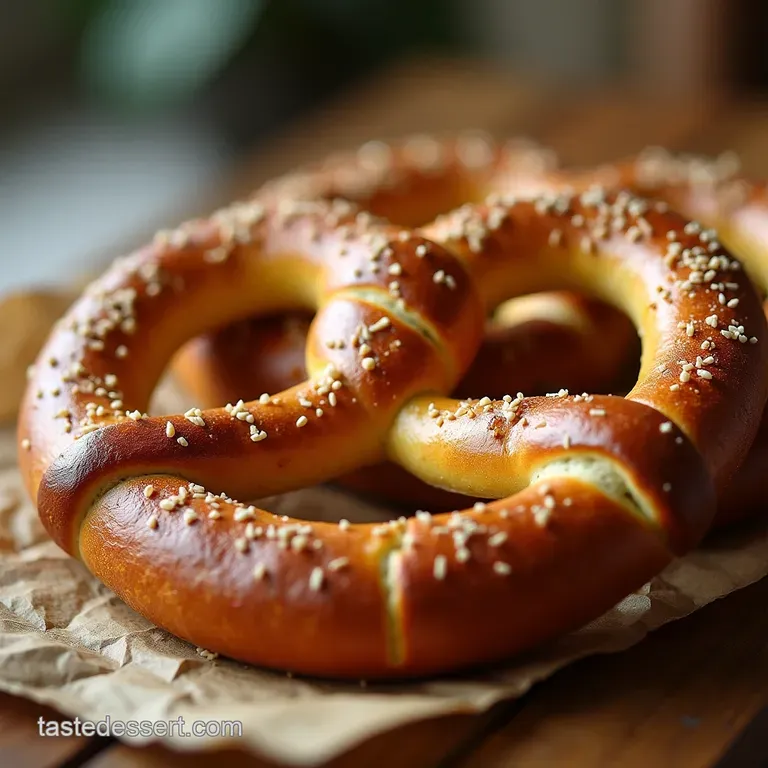
- The Irresistible Allure of Authentic Homemade Soft Pretzels
- Why This Recipe Conquers Takeout Quality
- Assembling Your Pretzel Pantry: What You Need
- Beyond the Basics: Essential Equipment for Dough Handling
- Phase One: Crafting and Resting the Ideal Dough
- The Signature Twist: Mastering the Pretzel Shaping Technique
- The Lye Substitute: Achieving That Deep Brown Crust
- Elevating the Experience: Dipping Sauces and Serving Suggestions
- Troubleshooting and Preservation for Long-Lasting Freshness
- Nutritional Snapshot and Recipe Adaptations
- Recipe FAQs
- 📝 Recipe Card
The Irresistible Allure of Authentic Homemade Soft Pretzels
There’s a certain magic woven into the smell of freshly baked soft pretzels wafting through the kitchen it’s pure, unadulterated nostalgia, isn't it? Forget those sad, dry versions you occasionally encounter; we are embarking on a culinary journey to create the real deal: substantial, satisfyingly chewy soft pretzels, heavily inspired by the classic German Brezel .
These aren't just bread items; they are an experience, built on a foundation of simple ingredients elevated by one crucial, transformative step. This entire Soft Pretzels Recipe is constructed to guide you toward achieving that perfect, mahogany hued exterior and impossibly soft interior right in your home oven.
Why This Recipe Conquers Takeout Quality
Many store-bought versions rely on speed or preservatives, resulting in a lackluster product. Our goal with this Homemade Pretzels Recipe is depth of flavour and superior texture.
We are aiming for that signature bite a slight crispness that immediately gives way to a wonderfully yielding interior. Achieving this texture is less about complicated ingredients and more about mastering the sequence of steps involved in How To Make Pretzels the right way.
Setting the Stage: Our Goal is Chewy Perfection
The secret to authentic texture lies in two areas: the dough's hydration and the final alkaline bath. We want a dough that is slightly firm when kneaded, which will result in Chewy Soft Pretzels rather than fluffy rolls.
After mixing the 4 cups of all-purpose flour with the activating yeast mixture and 4 tablespoons of melted unsalted butter, you’ll notice the dough coming together. Following a firm 5 to 8 minutes of kneading until it achieves an elastic smoothness sets the structural stage for success.
A Nod to Nostalgia: The Malted Secret Ingredient Unveiled
While this recipe avoids the dangerous, traditional lye bath, we incorporate a flavourful element that mimics that complex taste: brown sugar. Using 2 tablespoons of brown sugar (or granulated sugar if you prefer) feeds the yeast rapidly while lending a subtle, malty depth to the final product that many store-bought varieties miss.
This approach ensures our Easy Homemade Soft Pretzels taste genuinely artisanal.
Dispelling Dough Myths: Simplicity in Baking Mastery
It’s a common misconception that making good bread is inherently difficult. While this Soft Pretzels Recipe No Yeast variation is not what we are doing today (we are using yeast for structure!), the process remains fundamentally simple.
The dough requires a single, straightforward rise about an hour, or until doubled in a warm environment. Once risen, gently punching down the dough and dividing it into 8 to 10 equal portions is the next milestone before we move into shaping.
Assembling Your Pretzel Pantry: What You Need
Gathering your components efficiently will make the process seamless. For the dough itself, you’ll need 1 ½ cups of warm water (aiming for 105° F– 115° F) to wake up 2 ¼ teaspoons of active dry yeast, alongside the flour, 1 teaspoon of fine kosher salt, and the aforementioned melted butter.
However, the real supporting cast involves the tools and the bath ingredients.
Beyond the Basics: Essential Equipment for Dough Handling
While a stand mixer with a dough hook can certainly make kneading easier, this recipe is entirely achievable with a large mixing bowl and some elbow grease. You’ll also need a rolling pin for evening out the dough sections and standard baking sheets lined with parchment paper to prevent sticking during the final bake.
Dry Goods & Liquids: The Core Components of Your Dough
The foundation of these pretzels relies on precise ratios. The 4 cups of flour provide the bulk, while the warmth of the water is non-negotiable for yeast activation. Remember, if the water is too hot (over 130° F), you risk killing the yeast, leading to flat, dense results.
We are aiming for that gorgeous loft, so temperature check is vital here.
The Crucial Bath: Preparing the Baking Soda Solution
This step is what distinguishes an excellent soft pretzel from simple bread twisted into a shape. We use 8 cups of water brought to a rolling boil, into which a generous ½ cup of baking soda (bicarbonate of soda) is vigorously whisked.
This creates an alkaline solution, a safe and accessible substitute for traditional lye, which is responsible for caramelizing the dough's exterior rapidly in the heat, forming that signature dark crust and slightly tangy flavour profile.
Selecting the Perfect Topping: Salt Grades Matter
You cannot simply dust these with table salt. For the best textural contrast and the most authentic flavour, you must use coarse pretzel salt or, failing that, flaky sea salt. This large crystal size provides necessary bursts of salinity against the chewy backdrop of the baked dough.
Phase One: Crafting and Resting the Ideal Dough

Once your yeast is frothy and active, combine it in the mixing bowl with the flour and salt. Incorporate the melted butter, mixing until a shaggy dough forms. Turn this out onto a lightly floured surface and knead with purpose for approximately 5 to 8 minutes until the dough feels smooth and pliable, indicating the gluten strands have developed adequately.
Place the newly formed dough into a lightly oiled bowl, cover it securely, and allow it its first rest about one hour until it has visibly doubled in size.
Related Recipes Worth Trying
- Foolproof Chocolate Covered Pretzels Recipe The Ultimate Snap — Master the art of beautiful Chocolate Covered Pretzels This easy recipe guarantees a glossy professional finish Perfect for your next gathering
- The Classic Snap Perfect Salted Chocolate Covered Pretzels — Make irresistible homemade chocolate covered pretzels that taste better than storebought This easy recipe guarantees a thick velvety coating and perfect...
- Irresistibly Soft Chewy Molasses Cookies Recipe — Make the best chewy molasses cookies with signature crinkle tops This easy recipe yields perfectly soft deeply spiced ginger cookies ready for your tea break
The Signature Twist: Mastering the Pretzel Shaping Technique
After the dough has rested, gently punch it down to release the accumulated gas. Divide the dough into 8 to 10 equal portions. The next critical step involves rolling each portion into a long rope, roughly 24 inches in length.
To form the iconic shape, take one rope, form a "U" shape, cross the ends over one another twice, and then bring the twisted ends down to press firmly onto the base of the "U," creating the classic loop structure. For the best results when boiling later, ensure the ends adhere well to the bottom curve.
The Lye Substitute: Achieving That Deep Brown Crust
Before we bake, we must treat the dough to its alkaline bath. While the oven preheats to 450° F ( 230° C), ensure your baking soda bath is simmering strongly.
Waking Up the Yeast: Initial Mixing and Kneading Timeline
This initial mixing and kneading should take no more than 10 minutes total before the dough is ready for its slumber. Over kneading here can lead to tough pretzels; aim for just smooth elasticity.
First Rise Protocol: Creating the Perfect Environment
Finding a warm, draft free spot is crucial for the dough’s hour long rise. A slightly warmed oven (turned off!) with the door ajar works perfectly. This ensures vigorous activity from the yeast, leading to a lighter interior texture later on.
How to Achieve Uniformity When Twisting Your Soft Pretzels
Consistency in thickness is key to uniform cooking. Try to roll your ropes to an even thickness throughout. If the ends are too thin compared to the thick central loop, the ends risk burning before the thickest part achieves the correct internal temperature.
Placing the shaped pretzels on the baking sheets and chilling them for 15 minutes before the bath also helps them hold their shape better during the immersion process.
Precision Timing: Boiling Before the Oven's Heat
This is the moment of truth. Working one or two pretzels at a time, carefully lower them into the simmering baking soda solution using a large slotted spoon. Let them steep for just 20 to 30 seconds per side .
Any longer, and the alkaline solution will start to break down the dough too much, resulting in a rubbery texture rather than a Chewy Soft Pretzel . Immediately lift them out, allowing excess liquid to drip off, and place them back onto your parchment lined sheets.
They should immediately be brushed with an egg wash (one whisked egg with a tablespoon of water) and generously sprinkled with the coarse salt. Bake for 12 to 15 minutes until they reach that deep mahogany brown don't pull them out too early!
Elevating the Experience: Dipping Sauces and Serving Suggestions
While these Seasoned Soft Pretzels are divine simply salted, they truly shine when paired with compelling dips. The classic companion is a sharp, whole grain mustard, but a warm, creamy beer cheese dip is unbeatable for game day spreads.
For those with a sweet inclination, a thick, warm caramel sauce offers a delightful contrast to the salty crust.
Troubleshooting and Preservation for Long Lasting Freshness
Even the best recipes encounter hiccups. If your pretzels seem pale after baking, it often means they either didn't stay in the alkaline bath long enough or your oven temperature was too low. Conversely, if the centres seem doughy, they were likely underbaked, or the dough ropes were far too thick.
Beyond Coarse Salt: Creative Topping Variations to Explore
If you’re looking to experiment, consider variations on the topping. Before the egg wash, you can sprinkle on garlic powder mixed with dried minced onion for a phenomenal Garlic Soft Pretzel Recipe . Everything bagel seasoning is another stellar option.
Alternatively, for a sweeter twist, skip the salt entirely and toss the hot, just out-of-the-oven pretzels in a mixture of melted butter, cinnamon, and sugar.
Storing Leftovers: Keeping Your Pretzels Soft for Days
To maintain the chewiness, store cooled pretzels in an airtight container at room temperature for up to three days. To refresh them, simply spritz lightly with water and reheat in a 350° F oven for about 5 minutes.
Addressing Common Dough Woes: Texture Fixes
If your dough feels too slack or sticky during the initial mix, resist the urge to dump in excessive flour this leads to dry pretzels. Instead, knead an extra minute or two; sometimes, the butter needs time to fully incorporate.
If the shaped pretzels fall apart in the bath, they were either not rolled tightly enough or you left them in the soda solution for too long.
Making Them Vegan: Swapping Out Dairy Elements
This recipe is easily adaptable. To make these pretzels fully plant based, substitute the 4 tablespoons of melted butter in the dough with an equal amount of neutral vegetable oil.
For the egg wash, use a commercial liquid egg replacer or a very thin slurry of cornstarch and water brushed on top to help the salt adhere.
Nutritional Snapshot and Recipe Adaptations
Generally, these substantial pretzels clock in around 300 330 calories per large serving, depending heavily on the amount of salt applied. They are rich in carbohydrates necessary for that satisfying chew.
While the primary focus is the classic flavour, knowing you can achieve these results at home opens the door to versatility.
For those with limited oven space or who prefer energy efficiency, you might wonder about Soft Pretzels in Air Fryer . Yes, they work! Air-fry at 375° F ( 190° C) for about 8 to 10 minutes, ensuring the air circulates well around the shapes, though you will likely need to work in smaller batches.
The resulting texture is remarkably close to the oven baked version when done correctly!

Recipe FAQs
Why are my homemade soft pretzels not getting that dark, chewy crust?
That signature crust comes entirely from the alkaline bath, so don't skip that step! You must use a good amount of baking soda (bicarbonate of soda) in boiling water. Make sure the water is simmering, not just warm, and boil the pretzels for about 30 seconds per side that brief dip chemically changes the dough surface, allowing it to turn that lovely mahogany colour when baked.
Can I make the dough for these soft pretzels ahead of time?
Absolutely, bread dough freezes brilliantly! You can complete the kneading and first rise, then punch the dough down and store it tightly wrapped in the fridge for up to three days, or freeze it for a month.
When you're ready to bake, let the dough warm up slightly on the counter before you divide and shape it, just like you’re used to doing.
My pretzel knots keep unraveling while baking; what am I doing wrong?
This usually happens if the "rope" you rolled out is too thick, or if the ends weren't sealed properly. When you press the ends onto the bottom curve, really press them down firmly against the dough so they adhere; this prevents them from popping open under the heat of the oven.
A short 15-minute chill in the fridge before the bath also helps them hold their shape better.
What's the best thing to serve with these pretzels besides just plain salt?
You are spoiled for choice here, my friend! For a truly pub-style experience, a hearty, sharp beer cheese dip is unbeatable it cuts through the richness of the dough perfectly.
Alternatively, if you have a sweet tooth that day, ditch the salt, brush with butter after baking, and toss them in cinnamon sugar for a lovely twist.
Are soft pretzels hard to store? How long do they last?
They are best eaten fresh on the day of baking, naturally, as they lose their chewiness quickly. If you must store them, keep them in an airtight container at room temperature for up to two days.
To revive them, just give them a quick spritz of water and warm them in a moderate oven (about 325°F or 160°C) for about 5 minutes until soft again.
Chewy Homemade Soft Pretzels

Ingredients:
Instructions:
Nutrition Facts:
| Calories | 518 kcal |
|---|---|
| Protein | 9.7 g |
| Fat | 11.6 g |
| Carbs | 45.6 g |
| Fiber | 4.5 g |
| Sodium | 5000 mg |
