Christmas Cracker Toffee | Ultra-Crisp Saltine Candy
- Effort/Time: 25 minutes (High-efficiency, low-labor)
- Flavor Hook: Salty-sweet umami bomb with deep molasses undertones
- Perfect for: Last-minute gifting and high-volume holiday platters
- Master the Ultimate Shatter-Crisp Christmas Cracker Toffee
- The Technical Specifications and Yield for This Batch
- The Chemistry of Components: Selecting Your Toffee Elements
- Precision Tools and Thermal Mass Requirements for Success
- The Multi-Phase Execution Protocol for Optimal Toffee Texture
- Correcting Texture Failures and Avoiding Toffee Separation Issues
- Flavor Architecture and Smart Substitution Protocols for Variation
- ⚗️ The Scaling Lab: The Physics of Quantity
- Preserving Structural Integrity and Storage Longevity Strategies
- Aesthetics and Assembly for the Ultimate Holiday Platter
- Recipe FAQs
- 📝 Recipe Card
Master the Ultimate Shatter Crisp Christmas Cracker Toffee
There is nothing more frustrating than investing an hour into holiday baking only to have your candy turn out grainy or, worse, a greasy, separated mess that ruins your expensive chocolate.
I’ve been there, staring at a tray of "trash candy" that cost $15 in butter and semi sweet chips, feeling the sting of a failed festive promise. The emotional toll of a kitchen failure during the holidays is real; you want to share something spectacular, not explain why your toffee is bendy instead of brittle.
The key is perfecting this christmas cracker toffee.
Early in my journey, I destroyed three consecutive batches of christmas cracker toffee because I was too impatient to let the butter and sugar truly emulsify. I thought a few bubbles were enough, but I ended up with a layer of oil floating on top of gritty sugar.
It was a humbling lesson in the physics of confectionery you cannot rush the molecular bond between fat and sucrose. I realized that baking isn't just following a list; it’s managing a series of chemical reactions that require specific thermal environments to succeed.
Mastering this makes achieving great christmas cracker toffee straightforward.
The breakthrough came when I understood the hard crack stage science. This christmas cracker toffee recipe works because we use a rolling boil to drive out moisture, concentrating the sugar until it reaches a state where it cools into a rigid, non-crystalline structure.
This creates that signature "shatter" that echoes through the room when you take a bite. By adding a touch of Diamond Crystal Kosher Salt and high-quality vanilla, we create a complex flavor profile that masks the simplicity of the crackers.
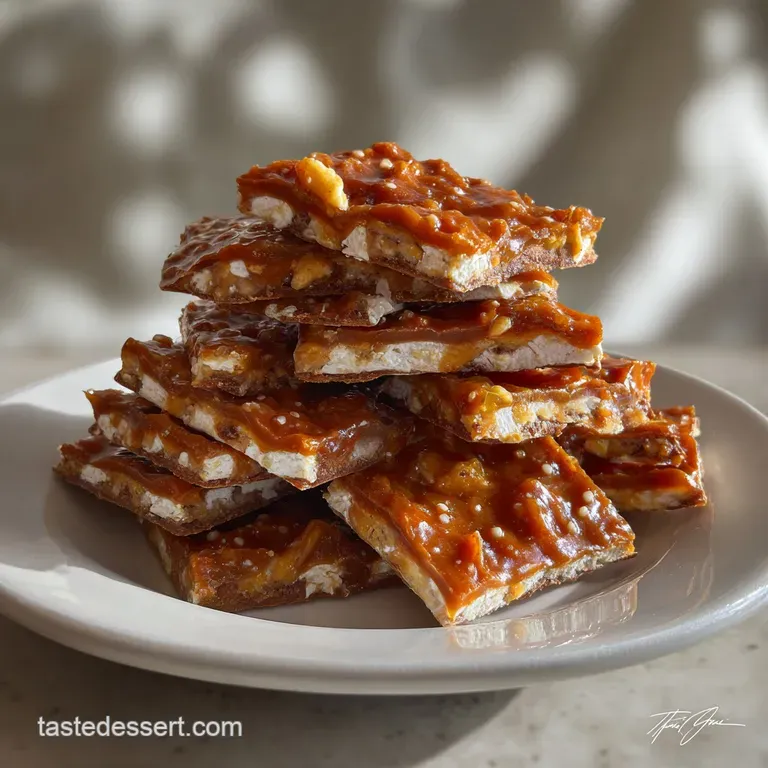
The result is a mahogany colored caramel that grips the saltine base with absolute tenacity. Everyone expects great christmas cracker toffee during the holidays.
The Technical Specifications and Yield for This Batch
When you are planning your holiday baking marathon, knowing your precise output is critical for managing your "Christmas Candy Platter Ideas." This christmas cracker toffee is designed for high density yield with a relatively small footprint in your oven.
You aren't just making a snack; you are producing 24 distinct servings of a professional grade confection that balances 198 kcal of pure energy with a complex textural experience. The process for this specific christmas cracker toffee is incredibly efficient.
- Prep Time:10 minutes
- Cook Time:15 minutes
- Total Time:25 minutes
- Recipe Yield: 24 servings (standard squares)
The efficiency of this christmas saltine toffee lies in its rapid thermal transition. Unlike traditional fudge which requires long cooling periods to set the crystalline structure, this toffee relies on rapid heat dissipation. You spend 10 minutes in prep, 15 minutes in active heat, and the rest is passive cooling. If you are looking for more complex candy projects, you might also enjoy a Foolproof Homemade English recipe which explores similar caramelization techniques but with a different structural base.
The Chemistry of Components: Selecting Your Toffee Elements
Success in making christmas cracker toffee starts with understanding how your ingredients interact at a molecular level. We aren't just mixing food; we are creating a stable emulsion and then inducing a phase change from liquid to solid.
Selecting the right brands, like Land O'Lakes Unsalted Butter or C&H Light Brown Sugar, ensures consistent moisture content and predictable melting points.
Ingredient Chemistry Breakdown
| Ingredient | Chemical/Physical Role (Science) | The Pro Secret (Why This Matters) |
|---|---|---|
| Unsalted Butter | Provides the lipid phase for emulsification | Use high fat European style for a more velvety, stable snap. |
| Light Brown Sugar | Sucrose plus molasses for Maillard reaction | The acid in molasses helps prevent premature crystallization. |
| Saltine Crackers | Cellulose structure for the toffee to anchor | The alkaline soda in crackers balances the acidic caramel notes. |
| Vanilla Extract | Volatile aromatic compounds | Alcohol base evaporates, leaving concentrated bean essence behind. |
Official Ingredients (Exact Quantities):1 sleeve saltine crackers (approx. 40 crackers): Why this? The porous surface allows the hot toffee to create a mechanical bond.1 cup Land O'Lakes unsalted butter (225g): Why this? Control over sodium levels ensures the saltiness comes only from the cracker and sea salt.1 cup light brown sugar, packed (200g): Why this? Higher moisture than white sugar aids in creating a pliable initial syrup.1 tsp Nielsen Massey vanilla extract (5ml) 1/2 tsp sea salt (3g) 2 cups semi sweet chocolate chips (340g): Why this? 55 60% cacao provides the perfect bitterness to offset the sugar.2 tbsp festive sprinkles (30g) 1/4 cup crushed candy canes or pecans (30g)
Precision Tools and Thermal Mass Requirements for Success
The equipment you use to craft christmas cracker toffee acts as a heat sink. A thin, flimsy pan will warp under the intense heat of the oven, causing your toffee to pool in the corners and burn.
You need tools that offer consistent thermal distribution to ensure the entire sheet of christmas cracker candy recipe reaches the same temperature simultaneously. Having the right tools is essential for making proper christmas cracker toffee.
- Nordic Ware Natural Aluminum Half Sheet Pan: This provides the essential thermal mass to prevent "hot spots" that lead to scorched sugar.
- Silpat Non-Stick Silicone Baking Mat: Unlike parchment, silicone provides a slight insulation layer that prevents the bottom of the crackers from over browning before the top is set.
- All-Clad 2 Quart Saucepan: A heavy bottomed pot is mandatory. It prevents the butter sugar mixture from breaking (separating) during the critical rolling boil.
- Heat Resistant Silicone Spatula: Needed for constant agitation to maintain the emulsion during the boiling phase.
- Offset Spatula: Essential for spreading the chocolate in a thin, even layer across the bubbling toffee surface.
The Multi Phase Execution Protocol for Optimal Toffee Texture
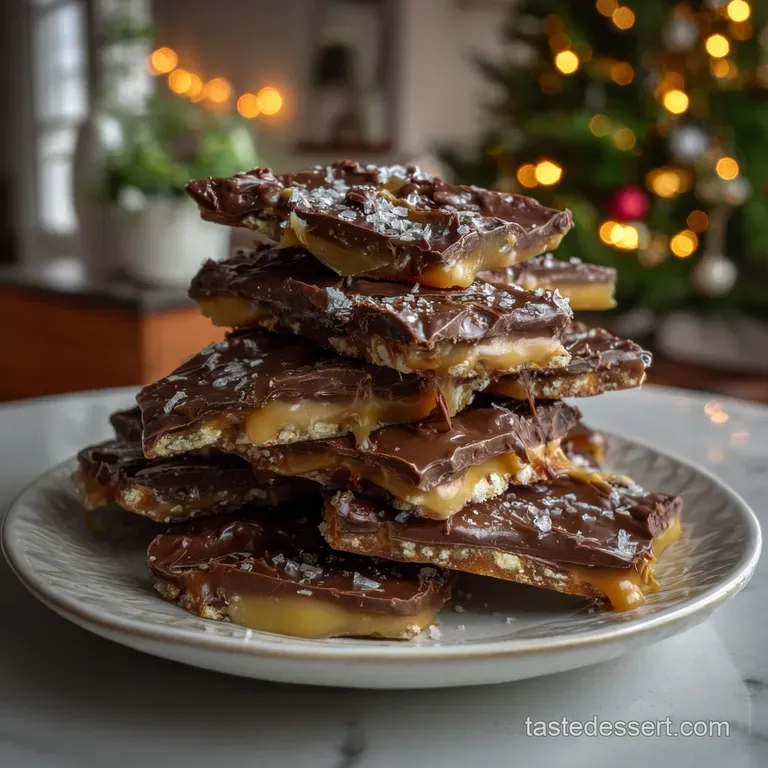
Follow these steps exactly to ensure your christmas saltine toffee recipe achieves the perfect hard crack finish. If you enjoy this process, you may want to try my Golden Homemade Toffee recipe for another take on crunchy textures. This method guarantees the structural success of your christmas cracker toffee.
- Preheat the oven to 400°F (200°C). Note: High heat is required for rapid evaporation of residual moisture in the butter.
- Line the Nordic Ware pan with a Silpat or heavy duty foil.
- Arrange the saltine crackers in a single, tight layer until the pan is completely covered without overlapping.
- Melt the butter and brown sugar in the All-Clad saucepan over medium heat until the butter is fully incorporated and the mixture is smooth.
- Boil the mixture for exactly 3 minutes without stirring until the surface is covered in large, dark amber bubbles and it smells like toasted nuts.
- Stir in the vanilla and sea salt until the sizzle stops and the mixture is glossy.
- Pour the hot toffee immediately over the crackers until every cracker is coated in a thin, bubbling layer.
- Bake for 5 minutes until the toffee is dark mahogany and the edges are aggressively bubbling.
- Scatter the chocolate chips over the hot surface and let sit for 2 minutes until the chips lose their shape and look shiny/melted.
- Spread the chocolate with an offset spatula until a velvety, smooth coat covers the entire surface.
- Top with sprinkles and candy canes until the chocolate is decorated but still visible.
- Chill for 2 hours until the chocolate is matte and the toffee base is rock hard.
Correcting Texture Failures and Avoiding Toffee Separation Issues
The most common heartbreak with christmas cracker toffee is the "greasy top." This happens when the emulsion of butter and sugar breaks, leaving a pool of oil that prevents the chocolate from adhering.
This is usually caused by drastic temperature swings or using a saucepan that is too thin, creating localized heat spikes that shock the fat molecules.
Why Your Toffee Separates
When the butter sugar mixture separates, it's often due to "sucrose crystallization." If a stray sugar crystal from the side of the pot falls into the boiling mixture, it can trigger a chain reaction that forces the fat out of the solution. This results in a grainy, oily mess that won't set.
Always use a clean spatula and avoid scraping the very sides of the pot once the boil has begun. Avoiding this separation is the ultimate goal when making any batch of christmas cracker toffee.
| Problem | Root Cause | The Fix | Pro Protocol |
|---|---|---|---|
| Oily Surface | Emulsion break due to uneven heat | Add 1 tbsp of boiling water and whisk vigorously | Maintain medium low heat; don't rush the melt. |
| Soggy Crackers | Under boiled toffee (too much water) | Increase boil time by 30 seconds next time | Ensure toffee reaches "Hard Crack" (300°F). |
| Grainy Texture | Sugar crystallization | Add a splash of corn syrup to the butter/sugar | Use a wet pastry brush to wash down pot sides. |
Flavor Architecture and Smart Substitution Protocols for Variation
This Simple Christmas Treats Baking staple is highly adaptable, but you must respect the chemistry of your substitutes. Replacing the fat or the sugar type will change the "snap" of the final product. If you're looking for a different profile, consider how an English Toffee Sauce recipe uses similar ingredients but stops at a lower temperature to maintain a liquid state. Experimenting with swaps is fun once you master the base christmas cracker toffee.
Ingredient Swaps
| Original Ingredient | Substitute | Why It Works |
|---|---|---|
| Saltine Crackers | Ritz or Graham Crackers | Ritz adds buttery richness; Graham adds honey notes but is softer. |
| Semi Sweet Chips | Dark Chocolate (70%) | Cuts the sweetness significantly; provides a more "adult" flavor profile. |
| Pecans | Toasted Almonds | Almonds provide a classic "Heath Bar" flavor profile. |
⚗️ The Scaling Lab: The Physics of Quantity
When you are making Popular Christmas Desserts for a crowd, the temptation is to double the batch in one pan. Do not do this.
- The Square Cube Law: If you double the ingredients in one pan, the layer of toffee becomes twice as thick. The center will remain soft and chewy while the edges burn, because the surface area hasn't increased to allow for even evaporation.
- Thermal Mass & Thermodynamics: A double thick layer of toffee retains heat significantly longer. This will "carry over cook" the crackers, often turning them bitter or burnt before the chocolate can even be applied. Scaling the christmas cracker toffee correctly requires two pans.
- Pan Crowding: For christmas cracker toffee, you must maintain the thin film ratio. If you need 48 servings, use two separate sheet pans on different oven racks and rotate them halfway through the baking cycle.
- Flavor Saturation: When scaling up spices or salt, only use 1.5x the amount. Saltiness intensifies as the water evaporates during the boil; doubling it usually results in an inedible, over salted batch.
Preserving Structural Integrity and Storage Longevity Strategies
To maintain the "shatter" of your christmas cracker toffee recipe, you must protect it from its greatest enemy: humidity. Sugar is hygroscopic, meaning it pulls moisture from the air. In a humid kitchen, your crisp toffee will turn into a sticky, tacky mess within hours.
- Storage: Store in an airtight container (like a Rubbermaid Brilliance) with layers of parchment paper between pieces. It stays fresh at room temperature for 7 days or in the fridge for 2 weeks. This protects your finished christmas cracker toffee.
- Freezing: This is the ultimate make-ahead treat. Freeze in a heavy duty freezer bag for up to 3 months. The sugar structure remains stable, though the chocolate may develop a slight "bloom" (white streaks) from the moisture transition.
- Reheating: Never microwave. If the chocolate has softened, place the toffee in the fridge for 20 minutes to re-snap the structure.
💡 ZERO WASTE PHILOSOPHY: Don't discard the "crumbs" at the bottom of the pan! Transform: Save the broken bits and cracker dust to use as a topping for vanilla bean ice cream or to fold into brownie batter.
Science: The caramelized sugar and salt provide an intense flavor concentrate that enhances the Maillard notes in other baked goods. These crumbs are concentrated christmas cracker toffee flavor nuggets.
Aesthetics and Assembly for the Ultimate Holiday Platter
When building a Christmas Candy Platter Ideas display, the christmas cracker toffee should be your "anchor" piece. Because it is flat and rigid, it provides excellent verticality when leaned against softer treats like fudge or marshmallows.
Cute Christmas Treats For Kids
For a kid-friendly version, swap the pecans for crushed pretzels or mini M&Ms. The "crack" sound is part of the appeal, making it one of the most interactive Popular Christmas Desserts you can serve. We love the simple presentation of this christmas cracker toffee.
Myth: You need a candy thermometer to make toffee. Truth: While a thermometer helps, you can judge by the "visual cue" of the bubbles. When they shift from thin/watery to thick/slow and the color hits a deep penny copper, you have reached the hard crack stage.
Myth: All butter is the same for candy. Truth: Cheap butter has a higher water content. As the water boils off, the volume of your toffee shrinks, often leading to a thinner, more brittle (and sometimes burnt) layer.
Stick to high-quality fats for the best christmas saltine toffee recipe results.
This christmas cracker toffee is more than just a quick snack; it’s a lesson in the beautiful, volatile world of sugar chemistry. By respecting the boil and choosing high-quality tools, you’ll create a holiday tradition that people will actually ask for by name.
Let's get cracking on that christmas cracker toffee!

Recipe FAQs
how to make christmas cracker candy?
Bake saltines covered in boiled butter and brown sugar at 400°F for five minutes, then top with chocolate and chill.
christmas toffee candy recipes?
The essential steps involve achieving the hard crack stage (300°F) to ensure a brittle structure. If you enjoyed mastering the thin film baking principle here, see how the same concept applies to achieving optimal crispness in our Antipasto Christmas Wreath Appetizer: Quick & Flavorful.
how does a christmas cracker work?
It relies on rapid moisture evaporation during boiling. The high heat drives off water, concentrating the sugar until it sets as an amorphous solid upon cooling. This rapid phase change is what creates the rigid, glassy snap.
- Boiling drives out water content
- Sugar molecules lock into a rigid structure
- Chocolate layer adds insulation
can you make toffee?
Yes, this recipe transforms simple saltines into glass like candy. This toffee relies on achieving the hard crack stage (300°F) where the sugar no longer crystallizes upon cooling. The precise thermal control prevents grittiness common in lower temperature candies.
how do you make christmas crackers at home?
You use pre-made saltine crackers as the base layer. The "cracker" element here refers to the baked confection built upon the salty biscuit, not the snapping paper novelty.
For other easy holiday recipes, try the [The Perfect Christmas Star Bread: Velvety & Aromatic] which also requires temperature management.
Is corn syrup necessary for toffee texture?
Corn syrup is optional, but highly recommended for smoothness. It acts as an invert sugar, actively interfering with sucrose crystallization to guarantee a non-grainy final product. Adding it ensures the toffee stays glassy rather than turning cloudy or gritty.
Should I use salted or unsalted butter?
Unsalted butter for precision control. Salted brands vary widely in sodium, which disrupts the critical salt balance against the molasses in the brown sugar. Unsalted lets you control saltiness via added sea salt flakes.
Cracker Toffee Christmas Treat
Ingredients:
Instructions:
Nutrition Facts:
| Calories | 198 kcal |
|---|---|
| Protein | 1.1 g |
| Fat | 12.4 g |
| Carbs | 21.9 g |
| Fiber | 0.9 g |
| Sugar | 16.2 g |
| Sodium | 108 mg |
