The Ultimate Creamy Chicken and Potato Gnocchi Soup a Hug in a Bowl

- Why This Creamy Chicken Gnocchi Soup is the Ultimate Comfort Dish
- The Secret to a Deeply Flavourful, Hearty Broth Base
- Gathering Your Kitchen Arsenal: Essential Ingredients Checklist
- Prepping the Poultry: Choosing and Shredding the Best Chicken
- Mastering the Method: A Step-by-Step Guide to Chicken Gnocchi Soup
- Building Depth: Sautéing Aromatics and Developing the Roux
- Pro Tips for Elevating Your Chicken Gnocchi Soup Experience
- Dietary Swaps and Creative Recipe Variations
- Making Ahead and Smart Storage Solutions
- Recipe FAQs
- 📝 Recipe Card
Why This Creamy Chicken Gnocchi Soup is the Ultimate Comfort Dish
There is a select category of recipes that don't just fill you up they genuinely nourish the soul. This rich, velvety rendition of Chicken Gnocchi Soup sits squarely in that category. It’s the culinary equivalent of putting on your favourite jumper on a chilly evening.
While many are familiar with this style of dish through popular chains, our homemade version often sought after as the definitive Olive Garden Chicken Gnocchi Soup Recipe —elevates the experience by prioritizing deep, complex flavour layers right from the very first step.
The brilliance of this soup lies in the textural contrast: tender, shredded chicken and soft, pillowy potato gnocchi suspended in a lusciously thickened, aromatic broth. When prepared correctly, this is a true hug in a bowl, satisfying enough for a standalone meal yet quick enough for a weeknight production, clocking in at just about 50 minutes total time.
The Secret to a Deeply Flavourful, Hearty Broth Base
The foundation of any spectacular soup must be an uncompromisingly rich broth. For this Chicken Gnocchi Soup Recipe , we rely on six cups (1.4 L) of high-quality, low-sodium chicken stock. Using inferior stock results in a flat final product, no matter how perfectly you season it later.
We build our flavour upon the classic French/Italian technique of gently sweating aromatic vegetables, ensuring that the base is savory and deep before any liquid is introduced.
What Makes Our Broth Velvety, Not Watery
The characteristic thickness that defines a good creamy soup is achieved through a technique called the roux. After sautéing our vegetables, we whisk in one-quarter cup (30g) of all-purpose flour mixed with the four tablespoons (60g) of melted butter, cooking this mixture for 1– 2 minutes.
This step is critical because it eliminates the raw flour taste while creating the necessary matrix to stabilize the heavy cream and milk later. This prevents the liquids from separating, giving the soup a luxurious, stable, and velvety finish, rather than a thin, watery consistency.
A Brief History of American Style Gnocchi Soups
While gnocchi small dumplings often made from potato, flour, and sometimes semolina are deeply rooted in regional Italian tradition, their incorporation into a cream based, chicken heavy soup is largely an American adaptation.
This dish exemplifies the popular North American style of comfort food that borrows authentic Italian ingredients (like the gnocchi) and integrates them into rich, dairy forward preparations, securing its place among favorite Gnocchi Recipes Soup enthusiasts adore.
Is Gnocchi Truly Soup Appropriate?
Absolutely. Potato gnocchi, due to its density and structure, stands up remarkably well to simmering liquids, perhaps even better than many traditional pasta shapes, provided it is not overcooked. It absorbs the flavour of the creamy broth beautifully, becoming plump and tender.
We use a standard 17-ounce (500g) package of gnocchi, which adds necessary substance and body to the soup, turning it from a simple liquid meal into a thoroughly satisfying supper.
Decoding the Essential Soffritto Technique
The Italian technique known as soffritto refers to the gentle cooking of aromatic vegetables in our case, diced yellow onion, carrots, and celery in butter or olive oil. This is Stage One of the cooking process.
We require patience here, cooking the vegetables (1 medium onion, 2 medium carrots, 2 celery stalks) slowly for a full 8 to 10 minutes until they are entirely softened and translucent, not browned.
This slow release of sugars creates the crucial, slightly sweet, savory foundation that forms the backbone of the entire creamy dish.
Gathering Your Kitchen Arsenal: Essential Ingredients Checklist
To embark on this recipe, you will need the building blocks: butter and flour for the thickening roux; the foundational vegetables (onion, carrot, celery, garlic); the main liquids (6 cups chicken stock, 1 cup heavy cream, 1 cup milk); the essential seasonings (thyme, bay leaf, nutmeg, salt, and pepper); and the heroes of the dish: 2 cups of shredded pre-cooked chicken, 17 ounces of potato gnocchi, and 4 cups of fresh spinach for color and nutrition.
The final garnish is a simple sprinkling of fresh parsley.
Prepping the Poultry: Choosing and Shredding the Best Chicken
For maximum efficiency and flavour in this Creamy Garlic Chicken Gnocchi Soup , pre-cooked and shredded chicken is the preferred choice. Rotisserie chicken is a blogger's secret weapon here, providing already moist and flavourful meat, saving you about 20 minutes of cooking time.
We need exactly two cups (300g) of meat. If cooking chicken fresh, simmer 1 lb of chicken breast in stock until cooked through, then shred it and reserve the cooking liquid to use as part of the total six cups of stock required for the recipe.
Choosing the Right Gnocchi: Fresh vs. Shelf Stable
While fresh gnocchi is excellent for quick pasta dishes, shelf stable vacuum sealed gnocchi or even quality frozen varieties are ideal for soup. They hold their shape slightly better and require less vigilant watching.
The goal is to cook the gnocchi just until it floats to the surface, which typically takes a brief 3 to 5 minutes. Overcooked gnocchi will become mushy and lose its appealing texture.
Dairy Decisions: Achieving the Perfect Creamy Finish
The ultimate texture of the finished soup relies heavily on the fat content of the dairy used. For the richest, most stable, and most authentic soup, we use one cup (240 ml) of heavy cream (double cream) paired with one cup (240 ml) of whole milk.
The high fat content of the heavy cream contributes significantly to the body, ensuring that the final broth is satisfyingly thick and luxurious.
Necessary Pots and Tools for Soup Success
A sturdy, large Dutch oven (5 6 quarts/liters) or a heavy bottomed stockpot is essential. The heavy base of a quality pot ensures even heat distribution, which is necessary when making the roux and when simmering the dairy inclusive broth, preventing scorching on the bottom.
You will also require a sharp knife for the precise dicing of the soffritto, and a good whisk for incorporating the stock smoothly into the roux.
Ingredient Preparation Timetable
The recipe is highly time efficient, requiring only 15 minutes of prep work. This time should be dedicated entirely to dicing the onion, carrots, and celery, mincing the four cloves of garlic, and chopping the fresh spinach and parsley.
Having all ingredients measured and ready before you turn on the heat (mise en place) ensures a smooth cooking process.
Related Recipes Worth Trying
- Grilled Chicken Salad with Strawberries and Spinac HoneyBalsamic Dressing — This easy Grilled Chicken Salad with Strawberries and Spinac is your perfect ProteinPacked Summer Salad Tender grilled chicken sweet fruit and a punchy...
- Golden Crunch The Ultimate Air Fryer Popcorn Chicken — The best Easy Air Fryer Popcorn Chicken recipe Get perfectly juicy bites with an unbelievably crunchy coating using Panko and your air fryer A quick snack win
Mastering the Method: A step-by-step Guide to Chicken Gnocchi Soup
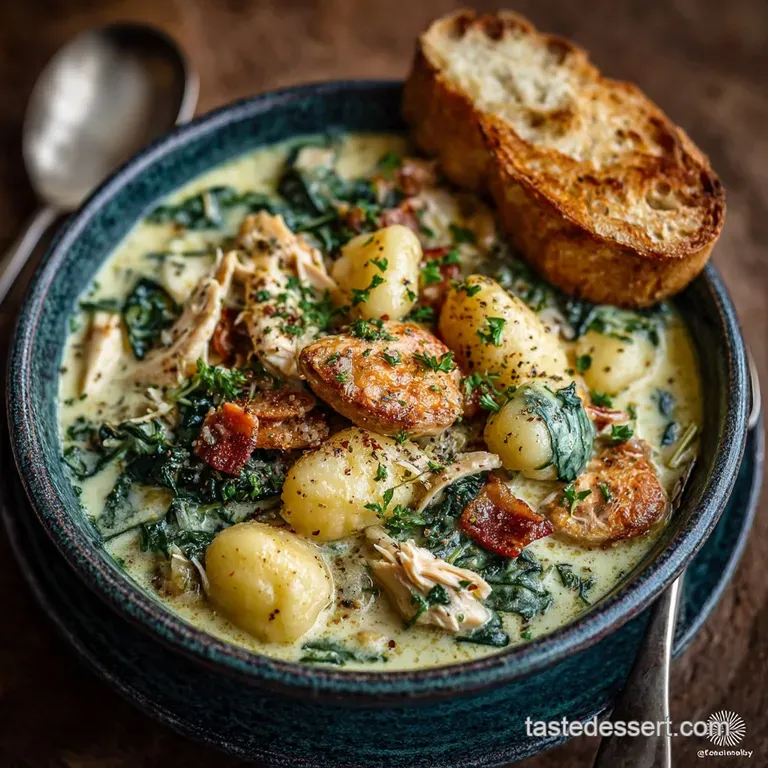
The process of cooking this comforting Chicken Gnocchi Soup Recipe is divided into three logical stages: building the flavour foundation, simmering the base, and incorporating the final ingredients. Following these stages sequentially guarantees that depth and texture are achieved without compromise.
Building Depth: Sautéing Aromatics and Developing the Roux
The cooking process begins by establishing the primary layers of flavour and thickness required for the soup's success.
Stage One: Creating the Golden Flavour Foundation
In the Dutch oven, melt the four tablespoons of butter and introduce the finely diced onion, carrots, and celery. Stir and cook over medium heat for 8– 10 minutes, allowing the vegetables to soften completely.
Once tender, stir in the four cloves of minced garlic and the one teaspoon of dried thyme, cooking for just one minute until the garlic is fragrant. Immediately sprinkle the one-quarter cup of flour over the vegetables and stir constantly for 1– 2 minutes; this forms the crucial roux.
Integrating the Broth and Simmering for Richness
This is where the structure comes together. Slowly pour in the chicken stock, starting with just one cup, whisking vigorously to incorporate the roux completely and ensure a smooth, lump free base. Once smooth, add the remaining stock and the bay leaf.
Bring the soup to a gentle boil, then immediately reduce the heat to maintain a steady simmer for 15 minutes. This simmering time is necessary to fully activate the thickening power of the roux.
The Critical Final Steps: Adding Cream and Gnocchi
Reduce the heat to low before incorporating the dairy. Stir in the heavy cream, milk, and a generous pinch of nutmeg, followed by salt and black pepper to taste. Crucially, do not allow the soup to return to a boil once the dairy is added, as high heat risks curdling.
Add the gnocchi directly to the soup base, stirring gently. Cook until the gnocchi floats (3– 5 minutes). Stir in the shredded chicken and the four cups of fresh spinach, cooking only until the spinach wilts (about 2 minutes).
How to Check for Perfect Seasoning Balance
Cream and milk inherently mute saltiness, so it is essential to perform a final tasting after all the dairy and liquids have been incorporated. Adjust the salt and pepper until the flavors pop, and don't forget that pinch of freshly grated nutmeg, which subtly enhances the creamy notes in the dish.
Remove the bay leaf before serving.
Pro Tips for Elevating Your Chicken Gnocchi Soup Experience
To ensure a flawless result every time, remember that the quality of your base ingredients matters immensely never compromise on using robust chicken stock. Plus,, mastering temperature control when adding dairy is paramount; keeping the soup just below boiling point once the cream is incorporated guarantees a smooth, silky texture.
If you choose to use dried spices, crush them slightly in your hand before adding them to the pot to release their essential oils, intensifying the overall aromatic profile of this glorious soup.
Dietary Swaps and Creative Recipe Variations
This versatile Gnocchi Recipes Soup can be easily modified to suit various dietary needs and preferences. For those seeking a Healthier Chicken Gnocchi Soup , substitute the heavy cream with evaporated milk or half and-half (single cream), which reduces the fat content while maintaining considerable richness.
If you prefer heartier greens, swap the spinach for chopped kale; just be sure to stir the kale in about 5 minutes before the gnocchi, as it needs a longer cooking time to soften properly.
For a vegetarian variation, replace the chicken stock with vegetable stock and substitute the shredded chicken with one cup of drained cannellini beans for a protein boost.
Making Ahead and Smart Storage Solutions
This soup, while incredible fresh, can also be prepared in advance, making it a fantastic meal prep solution. However, a specific storage strategy must be employed to maintain the integrity of the textures.
Preventing Mushy Gnocchi: Timing is Everything
Potato gnocchi continues to absorb liquid and swell even after the heat is turned off. To prevent the gnocchi from becoming overly soft and mushy upon reheating, it is highly recommended to cook the soup base fully, store it without the gnocchi, and then cook the gnocchi fresh when you are ready to serve or reheat a portion.
Freezing Creamy Soups: Best Practices and Warnings
Freezing creamy soups, particularly those thickened with a roux and featuring heavy cream, carries a risk of separation. When thawed, the fat and liquid can split, resulting in a grainy texture. If you must freeze this dish, aim to withhold the heavy cream until the soup is thawed and reheated on the stovetop.
Alternatively, substitute the heavy cream with evaporated milk, which offers better freeze thaw stability.
Converting This Recipe for the Slow Cooker or Instant Pot
This recipe translates beautifully for both popular appliances. For the ultimate Chicken Gnocchi Soup Crockpot version, sauté the soffritto on the stove first, then transfer it and all ingredients (excluding gnocchi, spinach, and dairy) to the slow cooker.
Cook on low for 4 to 6 hours. Add the dairy, spinach, and gnocchi during the last 30 minutes of cooking. For a swift Chicken Gnocchi Soup Instant Pot meal, use the sauté function to prepare the soffritto and roux, add the stock and chicken (if raw), and pressure cook for 8 minutes.
Quick release, then switch to the low sauté setting to stir in the cream, milk, and gnocchi until finished.
Lactose Free and gluten-free Substitutions
To make this recipe lactose free, swap the heavy cream and whole milk for full fat canned coconut milk (not the refrigerated beverage), paired with a quality vegan butter for the roux. Be aware that this will introduce a very subtle sweetness and coconut flavour.
For a gluten-free adaptation, ensure you use certified gluten-free potato gnocchi and substitute the all-purpose flour in the roux with a one-to-one gluten-free flour blend.
Recipe FAQs
Can I make this Chicken Gnocchi Soup ahead of time, or is it best served straight away?
While the flavour improves overnight properly brilliant, actually the texture of the gnocchi changes rapidly. Potato gnocchi are little sponges and will happily absorb all the lovely broth, turning a bit mushy if left swimming for too long.
If you want to make it ahead, cook the soup base entirely, but keep the gnocchi and the chicken separate, adding them just before serving or heating leftovers. That way, the gnocchi stay shipshape!
My soup seems a bit thin, bless its heart. How can I thicken it up without adding more flour?
If you're after a proper, velvety texture, and the roux didn't quite do the trick, you have a couple of options. Firstly, allow it to simmer uncovered for another 10 minutes to reduce naturally.
Alternatively, ladle out about 1/2 cup of the soup, mash some of the softened carrots and gnocchi into it, and then stir the mixture back into the pot. It’s a nifty trick for a natural thickening boost!
I'm worried about my gnocchi turning to mush in the Chicken Gnocchi Soup what's the best way to keep them lovely and pillowy?
That’s a fair worry; nobody wants a soggy bottom! The key here is not to overcook them. Gnocchi is done the instant they float to the surface of the soup, which only takes 3 5 minutes. Also, remember to stir very gently once they are in the pot.
Aggressive stirring can break them up, turning your beautiful soup a bit cloudy and starchy.
I need a lighter version of this soup. Can I substitute the heavy cream for something else?
Absolutely! If you want to cut down on the richness, you can swap the heavy cream for half and-half (single cream in Blighty) or evaporated milk. These still provide creaminess but with less fat.
Just be sure to maintain a very low simmer after adding the dairy, as lower fat liquids tend to curdle more easily if they get too hot we want comfort, not chaos!
Crikey, my creamy soup looks like it's split! What went wrong and can I fix it?
Oh, that’s a real shame, a proper culinary tragedy! Dairy splitting usually happens when the soup is allowed to boil aggressively after the cream or milk has been added. The high heat separates the fats and proteins. To fix it, you can sometimes whisk in a tablespoon of cold milk or stock off the heat.
Prevention is better than the cure, though just keep that heat nice and gentle!
Creamy Chicken Gnocchi Soup Recipe