Horseradish Sauce for Prime Rib: Piercing Heat
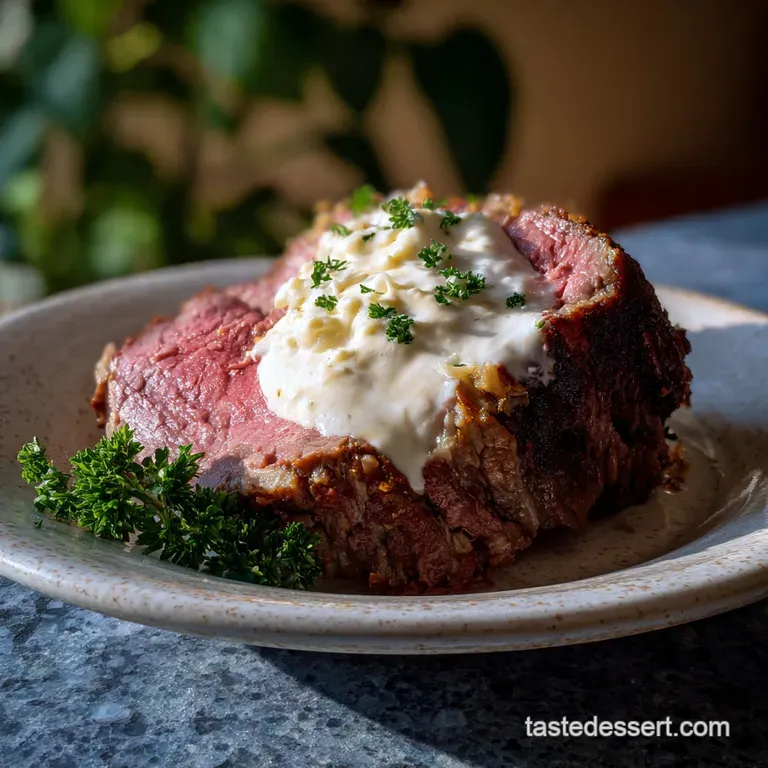
- Effort/Time: 10 minutes (no-cook)
- Flavor Hook: Piercing heat tempered by cooling, silky cream
- Perfect for: Holiday roasts and leftover-style sandwiches
- Mastering the Ultimate Horseradish Sauce for Prime Rib
- The Science of Cold Emulsions and Pungency
- Yield and Precision Metrics for Success
- Curating Components for the Perfect Horseradish Sauce for Prime Rib
- The Tool Kit: Achieving a Velvety Texture
- Step-by-Step Architecture for Flavor Integration
- Why Your Sauce Breaks: Troubleshooting the Texture
- Flexible Flavor Profiles: Adjusting This Horseradish Sauce for Prime Rib
- ⚗️ The Scaling Lab: The Physics of Quantity
- Storage Protocols for Maintaining Volatile Aromatics
- Pairing Logic for the Ultimate Holiday Roast
- Recipe FAQs
- 📝 Recipe Card
Picture the scene: you have spent hours nurturing a majestic, mahogany crusted holiday roast, only to serve it with a thin, watery, flavorless condiment that slides right off the plate. I have been there, watching a hundred dollar centerpiece lose its luster because I neglected the science of the side.
A weak sauce is a quiet tragedy that masks the joy of a perfectly executed meal, turning a celebration into a chore.
I once thought more heat was the only answer, so I added half a jar of horseradish without draining the brine, resulting in a separated, curdled mess that tasted like vinegar and regret.
It took me years of experimenting with fat-to-acid ratios to realize that the art of this creation lies in the emulsion stability, not just the raw power of the root. We aren't just mixing; we are building a structural bridge between the cooling fats and the aggressive aromatics.
The secret to this horseradish sauce for prime rib isn't just the ingredients; it’s the cold bloom process that allows the volatile oils to bond with the lipid molecules in the sour cream.
This chemical marriage ensures the heat lingers on the palate without overwhelming the delicate nature of your main dish. When you see that velvety ribbons of sauce holding their shape against a warm slice of roast, you’ll understand the transformation that happens when physics meets flavor.
Mastering the Ultimate Horseradish Sauce for Prime Rib
Getting the perfect horseradish sauce for prime rib requires understanding the moisture balance of your base ingredients. Most commercial sauces fail because they rely on shelf stable gums rather than a true dairy emulsion.
By using full fat sour cream and a touch of heavy cream, we create a high viscosity environment that traps the spicy compounds. This ensures the sauce provides a lush, velvety mouthfeel while delivering that iconic, nose tingling punch.
A successful horseradish sauce for prime rib acts as a palate cleanser, using lemon juice and Dijon mustard to slice through the heavy fats of the roast. This creates a sensory contrast that keeps the meal from feeling too heavy, allowing the art of your cooking to shine through in every bite. Whether you are following a BoneIn Rib Roast recipe or a simple weeknight steak, this condiment provides the necessary acidic tension.
The Science of Cold Emulsions and Pungency
Enzymatic Activation: When horseradish is crushed, the enzyme myrosinase converts sinigrin into allyl isothiocyanate, which creates the "heat." Lipid Buffering: High fat dairy molecules coat the tongue, slowing the absorption of volatile oils and preventing the heat from becoming
painful.
Ingredient Chemistry Breakdown
| Ingredient | Chemical/Physical Role (Science) | The Pro Secret (Why This Matters) |
|---|---|---|
| Full fat Sour Cream | Acidic dairy emulsion base | Provides the structural "cling" and cooling lipid barrier |
| Fresh Lemon Juice | Citric acid denatures proteins | Brightens the flavor profile and stabilizes the cream texture |
| Prepared Horseradish | Allyl isothiocyanate release | Delivers the volatile, sinus clearing aroma and heat |
| Dijon Mustard | Natural lecithin emulsifier | Prevents the sauce from separating during the cold bloom phase |
Yield and Precision Metrics for Success
To achieve the best horseradish sauce for prime rib, you must adhere to specific numeric checkpoints. Consistency is the hallmark of a master cook, and even a condiment deserves this level of detail to ensure the joy of the meal is preserved.
- 12 Serving Yield: Based on a standard 2 tablespoon serving size per guest.
- 40°F Chilling Temp: The ideal temperature for the "cold bloom," where flavors integrate without the dairy breaking down.
- 10 Minute Prep: The exact window needed to whisk the ingredients into a stable, velvety state.
Curating Components for the Perfect Horseradish Sauce for Prime Rib
Selecting the right elements is the first step in the art of homemade creation. For this horseradish sauce for prime rib, the quality of your dairy determines the final texture.
- 1 cup Full fat Sour Cream (Daisy Brand): Why this? High fat content ensures a velvety texture that won't run.
- 1/4 cup high-quality Mayonnaise (Hellmann's Real): Why this? Adds egg-yolk lecithin for a more stable, permanent emulsion.
- 1 tbsp Heavy Cream: Why this? Thins the viscosity just enough for a graceful pour.
- 1/2 cup Prepared Horseradish (Extra Hot, well drained): Why this? Draining prevents excess vinegar from breaking the cream emulsion.
- 1 tbsp Dijon Mustard (Grey Poupon): Adds a sharp, tangy depth and acts as a secondary binder.
- 1 tsp Worcestershire Sauce (Lea & Perrins): Provides a hidden layer of umami.
- 1 tbsp Fresh Lemon Juice: The vital acid needed to balance the heavy fats.
- 2 tbsp Fresh Chives (finely minced): Adds a grassy, onion like aroma and visual contrast.
- 1/2 tsp Kosher Salt (Diamond Crystal): Enhances the natural flavors of the dairy.
- 1/4 tsp Coarsely Ground Black Pepper: Adds a subtle, woody heat to the finish.
| Original Ingredient | Substitute | Why It Works |
|---|---|---|
| Sour Cream | Greek Yogurt (Full fat) | Similar tang and thickness; slightly higher protein. |
| Mayonnaise | Avocado Oil Mayo | Provides the same emulsification with a milder fat profile. |
| Chives | Green Onion (Tops only) | Similar color and mild allium flavor. |
| Lemon Juice | Apple Cider Vinegar | Provides necessary acidity; adds a fruity undertone. |
The Tool Kit: Achieving a Velvety Texture
The right tools are essential for the transformation of raw ingredients into a professional grade horseradish sauce for prime rib.
- Stainless Steel Mixing Bowl: Keeps the dairy chilled during the mixing process.
- Fine Mesh Sieve: Vital for draining the horseradish to prevent a watery sauce.
- Silicone Spatula: Ensures you incorporate every drop of the mayonnaise and sour cream.
- Microplane: If you choose to add fresh zest for extra brightness.
Chef's Tip: Freeze your mixing bowl for 10 minutes before starting. A cold bowl prevents the sour cream from warming up and losing its stiff peaks, ensuring your horseradish sauce for prime rib remains thick and luxurious.
step-by-step Architecture for Flavor Integration
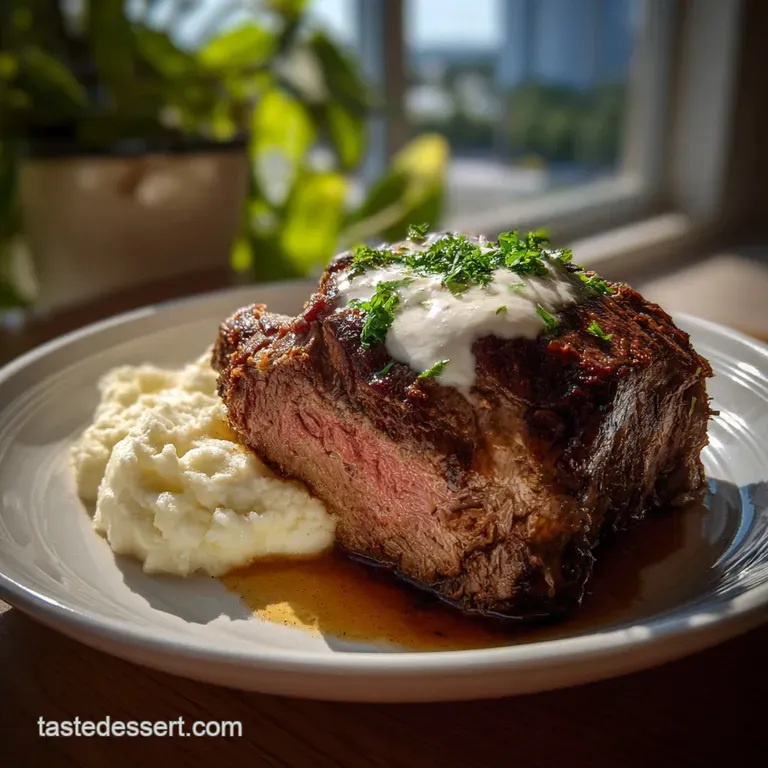
- Drain the 1/2 cup extra hot horseradish in a sieve for 2 minutes until the dripping stops and the pulp feels damp but not soaking. Note: Excess vinegar brine will curdle the sour cream.
- Whisk the 1 cup full fat sour cream and 1/4 cup mayonnaise in a cold bowl until the mixture is velvety and smooth with no visible lumps. Note: This creates your base emulsion.
- Fold in the drained horseradish pulp until the white cream looks speckled and textured.
- Add the 1 tbsp heavy cream slowly until the sauce reaches a thick, ribbons like consistency.
- Incorporate the 1 tbsp Dijon mustard and 1 tsp Worcestershire sauce until the color shifts to a very pale, off-white ivory.
- Squeeze in the 1 tbsp fresh lemon juice until the bright, citrusy aroma cuts through the heavy dairy scent.
- Sprinkle the 1/2 tsp kosher salt and 1/4 tsp black pepper until the seasoning is evenly distributed.
- Stir in the 2 tbsp minced chives until the sauce is dotted with vibrant green flecks.
- Cover with plastic wrap until the seal is airtight to prevent oxidation.
- Chill for at least 1 hour until the flavors have bloomed and the scent is deeply pungent and integrated.
Why Your Sauce Breaks: Troubleshooting the Texture
The Sauce is Too Watery
This usually occurs due to moisture migration. If the horseradish wasn't drained properly, the acetic acid (vinegar) in the brine will begin to break down the protein structures in the sour cream, causing the liquid to "weep."
| Problem | Root Cause | The Fix | Pro Protocol |
|---|---|---|---|
| Thin/Runny Texture | Improper draining or low-fat dairy | Whisk in 1 tbsp extra mayo | Always use "Extra Heavy" mayo for better stability |
| Grainy Mouthfeel | Over mixing the sour cream | Fold gently by hand | Stop mixing as soon as ingredients are combined |
| Weak Flavor | Volatile oils evaporated | Add 1 tsp fresh grated root | Store in a glass container with minimal headspace |
Flexible Flavor Profiles: Adjusting This Horseradish Sauce for Prime Rib
While the classic version is the gold standard, you can modify the horseradish sauce for prime rib to suit different palates. If you are looking for a Ruth Chris Horseradish Sauce Copycat, you might increase the mayonnaise ratio for a silkier finish.
- For a Lighter Touch: Swap half the sour cream for Greek yogurt; the texture will be slightly thinner but the tang will increase.
- The "Ina Garten" Twist: Add a teaspoon of honey to create a sweet and heat contrast that pairs beautifully with herb crusted roasts.
- Maximum Pungency: Use 1/4 cup freshly grated horseradish root alongside the prepared version for a "double kick" effect.
Fresh vs. Shortcut Comparison
| Feature | Freshly Grated Root | Prepared (Jarred) |
|---|---|---|
| Heat Intensity | Extremely High / Instant | Consistent / Managed |
| Texture | Fibrous and Crunchy | Smooth and Uniform |
| Shelf Life | Use within 30 minutes | Lasts 1 2 weeks in fridge |
⚗️ The Scaling Lab: The Physics of Quantity
When doubling this horseradish sauce for prime rib, you must respect the laws of flavor saturation.
- Spices (Salt/Pepper): Scale to 1.5x only. The surface area of the salt crystals interacts differently with larger volumes of dairy; you can always add more later.
- The Evaporation Paradox: Unlike a cooked Au Jus recipe, this cold sauce doesn't lose moisture to evaporation. Doubling the lemon juice can make the sauce far too acidic too quickly.
- Thermal Mass: A double batch of cold cream takes longer to reach "bloom" temperature. Increase your chilling time to 2 hours to ensure the center of the bowl is as flavorful as the edges.
Storage Protocols for Maintaining Volatile Aromatics
Myth: Horseradish gets hotter the longer it sits in the fridge. Truth: The opposite is true; the pungent allyl isothiocyanate is highly volatile and dissipates over time. For the best horseradish sauce for prime rib, consume it within 3 5 days.
- Fridge: Store in an airtight glass jar for up to 1 week. Glass is non-reactive and won't absorb the pungent odors.
- Freezing: DO NOT FREEZE. The emulsion of sour cream and mayo will shatter upon thawing, resulting in a grainy, separated liquid.
- Zero Waste Philosophy: If you have leftover sauce, don't discard it. Transform: Use it as a base for a potato salad dressing or a spread for roast beef sandwiches. Science: The residual acidity and enzymes help tenderize cold proteins.
Pairing Logic for the Ultimate Holiday Roast
The joy of a well made horseradish sauce for prime rib is found in the perfect pairing. This sauce is designed to be a companion to the rich, beefy notes of a high-quality roast.
- The Classic Roast Pairing: Serve a generous dollop alongside a thick slice of medium rare beef. The fat in the meat will mellow the heat of the sauce.
- The Leftover Prime Rib Sandwich: Slather this sauce on a toasted baguette, add thin slices of cold roast beef, and dip into a warm Au Jus recipe for the ultimate transformation of leftovers.
- Decision Shortcut:
- If you want More Kick: Add 1/4 tsp cayenne pepper.
- If you want More Creaminess: Increase heavy cream by 1 tbsp.
- If you want More Freshness: Double the fresh chives.
Every time you bring this horseradish sauce for prime rib to the table, you are sharing the art of the perfect condiment. It is a homemade gift of flavor that brings joy to any holiday gathering, turning a simple dinner into a true celebration of culinary delight. Enjoy the transformation!
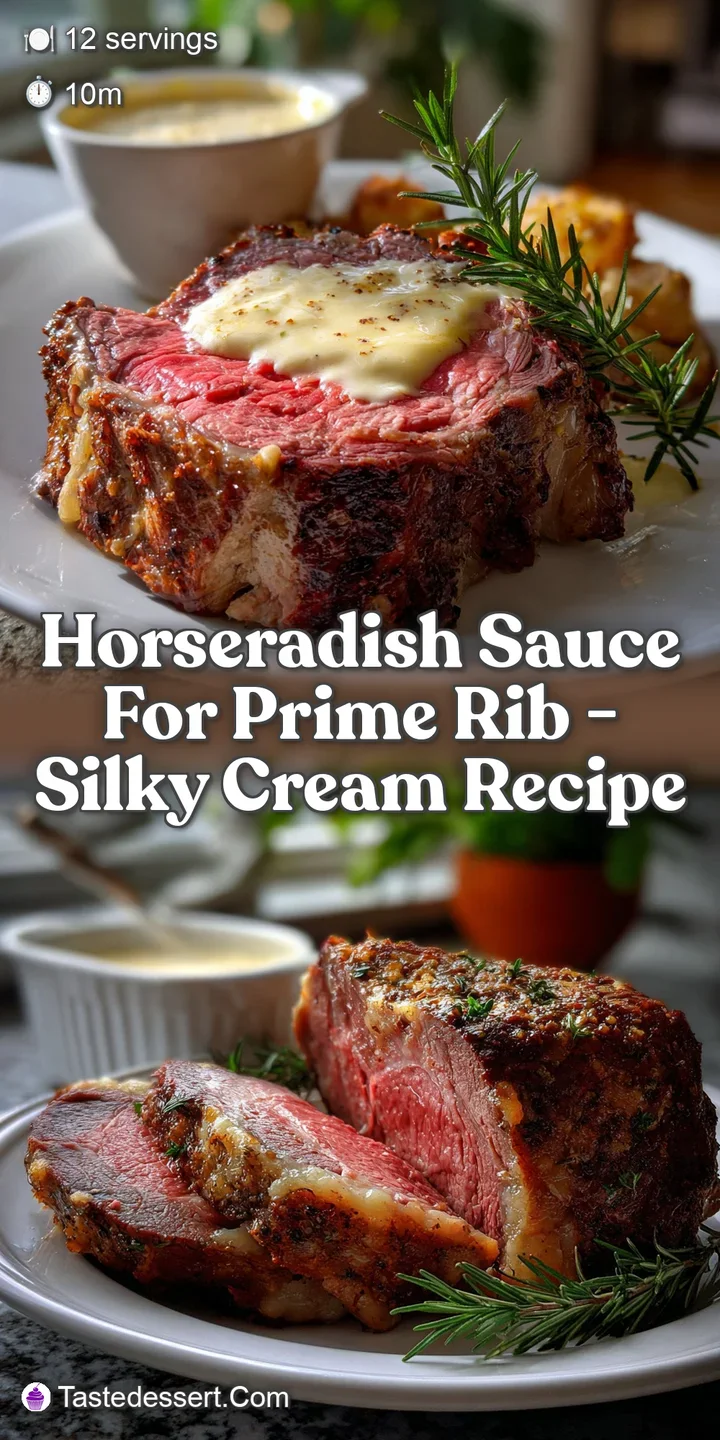
Recipe FAQs
how to make horseradish sauce for prime rib?
Drain horseradish, whisk the dairy base, and chill for cold blooming. This process stabilizes the emulsion, trapping the volatile heat oils in the fat molecules. For similar flavor balancing techniques, see how acid tension is used in our Pork Chops with Mushrooms and Shallots in a Creamy Dijon Sauce.
how to make horseradish sauce for prime rib roast?
Use full fat sour cream and drain the prepared horseradish well. Excess brine (vinegar) breaks the dairy emulsion, causing separation and a watery consistency.
If you enjoyed mastering texture control here, apply the same structural principles when working with doughs in the Blueberry Blackberry Pie: The Traditional Recipe for a Flaky Crust.
how to make horseradish sauce for prime rib without?
Substitute cream with full fat Greek yogurt for a tangier, lighter sauce. This swap introduces more protein but retains the necessary viscosity for a clinging texture. The acidity change is minor and will not significantly alter the initial reaction of the horseradish root.
how to make horseradish dip for prime rib?
Thicken by omitting heavy cream and using only full fat sour cream. A dip requires higher viscosity than a pourable sauce; prioritize a 1:1 ratio of sour cream to mayonnaise. Adding a pinch of dried onion powder enhances the savory depth expected in a true dip.
how to make horseradish cream for prime rib?
Whip the dairy components before folding in the horseradish pulp. Gently whipping the sour cream slightly aerates it, creating a lighter matrix to hold the heat compounds. This mechanical action helps build volume before the volatile oils inhibit the structure.
Can I use fresh horseradish instead of prepared?
Yes, but freshly grated is exponentially hotter and must be used immediately. Fresh root contains high levels of myrosinase, which rapidly converts sinigrin to the pungent allyl isothiocyanate, yielding maximum nose heat.
The intense flavor transfer principle is similar to how fresh herbs elevate a simple meatball, as seen in our Greek Turkey Meatballs: Easy Baked Recipe with Feta and Tzatziki Sauce.
Why is my horseradish sauce splitting or looking grainy?
Cold cheese added to hot liquid causes protein clumping. Temperature shock denatures casein proteins, creating grainy texture instead of smooth emulsion.
- Remove pan from heat first
- Add cheese in small handfuls
- Use fresh grated Gruyère (pre-shredded has cellulose coating)
Creamy Horseradish Sauce Recipe
Ingredients:
Instructions:
Nutrition Facts:
| Calories | 85 kcal |
|---|---|
| Protein | 0.8 g |
| Fat | 8.3 g |
| Carbs | 2.2 g |
| Fiber | 0.4 g |
| Sugar | 0.9 g |
| Sodium | 145 mg |
