The Perfect Charcuterie Board Setup
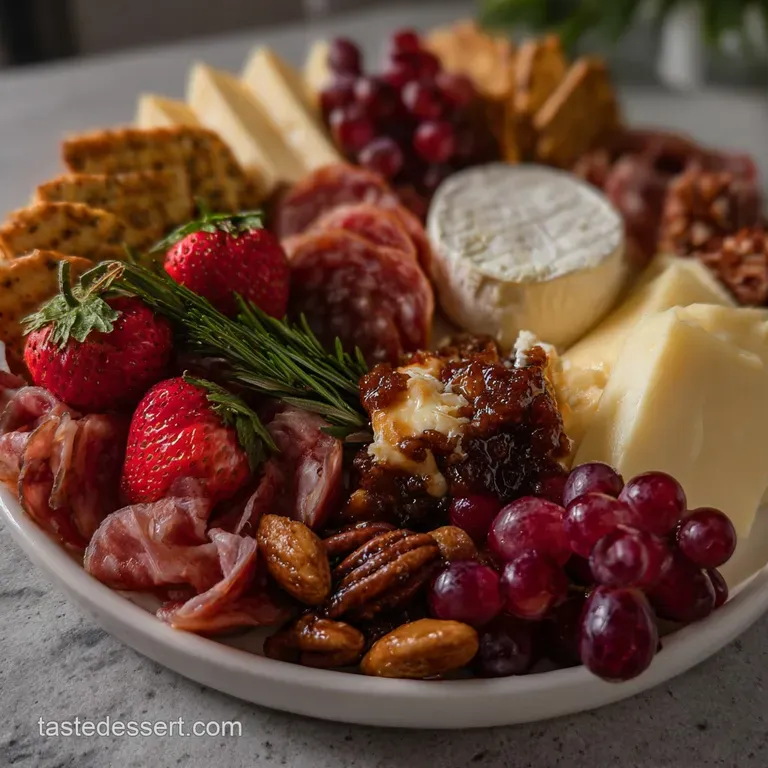
- Effort/Time: 30 minutes of assembly; zero cooking required.
- Flavor Hook: Velvet-soft triple cream brie against the sharp, salty snap of aged cheddar.
- Perfect for: Low-stress holiday hosting and high-impact social gatherings.
- The Anatomy of Flavor: Why This Texture-First Method Succeeds
- Dimensional Planning: Yield and Timing Logistics
- The Alchemy of Umami: Selecting Structural Elements
- Technical Armament: Tools for Precision Presentation
- The Assembly Protocol: Constructing the Perfect Palate
- Solving Structural Failure: Troubleshooting Thermal Instability
- Flexibility and Swaps: Adapting to Global Flavor Profiles
- Maintaining Integrity: Storage and Zero-Waste Systems
- Enhancing the Experience: Curation and Pairing Dynamics
- Recipe FAQs
- 📝 Recipe Card
There is nothing more gut-wrenching than dropping $150 on artisan meats and cheeses only to have them sit untouched because they look like a limp pile of deli cuts. I’ve hosted parties where the expensive Roquefort ended up looking like a gray puddle because I didn't understand thermal mass, and the prosciutto was so tangled guests needed a hacksaw to get a slice.
That financial sting taught me that a great charcuterie board isn't about the price tag it’s about the structural engineering of flavor.
I used to think "more is better," piling everything into a mountain that inevitably collapsed. One New Year’s Eve, I spent an hour painstakingly rolling salami, only for the oils to oxidize and the meat to turn a dull, unappetizing brown before the first guest even arrived.
I learned the hard way that the physics of fat and the chemistry of air exposure are just as important as the ingredients themselves when crafting a perfect charcuterie board.
The secret to a world class charcuterie board is the "acid fat ratio." When you pair 7 oz of Triple Cream Brie which is essentially a solidified emulsion of butterfat with the acetic acid in cornichons or the malic acid in grapes, you trigger a chemical reset on your tongue.
This prevents "palate fatigue," ensuring that the tenth bite of Genoa Salami tastes just as vibrant and savory as the first. We aren't just making a snack; we are building a flavor machine on this charcuterie board.
The Anatomy of Flavor: Why This Texture First Method Succeeds
A successful charcuterie board works because it exploits the variety of microbial activity found in fermented foods. By combining cured meats with aged cheeses, you create a spectrum of glutamates that maximize umami perception.
Building this charcuterie board properly is key to success.
- Lipid Coating and Acid Cut: High fat items like Mortadella coat the tongue in lipids, which is then "cleansed" by the high acidity of 1 tbsp Whole grain Dijon mustard or pickled onions.
- Osmotic Pressure in Cured Meats: The 4 oz Prosciutto di Parma undergoes long term salt curing, which draws out moisture and concentrates flavor through osmosis, creating a dense, savory profile for your charcuterie board.
- Textural Contrast Physics: Using both a small Baguette (crusty) and water crackers (shattering) provides different structural bases for soft versus hard cheeses on the platter.
- Aromatic Volatility: Tempering cheeses like the 6 oz Aged White Cheddar to room temperature allows aromatic compounds to vaporize, making the flavor profile 10x more intense than cold from the fridge cheese on the charcuterie board.
Dimensional Planning: Yield and Timing Logistics
| Metric | Value | Technical Note |
|---|---|---|
| Total Prep Time | 30 minutes | Includes slicing, toasting, and assembly of the charcuterie board. |
| Cook Time | 0 minutes | (Unless toasting baguette in a Lodge Cast Iron Skillet). |
| Total Yield | 10 servings | Calculated at approx. 2 oz meat and 2 oz cheese per person on this charcuterie board. |
| Serving Temp | 68°F - 72°F | Ideal range for lipid melting and aroma release. |
The Palate Cleansing Mechanism
The inclusion of 0.5 cup Castelvetrano Olives is not a garnish; it is a functional tool. The brine acts as a surfactant, breaking down the heavy fats from the 4 oz Genoa Salami. This allows the subtle floral notes of the 0.25 cup Honey to become detectable rather than being masked by animal fat on your final charcuterie board.
Microbial Flavor Complexity
The 5 oz Gorgonzola or Roquefort owes its pungent profile to Penicillium roqueforti. As this mold breaks down fats (lipolysis), it creates ketones that provide that signature "blue" bite.
Pairing this with 2 oz Dried Apricots provides a glucose heavy counterpoint that balances the sharp metallic finish of the cheese, completing the overall flavor map of the charcuterie board.
The Alchemy of Umami: Selecting Structural Elements
Choosing ingredients for a charcuterie board requires looking at the moisture content and pH levels of each item. You want a mix of "primary" (filling) and "accent" (high intensity) flavors to keep the eater engaged with this stunning display.
Ingredient Chemistry Breakdown
| Ingredient | Chemical/Physical Role (Science) | The Pro Secret (Why This Matters) |
|---|---|---|
| Triple Cream Brie | High fat emulsion stabilization | Provides a "fatty" baseline that carries fat-soluble flavor compounds from the jam. |
| Prosciutto di Parma | Proteolysis during 12 24 month aging | Breaks proteins into amino acids (glutamate), creating intense umami without bulk. |
| Castelvetrano Olives | Alkaline/Saline balance | The salt suppresses bitterness in the blue cheese, making it taste creamier and sweeter. |
| Honey with Honeycomb | Hygroscopic sweetener | Acts as a humectant to keep nearby cheeses from drying out while adding waxy texture. |
The Cured Meats (Charcuterie)
- 4 oz Prosciutto di Parma, thinly sliced: Why this? Paper thin slicing increases surface area for immediate tongue contact melting.
- 4 oz Genoa Salami, sliced into rounds: A classic fermented sausage providing a tangy, lactic acid finish.
- 3 oz Soppressata or Spicy Capicola: Use Boar's Head Spicy Capicola for a capsaicin kick that stimulates blood flow to the palate.
- 4 oz Mortadella or Hard Salami cubes: Provides a different bite size "geometric" variety to the board's visual landscape.
The Essential Cheeses
- 7 oz Triple Cream Brie: Why this? 75% butterfat content creates a velvety mouthfeel that coats the tongue.
- 6 oz Aged White Cheddar or Manchego: Look for Kerrygold Aged Cheddar for those crunchy calcium lactate crystals.
- 5 oz Gorgonzola or Roquefort: The high moisture and mold content offer a creamy yet sharp contrast.
- 4 oz Goat Cheese log: Provides a bright, citric tang that lightens the heavier, aged elements.
Accompaniments and Crunch
- 1 cup Red and Green Grapes: Essential for "burst" hydration between salty meat slices.
- 0.5 cup Marcona Almonds or Walnuts: Why this? High oil content provides a "nutty" bridge between the cheese and meat.
- 0.5 cup Castelvetrano Olives: These are the "butter" of olives low salt, high fat.
- 0.25 cup Cornichons or Pickled Onions: The sharp vinegar snap is the most important palate cleanser on the board.
- 2 oz Dried Apricots or Figs: Concentrated fructose to pair with the salt heavy meats.
- 0.25 cup Honey with a honeycomb chunk: The wax adds an incredible chewy texture to the soft cheeses.
- 0.25 cup Fig jam or Apricot preserves: A thick, pectine rich spread that clings to the baguette.
- 1 tbsp Whole grain Dijon mustard: The mustard seeds provide "pop" and a heat that clears the sinuses.
- 1 small Baguette, sliced and toasted: Use a Williams Sonoma Serrated Knife for clean, non-squashed slices.
- 4 oz Assorted water crackers: Neutral pH to let the cheese flavor shine.
- 4 oz Fruit and nut crisps: Provides a secondary, more complex "shatter" than standard crackers.
Technical Armament: Tools for Precision Presentation
Building a charcuterie board is a construction project. Using the right tools prevents cross contamination of flavors and ensures the structural integrity of your meat "rivers" and cheese "towers." Mastering the toolset elevates any charcuterie board.
- Large Wooden Board (18 24 inches): I recommend a John Boos & Co. Walnut Block. Wood is naturally antimicrobial and won't dull your cheese knives.
- Cheese Knife Set: You need a "spade" for hard cheddar, a "wire" or "perforated" knife for sticky brie, and a "fork" for crumbling the blue.
- Small Ramekins: Essential for containing liquids like 0.25 cup Honey and 0.5 cup Castelvetrano Olives to prevent "cracker sogginess."
- Mini Tongs or Toothpicks: Prevents guests from using their hands, which introduces unwanted heat and bacteria to the cold cuts.
- Lodge Cast Iron Skillet: For toasting the baguette slices. The high thermal mass of cast iron ensures an even, golden brown Maillard reaction.
The Assembly Protocol: Constructing the Perfect Palate
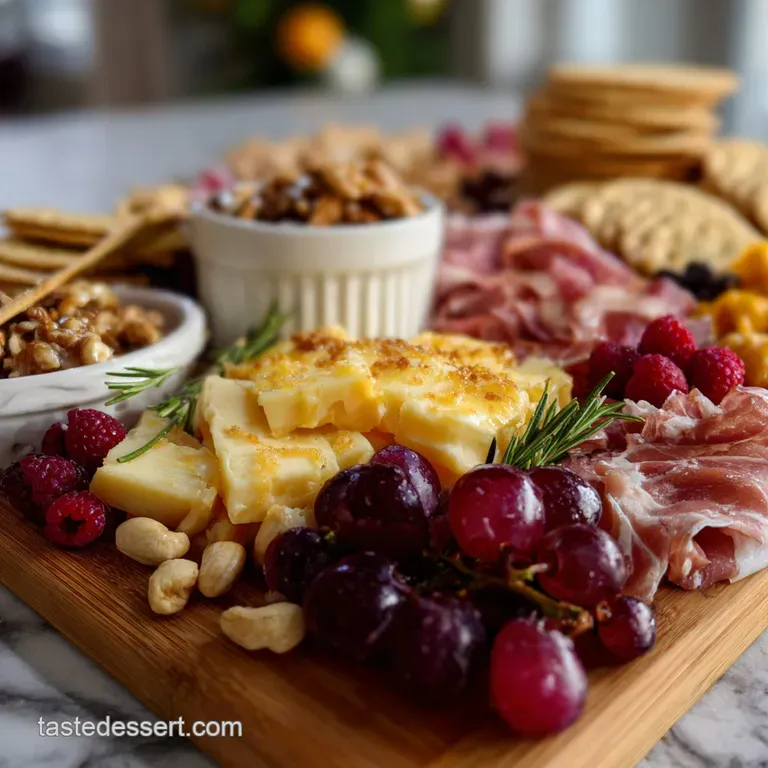
Follow this specific sequence to ensure the charcuterie board looks professionally styled. We start with the largest items (the "anchors") and finish with the smallest (the "filler").
- Temper the dairy. Remove the 7 oz Triple Cream Brie and other cheeses from the fridge 60 minutes before serving until they reach 70°F and feel slightly soft to the touch.
- Toast the bread. Slice the small Baguette into 1/2 inch rounds and toast in a Lodge Cast Iron Skillet for 2 minutes per side until edges are mahogany brown and centers are crisp.
- Anchor with ramekins. Place the 0.25 cup Fig jam, 0.25 cup Honey, and 1 tbsp Whole grain Dijon mustard in small bowls and position them in a triangle across the board until the layout feels balanced.
- Position the "Anchor" cheeses. Place the Brie and Aged Cheddar on opposite ends until they create visual weight and stability.
- Construct meat "rivers". Fold the 4 oz Prosciutto di Parma into "ribbons" and snake them across the board until they form a flowing line between the cheese anchors.
- Fan the Salami. Salami should be fanned out or "shingled" in a curve until the rounds overlap slightly, revealing the marbled fat.
- Cluster the fruit. Place the 1 cup Grapes in two separate bunches until they provide a vibrant color pop against the neutral meats.
- Add the briny elements. Fill gaps with 0.5 cup Castelvetrano Olives and 0.25 cup Cornichons until no large areas of the board surface are visible.
- Sprinkle the crunch. Scatter 0.5 cup Marcona Almonds into the tiny remaining crevices until the board looks "abundant" and overflowing.
- Tuck the crackers. Slide the 4 oz Fruit and nut crisps and water crackers into the edges until they are easily accessible without toppling the meat.
Chef's Tip: To make "Salami Roses," fold four slices of salami over the rim of a wine glass, overlapping them. Invert the glass onto the board. This creates a vertical element that adds height and prevents the board from looking flat.
This vertical technique is crucial for a high impact charcuterie board.
Solving Structural Failure: Troubleshooting Thermal Instability
The biggest enemy of a charcuterie board is room temperature over time. You must manage the "sweat" factor and the "oxidization" of the cured meats. A well made charcuterie board should last several hours looking fresh.
Why Your Cheese "Sweats"
When cheese is moved from a 38°F fridge to a 72°F room, moisture in the air condenses on the surface. Plus,, at room temperature, the milk fats (lipids) begin to liquify and seep out. This isn't spoilage, but it ruins the texture.
If this happens, lightly pat the cheese with a paper towel and ensure it isn't sitting directly under a warm light or in the sun.
| Problem | Root Cause | The Fix | Pro Protocol |
|---|---|---|---|
| Salami edges curling/turning gray | Oxidation and dehydration | Cover tightly with parchment until 5 mins before serving. | Brush lightly with a tiny amount of olive oil to seal moisture. |
| Brie becoming a "puddle" | Over tempering or too high fat content | Chill for 10 mins if the center becomes liquid. | Use a "rind-on" Brie to provide structural containment. |
| Soggy Crackers | Osmotic migration from fruit/pickles | Move wet items into ramekins immediately. | Place a "buffer" of nuts between the grapes and the crackers. |
Flexibility and Swaps: Adapting to Global Flavor Profiles
A charcuterie board is a living document. You can easily adapt the flavor profile while maintaining the necessary ratios of fat, acid, and salt. If you’re looking for a different seasonal vibe, you might enjoy our Thanksgiving Fruit Board recipe for a lighter, produce forward approach, though the meat components are key to the classic charcuterie board.
| Original Ingredient | Substitute | Why It Works |
|---|---|---|
| Prosciutto di Parma | Serrano Ham | Similar dry-curing process but with a slightly nuttier, less sweet profile. |
| Triple Cream Brie | Camembert | Stronger earthy/mushroom aroma; similar melting point. Note: Stronger flavor profile. |
| Cornichons | Pickled Jalapeños | Provides the necessary vinegar acid but adds a capsaicin heat. |
| Fig Jam | Quince Paste (Membrillo) | High pectin content provides a firm, sliceable fruit texture. |
Charcuterie Board Christmas Edition
For a charcuterie board christmas theme, swap the green grapes for fresh rosemary sprigs and pomegranate seeds. The red and green contrast instantly makes the board festive without changing the flavor mechanics. If you want to lean even further into the holiday spirit, check out our Christmas Dessert Board recipe for a sweet alternative.
dairy-free and Vegan Swaps
You can achieve a similar "Masterclass" level by using cashew based fermented "cheeses." Look for brands like Miyoko’s Creamery. These use the same fermentation science as dairy cheese to create the lactic acid tang required for a balanced charcuterie board.
Even vegan versions rely on balancing acids and fats, just like this traditional charcuterie board.
Maintaining Integrity: Storage and Zero Waste Systems
Proper storage is the difference between a great leftovers sandwich and a wasted $50 grocery bill. Never store the board "as is" in the fridge; the moisture from the grapes will ruin the meat, and the cheese will absorb the smell of the onions.
- Fridge: Store meats and cheeses in separate airtight containers. Hard cheeses (Cheddar) last 3 4 weeks; soft cheeses (Brie) last 5 7 days once cut.
- Freezing: Do NOT freeze the cheese. It destroys the protein fat emulsion, resulting in a crumbly, grainy texture upon thawing.
- Reheating: Toasts can be revived in a 350°F oven for 3 minutes to regain their "shatter."
💡 ZERO WASTE PHILOSOPHY
Don't discard the cheese rinds or meat scraps. Transform: Collect the rinds of the Aged Cheddar or Manchego. Science: These rinds are concentrated blocks of umami and salt. Toss them into a simmering vegetable soup or risotto.
The heat releases the trapped glutamates, creating a silky mouthfeel and deep savory flavor without adding extra fat to your next charcuterie board.
Enhancing the Experience: Curation and Pairing Dynamics
The charcuterie board experience is completed by the beverage pairing. You need high acid drinks to mirror the role of the cornichons. A dry Prosecco or a sharp Sauvignon Blanc works perfectly because the carbonation/acidity cuts right through the lipid coating left by the 4 oz Mortadella.
For a family friendly layout, consider the 7 Heartwarming Tips recipe to make the presentation more approachable for kids.
Perfect Wine Pairings
- Sparkling Wine (Champagne/Cava): The "scrubbing bubbles" and high acidity are the ultimate palate cleansers for triple cream brie.
- Off-Dry Riesling: The slight residual sugar pairs beautifully with the spicy capicola and salty blue cheese.
- Light Red (Pinot Noir): Low tannins mean it won't clash with the salt in the prosciutto, while the red fruit notes complement the fig jam.
Common Myths
- Myth: You must leave the rind on the board for all guests.
- Truth: While edible, some rinds (like the wax on certain cheddars) are purely protective. Only keep the "bloomy" rinds (Brie) or "washed" rinds for consumption.
- Myth: Charcuterie should be served ice-cold.
- Truth: Cold temperatures lock in fats. To truly taste a charcuterie board, it must sit at room temperature for at least 30 minutes to allow the volatile aromatic compounds to release.
As you assemble your charcuterie board, remember the principle of abundance and flow. Use the 4 oz Assorted water crackers as the foundation, and don't be afraid to let ingredients touch.
The "marriage" of a little honey dripping onto a slice of salami is exactly what makes this style of eating so legendary. Get creative, keep the acid high, and watch the charcuterie board disappear. Let's crack on with your next stunning charcuterie board!
Recipe FAQs
how to make charcuterie board?
Follow the anchor river-cluster sequence: anchor cheeses first, create meat rivers, then cluster fruit and nuts into the gaps. This structure ensures visual flow and balanced flavor ratios.
how to make charcuterie board roses?
Fold four salami slices over a wine glass rim, then invert. This method uses geometric folding to create height and prevent flat presentation across the platter.
how to make charcuterie board flowers?
Salami roses are the standard "flower" presentation. They are made by folding rounds over a glass; this vertical element adds necessary dimension to the otherwise flat platter.
how to make charcuterie board from wood?
Use large, food safe walnut or maple boards. Wood is naturally antimicrobial and provides the perfect organic surface to contrast with the vibrant colors of the ingredients.
how to make charcuterie board easy?
Use ramekins for all wet items like honey and pickles. This contains liquids, preventing cracker sogginess and allowing for quick, strategic placement of anchors.
What temperature should cheese be before serving?
Serve cheeses between 68°F and 72°F for optimal flavor. Cold temperatures suppress volatile aromatic compounds, locking flavor away until the lipids soften slightly.
Myth: Charcuterie boards must be served immediately after assembly.
Myth: Charcuterie must be served immediately after assembly. USDA guidelines recommend that perishable items like meat and soft cheese not sit out for more than two hours; temper cheeses 30 minutes prior.
- Remove soft cheese 60 minutes out
- Avoid direct sunlight or heat lamps
- Keep brined items (olives) segregated in bowls
Easy Charcuterie Board Assembly
Ingredients:
Instructions:
Nutrition Facts:
| Calories | 636 kcal |
|---|---|
| Protein | 27 g |
| Fat | 35 g |
| Carbs | 51 g |
| Fiber | 4 g |
| Sugar | 21 g |
| Sodium | 1480 mg |
