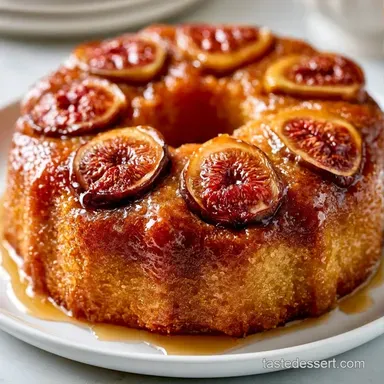
Caramelized Fig Upside Down Cake

- Time:15 minutes active + 45 minutes baking
- Flavor/Texture Hook: Caramelized, jammy fruit atop a fluffy, buttery sponge
- Perfect for: A nostalgic autumn dinner party or Sunday brunch
I can practically taste the rhythmic bubbling of brown sugar and butter in a cast iron skillet. That aroma transports me immediately to my grandmother's kitchen, where the air always felt thick with the scent of warm fruit and toasted sugar.
She always insisted that the flip was the most critical moment of all, a second of pure tension where you hold your breath and hope the fruit stays put.
You don't need a costly springform pan to achieve a professional result. In fact, a heavy cast iron skillet is superior because it distributes heat more evenly, ensuring the caramel doesn't scorch while the cake rises.
After years of adjusting the fruit-to-batter proportions, I've discovered that overcrowding the figs leads to a gummy texture.
This Fig Upside Down Cake is all about the contrast between a sticky, mahogany-colored fruit layer and a light, airy cake. While it isn't an overly complex bake, it requires patience during the cooling process. If you rush the flip, you risk leaving half of your dessert stuck to the bottom of the pan.
Fig Upside Down Cake Details
This recipe focuses on a plan based execution to make sure the fruit caramelizes without the cake becoming dense. The flow is simple: we build the fruit foundation first, then layer a fluffy sponge over the top, and finish with a timed rest before the flip.
If you're planning your day, remember that the prep is quick, but the "rest" period is non negotiable. You can't just pull it out of the oven and flip it immediately, or the caramel will be too fluid and run everywhere. Give it those 10 minutes to set.
- 1. The Base (10 mins)
- Melting the butter and arranging the figs.
- 2. The Batter (10 mins)
- Creaming the butter and folding in the dry ingredients.
- 3. The Bake & Set (55 mins)
- 45 minutes in the oven and 10 minutes of resting.
What You'll Need
The quality of your figs makes or breaks this dish. I prefer the Black Mission variety because they hold their shape better under heat. If you can't find them, Brown Turkey figs work too, though they are slightly milder.
Many people ask if they can use dried figs. While possible, the texture is entirely different. Dried figs are chewier and more concentrated, whereas fresh figs melt into a jammy consistency.
| Ingredient Type | Fresh Figs | Dried Figs |
|---|---|---|
| Texture | Jammy and soft | Chewy and dense |
| Flavor | Bright, honey like | Intense, raisin like |
| Prep | Halved and placed | Must be rehydrated |
For the batter, buttermilk is a non negotiable. The acidity reacts with the baking powder to create a lift that regular milk just can't provide. This ensures your Fig Upside Down Cake doesn't turn into a heavy brick.
Equipment Needed
While you don't need a fancy kitchen, certain tools simplify the process. I prefer a 10-inch cast iron skillet because its high thermal mass distributes heat evenly, preventing those frustrating cold spots where sugar fails to melt.
To spread the batter, an offset spatula is ideal. Because you are pouring the cake over a layer of fruit, you need to nudge the batter into every crevice without shifting the figs. Using a standard spoon often results in unwanted air pockets.
Lastly, prepare a cake stand or plate that is a bit larger than the skillet. You will be inverting the cake onto this surface, so it needs to be steady enough to catch any caramel that spills over during the flip.
Bringing It Together
Phase 1: Creating the Fig Foundation
Place 1/2 cup unsalted butter in a cast iron skillet over medium heat until melted. Mix in 3/4 cup packed brown sugar and 2 tbsp honey, stirring continuously until the mixture begins to bubble and develops a toasted marshmallow aroma.
Take the skillet off the heat. Arrange 1 lb of fresh fig halves cut side down, forming a snug, concentric circle. Gently press each piece into the caramel. Note: Packing them closely ensures the figs stay in place while baking.
Evenly drizzle 1 tsp lemon juice across the fruit. This touch of acidity balances the sugar and keeps the figs tasting bright.
Phase 2: Mixing the Batter
Combine 1 1/2 cups all purpose flour, 1 1/2 tsp baking powder, and 1/4 tsp salt in a medium bowl using a whisk.
In a larger bowl, cream 1/2 cup softened unsalted butter with 3/4 cup granulated sugar on high speed. Continue for roughly 3 minutes until the texture is light and airy.
Incorporate 2 large eggs individually, mixing thoroughly after each addition. Stir in 1 tsp vanilla extract.
Reduce the mixer to low. Mix in one third of the dry ingredients, followed by half of the 1/2 cup buttermilk. Repeat this sequence, finishing with the remaining flour. Blend until just combined. Note: Avoid overmixing to prevent the cake from becoming tough or bready.
Phase 3: The Bake and The Flip
Pour the batter over the figs, smoothing it out to the edges with an offset spatula.
Bake at 350°F (175°C) for 35–45 minutes. The cake is ready once a tester inserted in the center comes out clear and the sides start to shrink from the pan.
Allow the cake to cool in the pan for exactly 10 minutes. This timing is essential.
Set a cake plate upside down over the skillet and flip it in one quick motion. Gently lift the pan so the caramel glaze drips over the fruit.
Troubleshooting Guide

Flipping the cake is often the most nerve-wracking part of the process. If it feels stuck, resist the urge to pry it loose with a knife. It is likely that the caramel simply cooled too quickly and bonded the cake to the pan.
Fruit texture can also be a challenge. Excessive moisture in the figs can result in a soggy layer between the cake and the fruit. This typically occurs when using figs that are past their prime or if the cake wasn't allowed to rest long enough for the structure to firm up.
Fixing a Stuck Cake
If the cake won't slide out easily, return the skillet to the stove over low heat for 30-60 seconds. This will melt the caramel just enough to release its grip.
Avoiding Soggy Fruit
Make sure to pat your figs dry before adding them to the skillet. Additionally, do not add any extra syrup or liquid to the base beyond what is called for in the recipe.
Handling an Underbaked Center
If the edges are brown but the middle still wobbles, loosely cover the top with foil and bake for another 5 minutes. This prevents the top from burning while the center finishes cooking.
| Problem | Fix |
|---|---|
| Cake stuck to pan | Warm pan on low for 60 seconds |
| Sogginess at the base | Pat figs dry; follow 10 min rest |
| Center is underbaked | Tent with foil and bake 5 mins more |
Dietary Adaptations
Want a different twist? You can easily adjust the flavor profile. For a Fig and Honey Upside Down Cake, simply increase the honey to 3 tbsp and use a light honey-infused sugar instead of brown sugar.
To make this recipe gluten-free, use a 1:1 GF baking flour instead of all-purpose flour. Since gluten-free flours tend to be more absorbent, I recommend adding an extra tablespoon of buttermilk to ensure the crumb stays moist. For the most consistent results, weighing your ingredients is best; the King Arthur Baking ingredient weight chart is a fantastic tool for getting those GF ratios exactly right.
For a vegan version, use a high-quality vegan butter stick and replace each egg with a flax egg (1 tbsp ground flax mixed with 3 tbsp water per egg). You can substitute the buttermilk with a blend of soy milk and a splash of apple cider vinegar.
If you enjoy fruit-centric sweets, this pairs wonderfully with a classic peach dump cake for a diverse dessert spread.
Quick Decision Shortcuts:
- Extra tang? → fold in 1 tsp lemon zest
- Deeper flavor? → swap honey for maple syrup
- Nutty notes? → toast the flour for 5 mins before mixing
Preservation Secrets
This cake stays moist longer than most sponges because of the fruit topping. Keep it in a glass container with a lid. It stays fresh on the counter for 2 days, but since it contains buttermilk and fruit, I prefer keeping it in the fridge for up to 4 days.
When you're ready to eat a leftover slice, don't microwave it on high. That turns the sponge rubbery. Instead, pop it in a 300°F (150°C) oven for 5 minutes. This re melts the caramel glaze and brings back that fresh baked aroma.
For freezing, slice the cake first. Wrap each slice individually in parchment paper and then foil. Store them in a freezer safe bag for up to 2 months. Thaw in the fridge overnight before warming.
To avoid waste, if you have a few leftover figs that aren't quite ripe enough for the cake, roast them with a drizzle of honey and serve them over yogurt for breakfast.
How to Serve and Enjoy
The best way to serve Fig Upside Down Cake is while it's still slightly warm. The caramel is glossier, and the cake is at its softest. A dollop of unsweetened whipped cream or a scoop of vanilla bean ice cream provides a cool contrast to the warm, sticky fruit.
If you want something more sophisticated, try a side of creme fraiche. The slight tang of the fermented cream cuts through the richness of the butter and honey, making the whole dish feel lighter.
For those who want a truly decadent experience, this cake is a great companion to a Chocolate Ice Cream Cake recipe when serving a large group. The earthy figs and deep chocolate create a wonderful balance on the palate.
Slice the cake into wedges using a serrated knife. This prevents you from squashing the fluffy sponge while trying to cut through the jammy fig layer.
Why the Batter Works
The key to this recipe is the balance between the heavy caramel and the light cake. By using the creaming method (beating butter and sugar), we incorporate air bubbles that stay trapped in the batter.
Buttermilk Acid: The lactic acid in the buttermilk reacts with the baking powder to create an immediate lift, ensuring the cake is light enough to support the heavy fruit.
Thermal Mass: Using a cast iron skillet means the pan stays hot even after it's removed from the stove, which helps the caramel set properly before the batter is added.
This combination ensures that your Fig Upside Down Cake has a rich, velvety texture without feeling overly dense. It's the difference between a cake that tastes like a pudding and one that tastes like a classic dessert.
Recipe FAQs
Can I bake this cake ahead for guests?
Yes, you can bake the cake in advance and serve it at room temperature.
Tip: Warm individual slices in the oven briefly before serving to soften the caramel.
How do I prepare fresh figs for the pan?
Halve the figs and arrange them cut-side down in a tight, concentric circle.
Tip: Press them gently into the melted butter and sugar to keep them secure.
What frosting pairs best with fig cake?
A light cream cheese frosting or fresh whipped cream balances the rich honey and fig flavors.
Tip: If you enjoyed mastering the creamy texture here, see how the same principle works in our velvety martini.
Is it true that upside-down cakes always stick to the pan?
Not true. Allowing the cake to rest for exactly 10 minutes ensures it releases cleanly from the skillet.
Tip: Use one confident motion when flipping to prevent the fruit from sliding.
Fig Upside Down Cake with Fresh Figs