Juicy Baked Chicken Meatballs: No Dryness Here
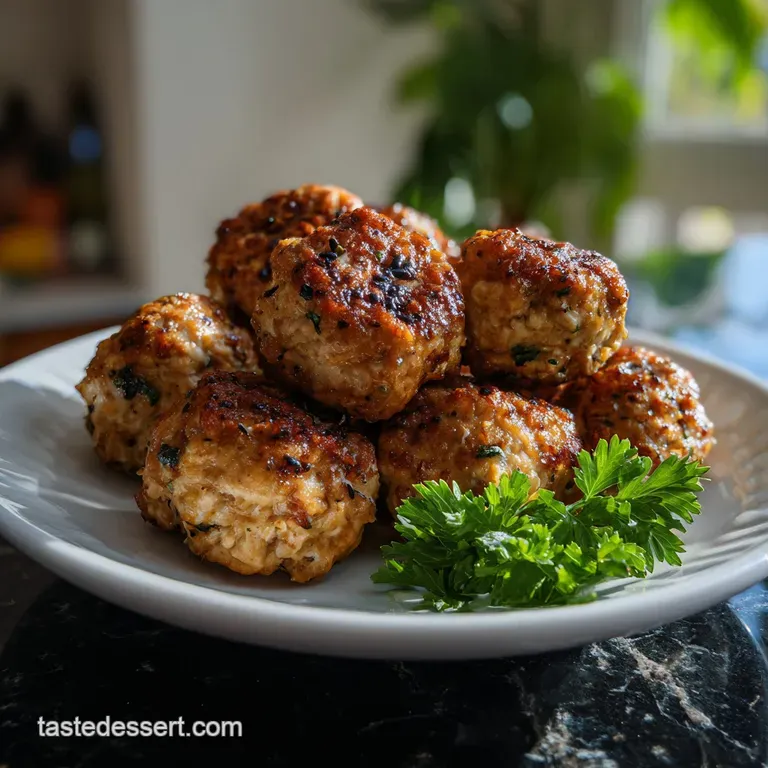
- Effort/Time: 35 minutes total (15 minutes prep).
- Flavor Hook: Sharp Parmesan and fresh parsley provide a bright, savory punch.
- Perfect for: Make-ahead meal prep, family pasta nights, or protein-packed snacks.
- The Ultimate Juicy Baked Chicken Meatballs
- Why This Recipe Works: Flavor Meets Health
- Key Ingredients and Smart Substitutions
- How to Make Baked Chicken Meatballs Step-by-Step
- Pro Tips to Avoid Common Mistakes
- Common Myths
- Storage, Freezing, and Reheating Guidelines
- Creative Serving Suggestions for Every Occasion
- Recipe FAQs
- 📝 Recipe Card
The Ultimate Juicy Baked Chicken Meatballs
Stop settling for rubbery, flavorless spheres that resemble pencil erasers. We have all been there pulling a tray of Chicken Meatballs out of the oven only to find they’ve shrunk into dry, dense nuggets.
I spent months making batches that were either too soggy to hold their shape or so tough they required a steak knife.
The struggle is real because lean ground chicken lacks the fat of beef or pork, which usually provides that velvety mouthfeel. But through a few kitchen experiments and some basic meat science, I discovered the secret is all about the "panade." By soaking 0.5 cup Panko breadcrumbs in 0.25 cup Whole Milk, we create a moisture reservoir that prevents the proteins from bonding too tightly.
Get ready for a sizzle that leads to a tender, juicy interior. This isn't just another Chicken Meatballs recipe; it’s a masterclass in moisture management and flavor extraction. Let's crack on and fix your dinner game forever.
Why This Recipe Works: Flavor Meets Health
Chicken Meatballs often fail because ground poultry is delicate and prone to overcooking. This method solves the structural and textural issues through specific biochemical interactions.
- Capillary Action: The 0.25 cup Whole Milk hydrates the 0.5 cup Panko, creating a gel-like paste that physically blocks meat proteins from knitting into a tough matrix.
- The Maillard Reaction: over High heat baking at 400°F (200°C) triggers amino acid and sugar breakdowns on the surface, creating a complex, savory crust without drying the center.
- Emulsification: The 1 Large Egg acts as a binder, using lecithin to bridge the gap between the lean water based proteins and the added fats from the 0.25 cup Parmesan cheese.
- Salt Induced Tenderness: 1 tsp Kosher Salt begins to dissolve a portion of the meat protein (myosin), allowing the Chicken Meatballs to retain more juice during the thermal transition.
The Science Behind 1 lb Lean Ground Chicken (93% lean)
- What It Does
- Provides the primary protein structure and base flavor for the Chicken Meatballs.
- The Chemistry
- Lean chicken undergoes protein denaturation quickly; as heat increases, the coiled proteins unwind and then coagulate, squeezing out water.
- Why This Matters
- Using 93% lean ensures enough structural integrity for a "bite" while remaining a heart healthy alternative to red meat.
The Science Behind 0.5 cup Panko Breadcrumbs
- What It Does
- Functions as a physical spacer between muscle fibers to prevent a dense, rubbery texture.
- The Chemistry
- The large surface area of Panko allows for maximum starch gelatinization when mixed with the 0.25 cup Whole Milk.
- Why This Matters
- This creates a "tenderizer" effect, ensuring the Chicken Meatballs stay soft even if they spend an extra minute in the oven.
The Science Behind 1 Large Egg
- What It Does
- Acts as the "glue" or secondary binder for the meat and aromatics.
- The Chemistry
- As the egg reaches 145°F, it undergoes coagulation, forming a delicate web that holds the 0.5 tsp onion powder and 3 cloves garlic in place.
- Why This Matters
- It prevents the Chicken Meatballs from crumbling into a meat sauce when you toss them with your favorite pasta.
Key Ingredients and Smart Substitutions
Creating Healthy Chicken Meatballs requires high-quality components. I always reach for Diamond Crystal Kosher Salt because its hollow flakes dissolve faster than table salt, ensuring even seasoning throughout the meat.
For the mixing, a KitchenAid Stainless Steel Bowl is ideal because it stays cold, which keeps the chicken fat from melting before it hits the oven.
| Original Ingredient | Substitute | Why It Works |
|---|---|---|
| 0.5 cup Panko | 0.5 cup Almond Flour | Moisture rich but creates a denser, grain free crumb. |
| 0.25 cup Whole Milk | 0.25 cup Plain Greek Yogurt | Adds acidity that further tenderizes the poultry fibers. |
| 1 lb Ground Chicken | 1 lb Ground Turkey | Similar lean profile. Try my Greek Turkey Meatballs: Easy Baked Recipe with Feta and Tzatziki Sauce for a Mediterranean twist. |
| 1 tsp Dried Oregano | 1 tsp Dried Basil | Maintains the herbal profile with a slightly sweeter, peppery finish. |
How to Make Baked Chicken Meatballs step-by-step
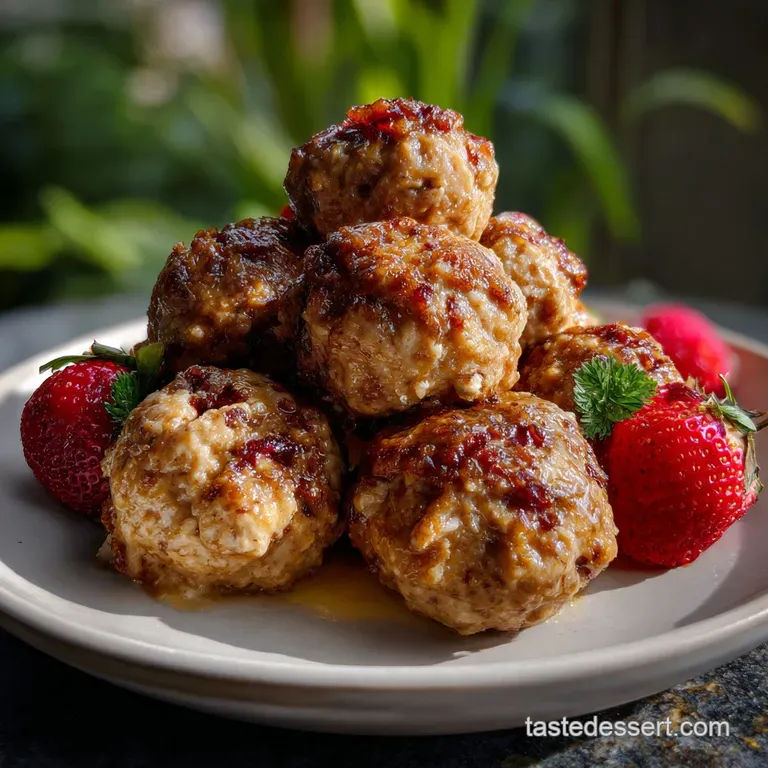
1. Construct the Panade
Whisk 0.25 cup Whole Milk and 1 Large Egg in a large bowl. Note: This hydrates the proteins and prepares the starch in the Panko for maximum moisture absorption.
2. Hydrate the Breadcrumbs
Stir in 0.5 cup Panko breadcrumbs and let sit for 5 minutes. Note: Gelatinization of the starches occurs here, creating the moisture lock barrier.
3. Integrate Aromatics
Fold in 3 cloves minced garlic, 2 tbsp fresh parsley, 1 tsp dried oregano, 1 tsp Kosher salt, 0.5 tsp black pepper, and 0.5 tsp onion powder. Note: Even distribution of salts and spices prevents "hot spots" of seasoning.
4. Combine the Meat
Add 1 lb Lean Ground Chicken (93% lean) and 0.25 cup freshly grated Parmesan cheese. Note: Use a light touch to avoid over working the proteins, which leads to toughness.
5. Shape the Spheres
Dampen your hands and roll the mixture into 1.5 inch balls. Note: Water on the hands prevents the sticky chicken proteins from adhering to your skin.
6. over High heat Baking
Place on a Lodge Cast Iron Baking Sheet and bake at 400°F for 20 minutes. Note: Rapid heat transfer creates the Maillard crust before the interior can overcook.
Pro Tips to Avoid Common Mistakes
Yes, Chicken Meatballs in the oven are simple, but the difference between "okay" and "restaurant quality" is in the technique. If you find your meatballs are sticking, ensure you are using a high-quality parchment paper or a well seasoned cast iron surface.
| Problem | Why It Happens | The Fix | Pro Protocol |
|---|---|---|---|
| Rubbery Texture | Overmixing the meat. | Mix until just combined. | Use a fork or "clawed" hands to keep the mixture aerated. |
| Flat Bottoms | Meat is too wet/soft. | Chill the mixture for 30 minutes. | Use a Nordic Ware Cookie Scoop for perfectly spherical uniformity. |
| Gray Color | Oven temperature too low. | Increase to 400°F+. | Use an oven thermometer to verify a true 400°F for the Maillard reaction. |
Chef's Note: For an unconventional flavor boost, grate 1 tsp of lemon zest into the meat mixture. The citric acid brightens the heavy Parmesan and cuts through the richness of the ground chicken.
Common Myths
Myth: You must brown Chicken Meatballs in a skillet first for flavor. Truth: A 400°F oven provides enough convective heat to trigger the Maillard reaction without the mess of oil splatters.
Myth: Ground chicken is always healthier than beef. Truth: It depends on the blend. 93% lean chicken is excellent, but "Ground Chicken" with skin included can be higher in saturated fat than lean sirloin.
Storage, Freezing, and Reheating Guidelines
Chicken Meatballs are the ultimate meal prep champions. They stay juicy in the fridge for up to 4 days when stored in an airtight container. If you are making a double batch, these freeze beautifully.
- To Freeze: Place cooked and cooled Chicken Meatballs on a tray in the freezer for 1 hour. Once "flash frozen," transfer them to a heavy duty freezer bag. They will stay fresh for 3 months.
- To Reheat: Avoid the microwave if possible, as it can turn the poultry rubbery. Instead, simmer them directly in a sauce, like the one found in my Chicken Parmesan: Our Crispy Classic Recipe for Restaurant Quality.
- From Frozen: You can bake them at 350°F for 15 minutes straight from the freezer no thawing required.
Creative Serving Suggestions for Every Occasion
These Chicken Meatballs are incredibly versatile. While they shine in a classic marinara, don't be afraid to experiment.
- The Comfort Classic: Drop them into a pot of Lemon Chicken Orzo Soup: Classic Avgolemono Style (Velvety Smooth) for a boost of protein.
- The Soup Swap: Use these as a shortcut for the filling in Chicken Pot Pie Soup: Ultra Creamy Comfort Classic (Ready in 1 Hour).
- The Fusion Bowl: Glaze them with a mixture of soy sauce, ginger, and honey, then serve over jasmine rice with steamed bok choy.
- The Low-Carb Option: Serve over zoodles (zucchini noodles) with a heavy drizzle of pesto and extra Parmesan.
Avoiding the Pitfall of Overmixing the Meat
Overmixing is the silent killer of Baked Chicken Meatballs. When you work the meat too much, the proteins cross link so tightly that the texture becomes similar to a commercial hot dog. Use a light, folding motion. Stop the moment you no longer see streaks of raw chicken or clumps of Panko.
How to Use a Thermometer for Juicy Results
The most reliable way to ensure your Chicken Meatballs are safe but juicy is an instant read thermometer like a ThermoWorks Thermapen. Poultry is safe at 165°F (74°C).
Pull the meatballs at 160°F; the "carry over cooking" will bring them to the final temperature while they rest on the counter.
Freezing Instructions for Raw and Cooked Batches
You can freeze these raw, too! Follow the same flash freeze method: roll the balls, freeze on a tray for 2 hours, then bag them. When you're ready to eat, just add 5 8 minutes to the baking time. This is my favorite "emergency dinner" hack for busy weeknights.
Whether you're tossing these into Sour Cream Chicken Enchiladas - The Best Creamy White Sauce Recipe for a weirdly delicious fusion or keeping it simple with pasta, these Chicken Meatballs will be your new go-to. They are light, packed with 21.6 g of protein per serving, and finally actually juicy.
Recipe FAQs
Why do my chicken meatballs often turn out dry?
Dryness results from low-fat content and overcooking. Lean ground chicken contracts severely when internal temperature exceeds 170°F, forcing moisture out. High heat baking traps initial surface moisture before complete denaturation.
- Use a bread panade soaked in milk
- Do not squeeze excess liquid from the bread
- Incorporate a binder like an egg yolk
Can I use frozen ground chicken?
No. Thawing introduces excess liquid that ruins binder stability. Partially thawed meat mixes unevenly, causing some sections to overwork and dry out immediately upon cooking. Ensure all ingredients, including the meat, are fully chilled but not frozen solid.
Is baking better than pan-frying for moisture retention?
Baking provides even, fast heat critical for juiciness. Pan-frying requires lower heat for longer to cook the center, which dries the exterior crust prematurely; baking utilizes high ambient heat to create a quick seal. For an alternative preparation method, see our guide on Panda Express Honey Sesame Chicken Homemade Takeout for speed coating techniques.
What is the safe internal cooking temperature?
165°F (74°C). Always use an instant read thermometer inserted into the center of the thickest meatball. Removing them immediately at this temperature prevents carryover cooking from pushing them past the dryness threshold.
Do I need to use fresh parsley?
Yes. Dried parsley lacks necessary volatile oils. Fresh herbs introduce moisture and a sharp flavor contrast that cuts through the richness of the Parmesan binder. If you prefer a cold preparation, consider using the fresh herbs in our Cluck Yeah Best Homemade Chicken Salads Two Ways.
Can I freeze the raw meatballs before cooking?
Yes. Flash freezing maintains superior texture. Place formed balls on a lined sheet tray and freeze solid before transferring them to a freezer bag. This prevents the exterior from smashing when packed together.
Should I use Panko or regular breadcrumbs?
Panko yields a slightly lighter internal texture. Regular breadcrumbs absorb more liquid from the panade, creating a denser, more compact meatball structure. Both work, but Panko maintains better loft for this lean meat profile.
Juicy Chicken Meatballs Recipe
Ingredients:
Instructions:
Nutrition Facts:
| Calories | 228 kcal |
|---|---|
| Protein | 21.6 g |
| Fat | 11.4 g |
| Carbs | 8.1 g |
| Fiber | 0.6 g |
| Sugar | 1.2 g |
| Sodium | 580 mg |
