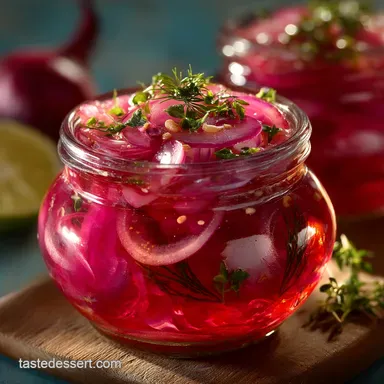
Quick Pickled Red Onions the Foolproof Chefs Blueprint
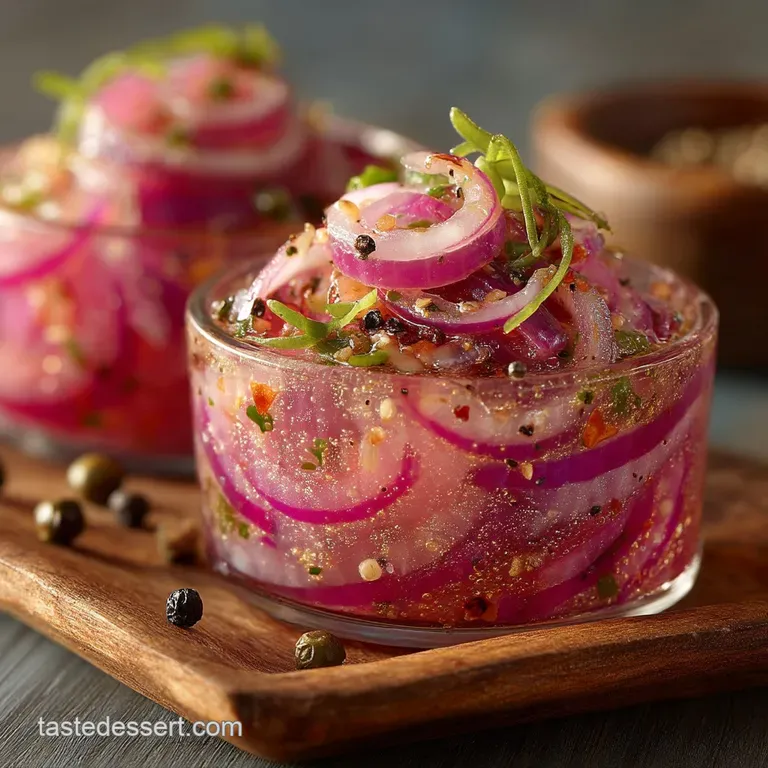
Why Every Kitchen Needs the Magic of Quick Pickling
In the world of home cooking, true flavor mastery often hinges on contrast. That perfect balance of fat, salt, and acidity is what separates a good dish from a great one. And for delivering that vibrant, sharp acidity, nothing beats a batch of quick pickled red onions .
This simple technique is your fast-track ticket to a professional-level pantry. Once you taste these bright, beautiful homemade quick pickles, you’ll understand why they are the most essential condiment you didn't know you needed.
They act as a palate cleanser and a textural component, ready to elevate everything from weeknight meals to holiday charcuterie boards.
From Zero to Flavor Hero: The 30-Minute Transformation
The beauty of this Pickled red onions recipe lies in its incredible speed. Unlike traditional canning that demands sterilization and long waiting times, the hot-brine method transforms firm, sharp raw onions into soft, tangy jewels in under an hour.
Active preparation requires just 10 minutes, dedicated to slicing the onions and combining the brine components. After a quick 5 minutes of heating the liquid, the real magic happens during the minimum 30-minute rest period.
Pouring the hot liquid over the packed onions ensures they soften and begin to absorb the brine immediately, meaning they are technically edible within that 30-minute window, though their flavor truly blossoms after 24 hours in the refrigerator.
Beyond the Basics: What Makes These Pickled Red Onions Different?
This isn’t the flabby, overly sweet pickle you might find commercially. Our recipe prioritizes tang and brightness. We use a simple 1:1 ratio of vinegar to filtered water, ensuring a robust flavor profile.
While some recipes call for distilled white vinegar, opting for white wine vinegar, or even Pickled red onions apple cider vinegar (ACV), offers a slightly rounder flavor without dulling the stunning pink color of the finished product.
We incorporate only 2 tablespoons of granulated sugar, just enough for balance, not sweetness, making this a low-sugar take that avoids the syrupy quality often associated with quick pickles. The resulting brine is zesty, clean, and perfectly balanced against the pungency of the onion.
Culinary Uses: The Unexpected Dishes That Crave Acidity
The versatility of Pickled Red Onions is immense. They offer a concentrated burst of flavor that cuts through richness in a way few other ingredients can. Unsurprisingly, they are non-negotiable for Pickled red onions for tacos , providing that essential vinegary snap needed for heavy shredded meats or fatty fish.
But think beyond Mexican cuisine. Use these Cebollas encurtidas to upgrade a simple turkey sandwich, sprinkle them over rich pulled pork sliders, or drape them across a slice of creamy avocado toast at brunch.
They also shine brightly when paired with sharp cheddar or creamy brie on a cheese board, offering a professional-level contrast that keeps the palate engaged.
Gathering Your Arsenal: Essential Elements for Zesty Pickling
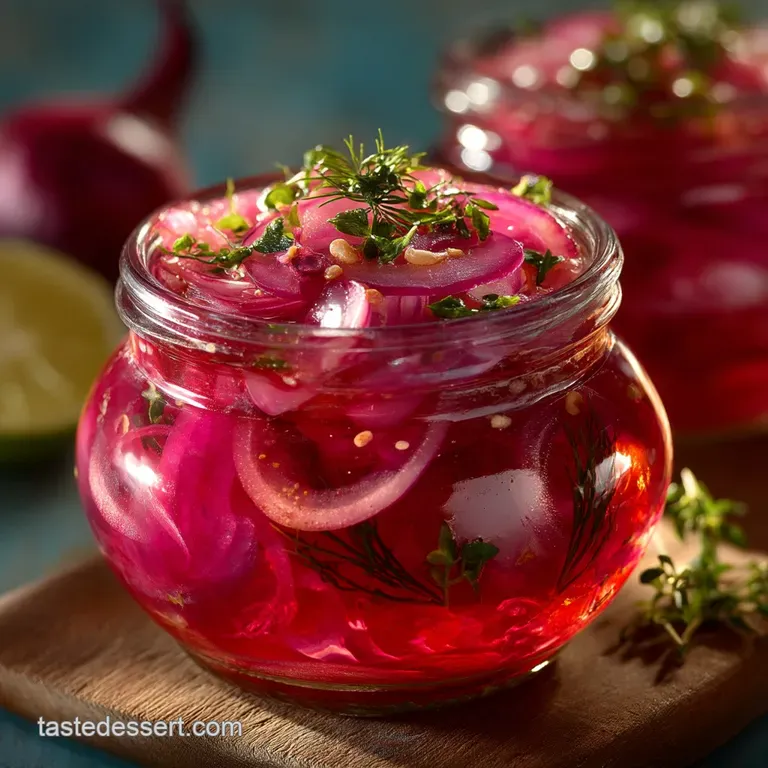
Achieving pickling perfection starts with quality ingredients and the right tools. Because we are relying on a hot, acidic brine, organization is paramount for efficiency and safety.
Selecting the Perfect Onion: Firmness, Size, and Color
For this quick pickle, you will need approximately 400 grams, which usually equates to one large or two medium red onions. When shopping, select onions that are firm and heavy for their size, avoiding any with soft spots or blemishes.
The red color is crucial here; the anthocyanins in the red onion are what react with the acidic brine, transforming the translucent slices into that striking, deep pink hue we crave.
The Brine Breakdown: Balancing Sweetness, Salt, and Tang
The success of the brine depends entirely on using the precise ratios. You’ll need 1 cup (240 ml) of white wine vinegar (or ACV) paired with 1 cup (240 ml) of filtered water. To temper the sharpness and enhance the onion's natural sweetness, incorporate 2 tablespoons of granulated sugar.
Finally, 1 teaspoon of Kosher salt (or fine sea salt) is essential, not just for seasoning, but for drawing out excess moisture from the onion cells, which helps maintain a crisp texture.
For optional aromatic depth, have ready 2 lightly smashed garlic cloves, a small bay leaf, and 1 teaspoon of whole black peppercorns.
Tool Check: Necessary Gear for Safe and Efficient Pickling
To handle the acidic brine safely, use a medium non-reactive saucepan, ideally stainless steel or enamel. Acidic liquids can react with aluminum, causing discoloration and leaching. For the onions themselves, a sharp chef’s knife is sufficient, but a mandoline slicer is highly recommended.
It ensures the uniform 1/8 inch (3mm) slices needed for consistent texture and pickling speed. Finally,, you’ll need one standard 1-pint (500 ml) Mason jar with a tight-fitting lid, which should ideally be sterilized before use to maximise the storage life of your homemade quick pickles .
Related Recipes Worth Trying
- Crispy Seared Salmon Avocado Salad with Zesty LemonDill Vinaigrette — This easy Salmon Avocado Salad recipe delivers crispy skin and creamy avocado in under 25 minutes Its packed with healthy nutrition and the zesty dill...
- 20Min Charred Corn Tomato Avocado Salad The Best Summer Side — This easy Corn Tomato Avocado Salad is the ultimate summer side We char the corn for smoky depth then toss it in a zesty honey lime dressing Ready in 20 mins
- Easy White Chocolate Covered Pretzel Cookies Recipe — These White Chocolate Covered Pretzel Cookies blend salty crunch with buttery shortbreadthe perfect Salty Sweet Cookies for any occasion Get the simple recipe
Step-by-step Guide: Mastering the Quick Pickling Process
This process is broken down into simple stages, ensuring a flawless result every time.
Prepping the Produce: Achieving the Ideal Thin Slices
Begin by peeling and slicing your red onions as thinly and uniformly as possible, the target thickness is 1/8 inch (3mm). Thin slices are crucial because they ensure the onions soften quickly and saturate fully with the brine. Once sliced, tightly pack the onions into the sterilized Mason jar.
Don't be afraid to press them down firmly; they will shrink dramatically once the hot liquid is added. If you are using the optional flavor boosters, nestle the smashed garlic, bay leaf, and whole peppercorns amongst the packed onions.
Building the Brine: Heating and Dissolving Techniques
In your non-reactive saucepan, combine the 1 cup of filtered water and 1 cup of vinegar. Stir in the 2 tablespoons of granulated sugar and 1 teaspoon of Kosher salt. Place the pan over medium-high heat, stirring constantly until both the sugar and the salt are completely dissolved into the liquid.
It is vital to heat the brine thoroughly until it just begins to bubble around the edges, but avoid letting it come to a rolling boil for an extended period.
The Soaking Stage: Submerging and Cooling for Maximum Flavor
Immediately and carefully pour the hot brine mixture over the onions in the jar. The liquid should cover the onions completely; use the back of a spoon to gently press them down to ensure full submersion. If the brine level is slightly low, you can top it off with a final splash of pure vinegar.
Screw the lid on loosely (to allow steam to escape) and let the jar cool completely on the counter until it reaches room temperature, which takes about 30 minutes. The residual heat kickstarts the pickling process, tenderizing the onions and drawing out the color.
When Are They Ready? Identifying the Perfect Pink Hue
The visual transition is the best indicator of readiness. Within the initial 30-minute cooling period, the onions will transition from pale white and red stripes to a stunning, uniform vibrant pink.
While these quick pickled red onions are ready to eat in half an hour, their flavor profile deepens significantly after a full 24 hours of rest in the refrigerator. The acidity mellows, and the seasoning becomes more integrated.
Elevating Your Jar: Pro Tips and Flavor Enhancements
Making great Pickled Red Onions is one thing; making them unforgettable is another. These final steps and customization ideas will ensure your condiment drawer is always stocked with the best version possible.
Spice Infusions: Creative Ways to Customize Your Pickled Red Onions
While the base recipe is delicious as is, the beauty of homemade quick pickles is the ability to customize. For a spicy kick that works wonderfully on sandwiches or as a garnish for rich stews, add half a teaspoon of dried chili flakes or a few thin slices of fresh jalapeño directly into the jar before pouring the brine.
Alternatively, for a complex, aromatic flavor, swap out the standard peppercorns and bay leaf for 1 teaspoon of coriander seeds and a sprig of fresh dill, lending a milder, earthy undertone.
Shelf Life and Storage: Keeping Your Condiment Crisp
Because this is a quick pickle, relying on refrigeration rather than a formal canning process, the shelf life is approximately 3 weeks when stored tightly sealed in the refrigerator. To ensure maximum longevity and food safety, always sterilize your Mason jar before packing the onions.
Avoid reusing the pickling brine, as its potency and sanitation degrade over time, but feel free to reuse the pink brine as a tangy component in vinaigrettes!
Troubleshooting Common Issues (Too soft? Too salty?)
The most common issue is the onions becoming too soft or mushy. This usually happens if the brine is allowed to boil vigorously for too long, essentially overcooking the onions when poured hot. Ensure you only heat the brine until the solids dissolve.
If your brine tastes too salty, it's often due to using iodized table salt, which is stronger than Kosher or sea salt and can also result in a cloudy liquid. Always use Kosher salt for the cleanest flavor.
If you find your finished product is still overly salty, simply give the onions a quick rinse under cold water before serving them, which will not diminish the absorbed vinegar flavor.
Understanding the Calorie Impact
Considering the recipe uses only 2 tablespoons of sugar dissolved into an entire jar, the nutritional impact is minimal. A typical 2-tablespoon serving of these Pickled Red Onions contributes roughly 25 kilocalories.
The majority of the small carbohydrate count (about 6 grams) and sugar (around 5 grams) comes directly from the small amount of granulated sugar added for flavor balance.
Making it Vegan, Keto, or Paleo Friendly
This recipe is naturally 100% vegan. For those requiring a strict keto or paleo adaptation, achieving a true Pickled red onions no sugar result is simple. Substitute the 2 tablespoons of granulated sugar with a zero-calorie, measure-for-measure granulated sweetener like erythritol or monk fruit blend.
If you prefer to use honey or maple syrup, use only 1.5 tablespoons, though be aware that while they are unrefined, they introduce non-keto sugars. The primary ingredients, onions, vinegar, water, and salt, remain compliant across virtually all dietary templates.
Recipe FAQs
How long do these Quick Pickled Red Onions actually last in the fridge?
Right, since this is a ‘quick pickle’ and not a traditional canning method, their shelf life is limited. Provided you use a sterilised jar and keep them chilled, they are generally good for about 2 to 3 weeks.
You’ll know they’re past their best if the brine gets cloudy or the onions lose their lovely, vibrant crunch.
What if I don't have white wine vinegar? Can I just use any old vinegar?
You absolutely can switch things up, though the final flavour profile will change slightly. Distilled white vinegar works perfectly well but is much sharper, so you might need a tiny dash more sugar to balance the tartness.
Apple cider vinegar (ACV) is also a fantastic substitute, lending a slightly fruitier, earthier depth to your pickles.
Do I really have to pour the brine over the onions while it's still piping hot?
Yes, heating the brine is absolutely crucial, it’s not just to dissolve the sugar and salt! The hot liquid is what gently cooks the raw onion, softening its harsh edges while keeping the delightful crunch.
This thermal shock is also what draws out that gorgeous bright pink pigment from the onion, transforming it in minutes.
Why is the ratio of water and vinegar so important for quick pickles?
The 1:1 ratio of water to vinegar (plus salt and sugar) is the benchmark for safety and flavour in quick pickling. This balance ensures the acidity is high enough to stop nasty bacteria from setting up shop, giving them a decent shelf life in the fridge.
Get that ratio right, and Bob’s your uncle, a beautifully balanced pickle every time.
I want to spice things up a bit. Any variation ideas for a bit of a kick?
Go wild! If you fancy a bit of heat, simply tuck in a few thin slices of fresh jalapeño or half a teaspoon of dried chili flakes alongside your onions before pouring the brine.
Another brilliant trick is to add whole spices like mustard seeds or a few star anise to the brine while it heats, giving them a lovely aromatic complexity perfect for a charcuterie board.
Quick Pickled Red Onions Recipe Zesty Foolproof Ready in 45 Minutes