Sausage Stuffing: the Ultimate Sage and Apple Recipe for a Crisp Crust
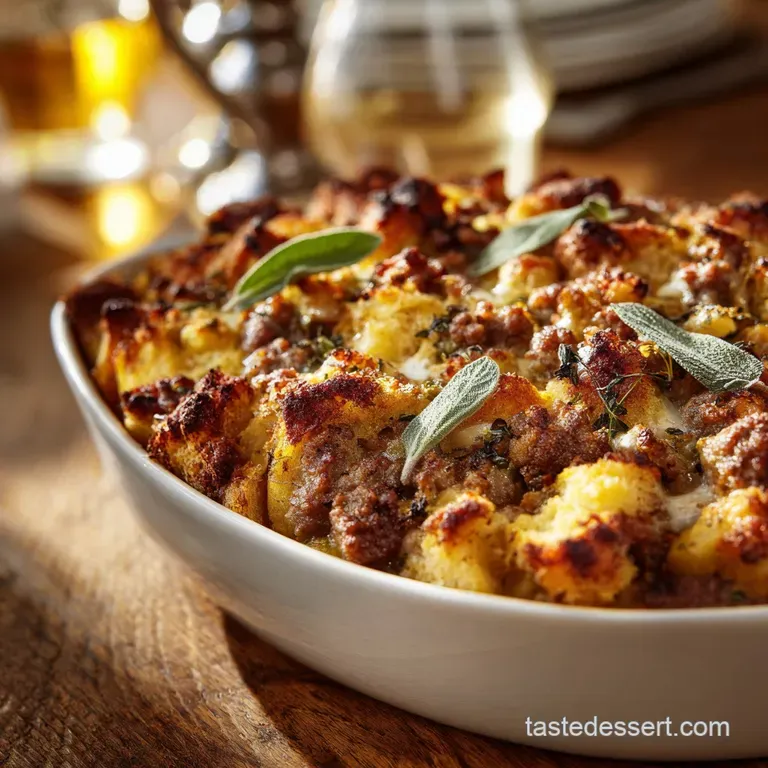
- Introducing the Ultimate Sage and Apple Sausage Stuffing
- The Science of Brilliant Stuffing: Flavor Layering
- Essential Ingredients for the Perfect Sausage Stuffing
- Mastering the Method: Step-by-Step Instructions for Sausage Stuffing
- Troubleshooting and Chef's Notes for Flawless Results
- Make-Ahead Strategy and Proper Storage of Sausage Stuffing
- Elevating the Feast: Classic Pairings for Sausage Stuffing
- Recipe FAQs
- 📝 Recipe Card
Introducing the Ultimate Sage and Apple Sausage Stuffing
If there is one scent that instantly teleports me to Thanksgiving or Christmas dinner, it’s this stuffing baking. The minute the heat hits the sage, the onion, and the sizzling pork fat, you just know everything is going to be okay.
We are talking about that deep, complex flavor that comes from perfectly browned sausage meat cradled in moist, herbaceous bread, topped with a crisp, buttery crust.
Stuffing often feels complicated, but honestly, this recipe is a lifesaver when the main roast is hogging all the attention. It uses simple pantry staples and great, flavorful pork sausage, making it incredibly budget friendly and fast to pull together.
You mix, you bake, and suddenly you look like a kitchen genius, which is always the goal, right?
I’ve made every mistake in the book gluey stuffing, dry stuffing, bland stuffing. But I’ve cracked the code on achieving the perfect, balanced texture every single time.
Get ready to banish the boring bread cubes forever, because this ultimate homemade stuffing recipe with sausage is about to become your new holiday tradition.
The Science of Brilliant Stuffing: Flavor Layering
Stuffing is not just about throwing bread and meat together; it’s about strategic layering of flavor that keeps every bite interesting. We are using a technique here that ensures the herbs infuse the fat, the fat coats the bread, and the stock binds everything without making it mushy. It’s genius.
Why This British Style Stuffing Stands Apart
Unlike some American dressings that rely heavily on sweet additions, this version embraces the savory power of pork and earthy sage, with just a crucial hint of fruit. It’s hearty, robust, and the perfect foil for rich gravy and roast turkey.
The combination of crispy sausage and slightly yielding, sharp apple bits sets it apart from those one-note recipes.
Stuffing vs. Dressing: Settling the Great Debate
This is the age-old question, isn’t it? The difference is actually quite simple and entirely defined by location. If you cook it inside the bird, it’s traditionally called stuffing. If you cook it in a baking dish on the side (which is what I do for safety and crust factor), it’s technically dressing. I call this a Sausage Stuffing: The Ultimate Recipe for a Crispy Holiday Classic because it has that beautiful, moist, traditional stuffing texture, no matter where it cooks.
Scaling and Planning Ahead for the Holidays
This sausage stuffing casserole recipe scales beautifully, so feel free to double or even triple the batch if you’re feeding a crowd. Tip: If you do scale it up, use two separate baking dishes instead of one gigantic one; this ensures a much better surface-to-volume ratio for that crispy top.
Planning ahead means less stress on the big day!
The Role of Granny Smith Apple for Acidity Balance
Trust me, you need the apple. The Granny Smith is non-negotiable here because its tartness cuts straight through the richness of the pork sausage and butter. It adds a lovely textural element without making the dish overly sweet.
Don’t skip this step thinking it’s too weird; it’s the secret weapon that balances the whole dish.
Achieving the Perfect Moisture Ratio (The Stock Soak)
The difference between a brilliant stuffing and a gluey disaster is controlling the liquid. We use warmed stock and a light egg binder, pouring it over already dried bread cubes.
The dried bread soaks up the liquid like a sponge, ensuring every cube is moist through the center but still retains its shape. It should feel damp, but never sloppy.
Why Browning the Sausage is Non-Negotiable
We’re not just warming the sausage; we are aggressively browning it to develop the Maillard reaction. This creates deep, savory, nutty flavors that plain, pale sausage just can't deliver.
That rendered fat is also where we sauté the aromatics, meaning every single flavor layer starts with rich, seasoned pork goodness.
Essential Ingredients for the Perfect Sausage Stuffing
You only need a few core ingredients, so make sure they are high-quality. This recipe hinges on the fantastic pairing of sausage, herbs, and bread.
Choosing the Best Pork Sausage for Deep Flavor
I always reach for a high-quality, plump pork sausage that is specifically labeled "sage" or "mild Italian." Avoid the super sweet breakfast links. The better the sausage, the better the final dish will taste, full stop.
| Ingredient | My Top Choice | Viable Substitute |
|---|---|---|
| Sausage | high-quality Sage Pork Sausage | Ground turkey or Ground Beef seasoned heavily with fennel and extra sage. |
| Bread | Day-old Sourdough or Challah | Standard sandwich loaf (but dry it longer!) or cornbread for a Southern take. |
| Stock | Low-Sodium Chicken Stock | Turkey broth, vegetable stock, or water plus a bouillon cube. |
| Butter | Unsalted Butter | Margarine or high-quality olive oil, though butter offers better flavor. |
| Apple | Granny Smith | A splash of lemon juice mixed into the stock if you absolutely cannot use apple. |
Handling the Bread: Croutons vs. Cubes and the Importance of Staling
You absolutely, positively must use dry bread. If you try this with fresh, soft bread, you will end up with a porridge like mush. I cube day-old bread (like the hearty, chewy sourdough in my Thanksgiving Stuffing: Ultimate Sourdough Sausage Recipe ) and then dry it out in the oven until it feels hard, like massive croutons.
Fresh Herbs vs. Dried: Maximizing the Sage Aroma
I know dried herbs are easier, but for this specific traditional sausage stuffing recipe, fresh sage and thyme make all the difference. Their oils release into the hot butter and sausage fat, creating that intoxicating holiday aroma.
If you are desperate, you can use dried herbs, but use only 1 teaspoon of dried sage for every 1 tablespoon of fresh.
Substitutions for the Onion and Celery Aromatic Base
The combination of onion and celery (the mirepoix ) is essential for the structure and base flavor. You can swap yellow onion for white onion, or even shallots if you want a slightly milder sweetness.
I once ran out of celery, and used diced carrots instead; it worked fine, but you lose that essential earthy crunch, so try to keep the celery if you can!
Mastering the Method: step-by-step Instructions for Sausage Stuffing
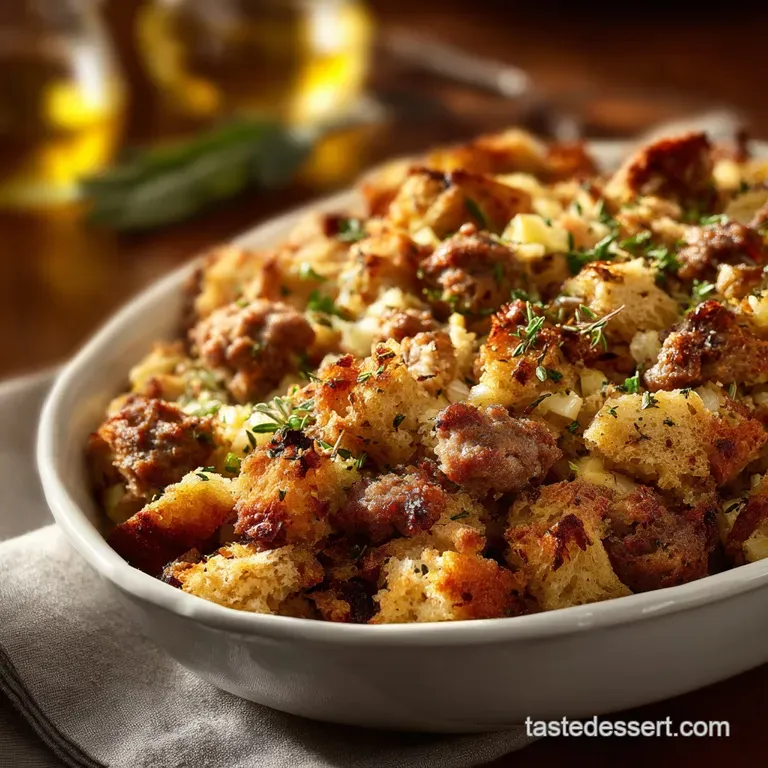
Prepping the Aromatics and Caramelizing the Apples
First, get your bread prepped and drying. While that’s happening, start building flavor. Melt that first tablespoon of butter and add the sausage meat. Cook it until it’s browned all over it should look gnarly and delicious. Then, drain the excess fat (but save a couple of tablespoons!).
Then we sauté the onion and celery in the remaining seasoned fat. This transfers that lovely sausage flavor directly into your aromatic base.
Combining the Wet and Dry Components
Once the sausage and aromatics are in the big mixing bowl with the dry bread, pour the warm stock and egg binder over everything. Do not stir it frantically. Fold it gently until all the bread is coated.
Let it sit for five minutes before transferring it to the baking dish; this is the resting period where the bread drinks the stock and achieves perfect moisture.
Chef's Note: When mixing, use your hands! You can feel exactly when the bread is adequately damp but hasn't started to break down yet. If it feels too dry, add an extra splash (2 3 tablespoons) of stock.
Achieving the Signature Crisp Top (Baking Technique)
We bake this in two stages: covered, then uncovered. Covering it tightly with foil for the first 30 minutes traps the moisture and ensures the center cooks through perfectly without drying out.
Removing the foil for the final 15- 20 minutes allows the exposed bread cubes on top to crisp up and turn beautifully golden brown. That contrast between the soft inside and the crunchy top is everything.
Cooking This Sausage Stuffing Inside or Outside the Bird
For the safest and most consistent results, I always recommend cooking the stuffing outside the bird. If you insist on cooking it inside the turkey, ensure you stuff the bird loosely, and the internal temperature of the stuffing must reach 165°F (74° C) before serving.
Be warned, cooking it inside can often lead to a soggier, less crusty product.
Troubleshooting and Chef's Notes for Flawless Results
The Danger of Over Mixing (Preventing Gluey Stuffing)
If you treat stuffing like bread dough and mix it aggressively, the starches in the bread release too much, turning your beautiful cubes into a gummy paste. Fold, don’t stir vigorously. Once the liquid is absorbed, stop mixing immediately.
How to Fix Stuffing That Tastes Too Dry or Too Salty
Did you bake it too long? If your stuffing is too dry after baking, you can gently drizzle 1/4 cup of warm stock or melted butter over the top before serving. If it tastes too salty (usually from the sausage or stock), stir in a small amount of sugar (1 tsp) and a splash of vinegar or lemon juice; the acid helps counteract the saltiness.
Ensuring the Sausage is Fully Cooked Through
This is critical for safety. The sausage must be fully cooked and browned before it ever hits the bread. Do not rely on the baking time of the stuffing casserole to cook raw sausage meat.
make-ahead Strategy and Proper Storage of Sausage Stuffing
Stuffing is one of the best holiday sides to prepare in advance, seriously cutting down on kitchen chaos.
Chilling and Preparing the Stuffing Mix 24 Hours Ahead
You can easily prep the entire stuffing mixture, right up to Step 8, the day before. Assemble the bread, sausage, and aromatics, pour over the stock mixture, and transfer it to the buttered casserole dish. Cover it tightly and refrigerate overnight.
Crucial Step: On baking day, allow the cold dish to sit on the counter for 30 minutes while the oven preheats, then add an extra 10- 15 minutes to the initial covered baking time.
Reheating Leftovers While Maintaining Crispness
Leftover sausage stuffing keeps wonderfully. To reheat, slice the stuffing into squares, place them on a baking sheet, and cover loosely with foil. Bake at 350°F (175°C) until warmed through (about 15- 20 minutes).
For the last five minutes, remove the foil and blast it under the broiler for 60 seconds to re-crisp the top.
Guidelines for Freezing and Thawing Raw or Cooked Stuffing
But does it freeze well? You bet.
- Freezing Cooked Stuffing: Cool completely, then wrap tightly in foil and place in a freezer bag. It lasts up to 3 months. Thaw overnight in the fridge and reheat as above.
- Freezing Raw Stuffing: Assemble the mixture (Steps 1 8) and freeze it unbaked in the casserole dish. When ready to bake, thaw overnight in the fridge, let it come nearly to room temperature, and proceed with the baking instructions.
Elevating the Feast: Classic Pairings for Sausage Stuffing
This sausage stuffing is so robust, it pairs perfectly with almost any traditional holiday protein. Serve it next to a classic roast chicken or turkey, obviously, but don't forget the sauce. We need a rich, savory companion.
- Sauces: A thick, homemade gravy is essential. I also love serving a tart, slightly bitter homemade cranberry sauce; the fruitiness balances the heavy pork fat beautifully.
- Vegetables: Pair the rich, savory stuffing with something bright and green, like crisp green beans or Brussels sprouts tossed with balsamic glaze. The lighter veggies keep the meal from feeling too heavy and dense.
Recipe FAQs
Why is my sausage stuffing mixture too dry and crumbly?
Dryness usually means the bread cubes haven't absorbed enough liquid, or the initial ratio of fat to starch was too low. Ensure your bread is thoroughly soaked, and try adding an extra splash of warm chicken or vegetable stock until the mixture holds its shape when squeezed gently.
You can also lightly beat an extra egg into the mixture to act as a binder.
Can I bake this stuffing inside the turkey or chicken?
For food safety reasons, especially since this recipe contains raw sausage meat, it is strongly recommended to bake the stuffing separately in a casserole dish. Stuffing cooked inside poultry must reach an internal temperature of 165°F (74°C) to be safe, which often results in an overcooked bird or dense, unsafe stuffing.
Baking separately guarantees a perfectly safe, evenly cooked, and crispier result.
Can I prepare the sausage stuffing ahead of time?
Absolutely; this stuffing is an excellent make-ahead component for busy holiday meals. You can assemble the entire mixture, including the sausage, onions, and bread, up to 24 hours in advance and store it tightly covered in the refrigerator.
Before baking, allow the mixture to come to room temperature for 30 minutes, then add a small extra drizzle of stock, as the bread tends to absorb more moisture overnight.
How do I adjust the recipe if the stuffing comes out too wet or mushy?
If the mixture is too wet, it might indicate too much stock was added or the vegetables weren't properly cooked down. The quickest fix is to incorporate a handful of extra dried or toasted bread cubes, or a couple of tablespoons of Panko breadcrumbs, to help bind the excess moisture.
Ensure the mixture is loosely packed into the baking dish to allow steam to escape during cooking, preventing sogginess.
Can I use a different type of sausage, or replace the meat entirely?
Yes, while British style pork sausage is classic, you can substitute mild or hot Italian sausage for a spicier profile, or use ground turkey or chicken if preferred. If using a leaner meat like turkey, you may need to add an extra tablespoon of butter or oil when sautéing the vegetables to ensure the stuffing remains moist and flavourful.
For vegetarian variation, substitute the sausage with sautéed mushrooms, lentils, and rich vegetable stock.
How should I store and reheat leftover sausage stuffing?
Store leftover stuffing in an airtight container in the refrigerator for up to four days. It also freezes exceptionally well; wrap cooled portions tightly in foil and freeze for up to three months.
To reheat, thaw overnight, then cover loosely and bake at 350°F (175°C) until it reaches an internal temperature of 165°F (74°C).
Is it necessary to use Granny Smith apples, or can I use a sweeter variety?
The Granny Smith apple is specifically chosen for its firm texture and high acidity, which provides a vital counterpoint to the rich, savory sausage and earthy sage. Using a sweeter apple, like Fuji or Gala, will still work but will make the stuffing taste noticeably sweeter and less balanced.
If you must use a sweet apple, consider adding a teaspoon of cider vinegar to the stock to restore some necessary tartness.
Sage And Apple Sausage Stuffing
Ingredients:
Instructions:
Nutrition Facts:
| Calories | 1121 kcal |
|---|---|
| Protein | 46.5 g |
| Fat | 65.4 g |
| Carbs | 66.6 g |
