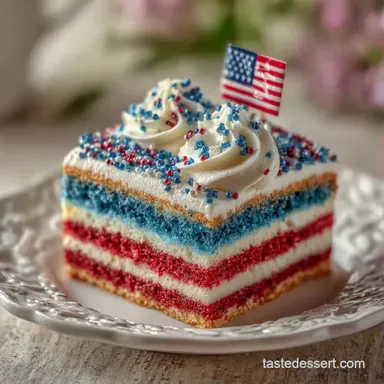
Sheet Pan Flag Cake: Pillowy and Moist
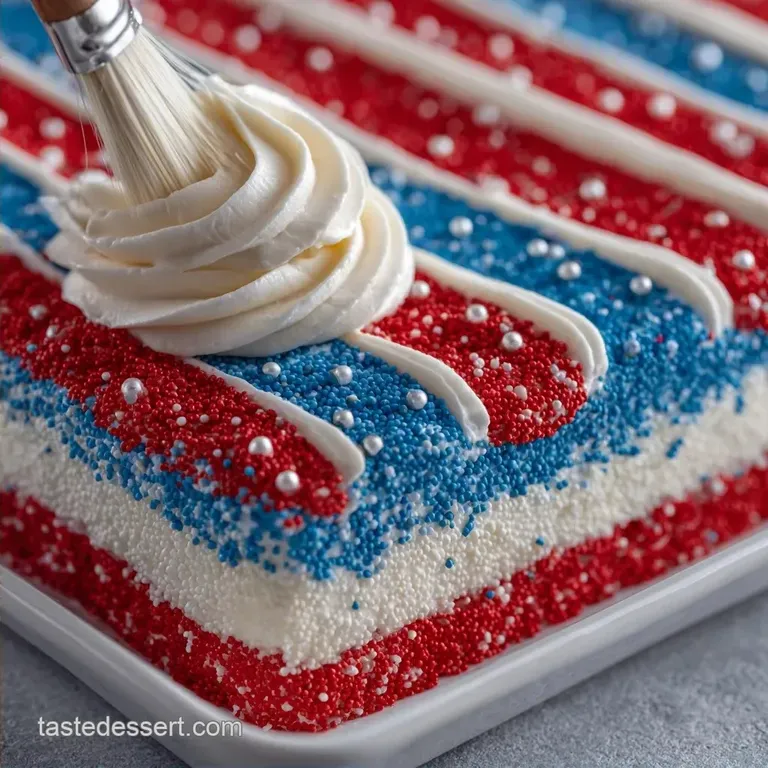
- Time: 30 min active + 60 min chilling
- Flavor/Texture Hook: Pillowy vanilla sponge with velvety buttercream
- Perfect for: 4th of July parties, family reunions, or patriotic potlucks
- Easy Sheet Pan Flag Cake Recipe
- Why This Cake Works
- Cake Method Comparison
- Ingredient Deep Dive
- Equipment Needed
- Ingredients & Substitutes
- From Prep to Plate
- Pro Tips and Pitfalls
- Troubleshooting Common Issues
- Creative Twists and Swaps
- Scaling Your Cake
- Truth About Cake Myths
- Freshness and Storage Tips
- Serving and Enjoying
- Recipe FAQs
- 📝 Recipe Card
Easy Sheet Pan Flag Cake Recipe
The smell of vanilla and fresh berries always takes me back to my grandmother's porch in July. I can still hear the distant pop of fireworks and the sound of kids running through a sprinkler.
She always made this kind of cake because it was the only thing that could actually feed twenty people without her having to bake five separate rounds in a tiny oven. It was the centerpiece of every summer bash, sitting there in all its red, white, and blue glory.
I remember the first time I tried to make it on my own. I forgot to let the cake cool completely before frosting it, and the buttercream basically slid right off the sides in a sugary landslide. It was a mess, but it taught me the most important lesson about sheet cakes: patience is the secret ingredient.
Once you get the timing right, this dessert becomes a timeless family favorite that people actually look forward to every year.
This Sheet Pan Flag Cake is designed for the home cook who wants the "wow" factor without the stress of a multi layered cake. We're using a single pan, a few basic bowls, and a handful of fresh berries to create something that looks professional but tastes like a nostalgic childhood treat.
It's a straightforward process that focuses on a soft, moist crumb and a stable frosting that won't melt the second it hits the air.
Why This Cake Works
I've spent a lot of time wondering why some sheet cakes turn out dry like cardboard while others stay soft for days. It usually comes down to a few simple reactions in the batter.
- Acidic Lift: The buttermilk reacts with the baking soda to create tiny carbon dioxide bubbles. This is what gives the cake that light, airy feel instead of being a dense brick.
- Oil for Moisture: Unlike cakes that use only butter, the vegetable oil here stays liquid at room temperature. This means your Sheet Pan Flag Cake won't feel dry or stiff when you serve it outdoors.
- The Frosting Seal: A thick layer of buttercream acts as a barrier. It keeps the moisture trapped inside the sponge and provides a sturdy base so the berries don't sink into the cake.
- Rapid Heat Distribution: Using a wide, shallow pan means the batter cooks evenly and quickly. You avoid the dreaded "raw center, burnt edges" scenario common with deep round pans.
Cake Method Comparison
| Feature | Fast Sheet Method | Classic Layer Method | Impact on Result |
|---|---|---|---|
| Bake Time | 25 minutes | 30-40 minutes | Sheet cakes bake much faster |
| Cooling | Single pan | Multiple layers | Easier to handle and frost |
| Texture | Pillowy and uniform | Dense and structured | Sheet cake is softer overall |
Ingredient Deep Dive
When you're making a simple cake, the quality of your basics really matters. You don't need fancy stuff, but you do need to understand what each part is doing. For the best results, I recommend following King Arthur Baking's tips on measuring flour by weight to avoid over packing your cups.
| Ingredient | Science Role | Pro Secret |
|---|---|---|
| Buttermilk | Tenderizes the crumb | Use room temp to prevent batter splitting |
| Vegetable Oil | Long term moisture | Neutral oil keeps the vanilla flavor front and center |
| Baking Soda | Primary leavening | Sift it with flour to avoid bitter clumps |
| Powdered Sugar | Structure for frosting | Sift it! Lumps in buttercream are a nightmare |
Equipment Needed
You don't need a professional kitchen for this. In fact, the fewer tools you use, the easier the cleanup. I usually just use a large mixing bowl and a whisk. If you have a stand mixer such as KitchenAid, it'll make the frosting fluffier, but a hand mixer works just fine too.
The most important piece of gear is a 10x15 inch sheet pan. If you use a larger pan, your cake will be too thin and might overbake. If you use a smaller one, the center might stay gooey. Also, don't skip the parchment paper.
Grease and flour are okay, but parchment is the only way to guarantee the cake doesn't stick to the corners.
Ingredients & Substitutes
Here is everything you'll need. Keep your dairy at room temperature so the batter emulsifies properly.
For the Cake: 2 1/4 cups (280g) all purpose flour Why this? Balanced protein for a sturdy but soft cake 1 1/2 cups (300g) granulated sugar 1 tsp (5g) baking soda 1/2 tsp (3g) salt 1 cup (240ml) buttermilk, room temperature Why this? Adds tang and
Activates the soda 1/2 cup (120ml) vegetable oil 2 large eggs, room temperature 1 tsp (5ml) pure vanilla extract
For the Frosting & Toppings: 1 cup (225g) unsalted butter, softened Why this? Base for a stable, creamy texture 4 cups (500g) powdered sugar, sifted 2 tbsp (30ml) heavy cream 1 tsp (5ml) pure vanilla extract 1g salt 1 cup (150g) fresh blueberries 2 cups (250g) fresh
Raspberries or sliced strawberries
Substitution Guide:
| Original Ingredient | Substitute | Why It Works |
|---|---|---|
| Buttermilk | 1 cup milk + 1 tbsp lemon juice | Mimics acidity. Note: Slightly less tang than real buttermilk |
| Vegetable Oil | Melted Coconut Oil | Similar fat profile. Note: Adds a very subtle coconut hint |
| Raspberries | Sliced Strawberries | Same color profile. Note: Strawberries are slightly juicier |
| Heavy Cream | Whole Milk | Thins the frosting. Note: Frosting will be less stable/stiff |
From Prep to Plate
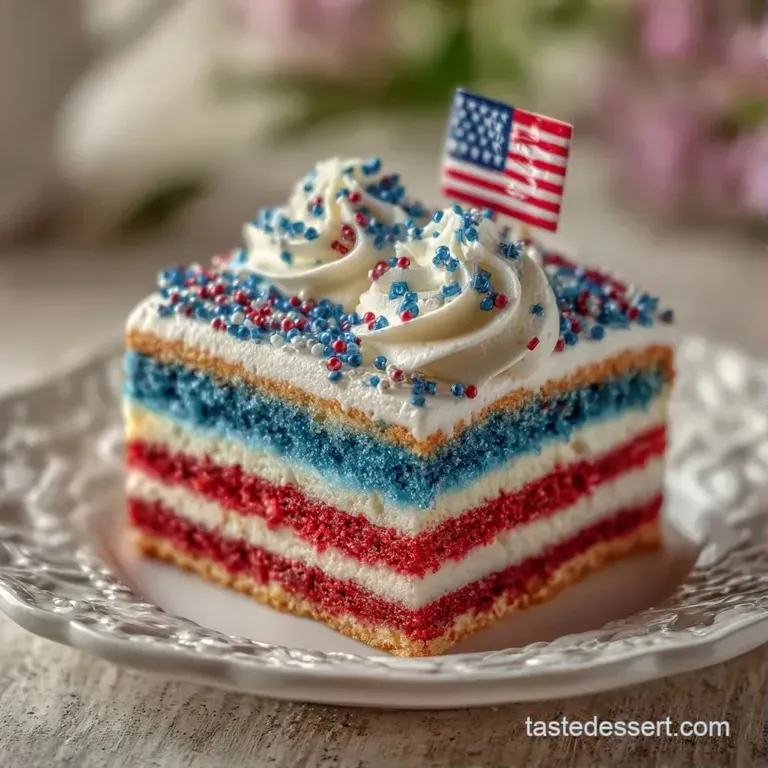
Right then, let's get into the actual making. Make sure your oven is fully preheated before you start mixing, or the baking soda will lose its punch.
- Preheat your oven to 350°F (175°C) and line a 10x15 inch sheet pan with parchment paper. Note: Leave a little overhang on the sides for easy lifting.
- Whisk together all purpose flour, granulated sugar, baking soda, and salt in a large bowl.
- Fold in buttermilk, vegetable oil, eggs, and vanilla extract. Stir until the batter is smooth and ribbon like. Note: Stop stirring as soon as the flour disappears to keep it fluffy.
- Spread batter evenly into the prepared pan. Bake for 22-25 minutes until the center springs back when touched and a toothpick comes out clean.
- Allow the cake to cool completely in the pan. Note: This usually takes about an hour; don't rush this part!
- Whip softened butter and powdered sugar until light and airy. Beat in heavy cream, vanilla extract, and salt until firm and spreadable.
- Smooth a thick layer of buttercream across the cake surface. Chill in the refrigerator for 60 minutes to set. Note: This creates a hard surface for the berries to sit on.
- Create the flag design by pressing blueberries into the top left corner for the union and alternating rows of raspberries and bare buttercream for the stripes.
If you're looking for a different style, you might enjoy a traditional baked flag cake for a more structured look.
Pro Tips and Pitfalls
I've made my fair share of mistakes with this Sheet Pan Flag Cake, and most of them happened because I tried to cut corners. The biggest one is the temperature of the ingredients. Cold eggs and cold buttermilk can cause the fat in the oil to clump, leaving you with a streaky batter.
Another common issue is the "fruit bleed." If you put the berries on too early, the red juice from the raspberries will start to seep into the white frosting, making it look pink and messy. To stop this, make sure your berries are completely dry after washing them. Pat them with a paper towel until they're bone dry.
Troubleshooting Common Issues
| Issue | Solution |
|---|---|
| Why Your Cake Sank | If the center of your cake dips, it's usually because the oven door was opened too early or the baking soda is old. |
| Why Frosting Is Runny | Runny frosting usually happens because the butter was too soft (almost melted) or the kitchen was too hot. If this happens, pop the bowl in the fridge for 10 minutes and beat it again. |
| Why Berries are Sinking | If your blueberries are diving into the cake, your frosting wasn't chilled. The 60 minute fridge rest is non negotiable for a clean look. |
Common Mistakes Checklist:
- ✓ Did you line the pan with parchment? (Avoids sticking)
- ✓ Are the eggs and buttermilk room temperature? (Ensures smooth batter)
- ✓ Did the cake cool completely before frosting? (Prevents melting)
- ✓ Did you chill the frosted cake for 60 minutes? (Stabilizes the top)
- ✓ Are the berries patted dry? (Prevents bleeding)
Creative Twists and Swaps
While the classic vanilla version is a winner, you can definitely tweak this. If you want a more nostalgic feel, I've found that adding a teaspoon of almond extract to the batter makes it taste like a professional bakery cake. It adds a subtle depth that pairs beautifully with the fresh berries.
For those who want something a bit more indulgent, you can try a fluffy homemade version with an extra rich buttercream. Or, if you're feeling adventurous, try these variations:
The Zesty Twist
Add the zest of one lemon to the batter and use a lemon infused buttercream. The acidity cuts through the sugar and makes the blueberries pop.
The Decadent Base
Substitute the vegetable oil with melted browned butter. It changes the flavor profile to something more nutty and toasted, though the cake will be slightly less moist.
Dairy-free Swap
Use an unsweetened almond milk mixed with a splash of apple cider vinegar instead of buttermilk, and use a vegan butter stick for the frosting. It's surprisingly close to the original.
Gluten-free Alternative
Swap the all purpose flour for a 1:1 gluten-free baking blend. You may need to add an extra 1/2 teaspoon of baking powder to help with the rise, as GF flours can be heavier.
Scaling Your Cake
If you're not feeding a crowd of twenty, you can easily scale this down. For a half batch, use a 9x13 inch pan. You'll need to reduce the baking time by about 20%, so start checking for doneness at 18 minutes.
When it comes to the eggs, beat one egg in a small bowl and use half of it to keep the ratios correct.
Scaling up is a bit trickier. If you need to double the recipe for a massive event, don't just put twice the batter in one pan. You'll end up with a raw center and burnt edges. Instead, bake two separate sheet pans.
Important Scaling Note: When doubling, only increase the salt and baking soda by 1.5x. Too much leavening in a large batch can cause the cake to rise too fast and then collapse. Also, reduce the total liquids by about 10% to ensure the cake maintains its structure.
Truth About Cake Myths
There's a lot of weird advice out there about baking. Let's clear a few things up.
Myth: You must "cream" butter and sugar for 10 minutes for the best frosting. Truth: While you want it light and airy, over beating can actually incorporate too much air, making the frosting unstable. 3-5 minutes is usually plenty for a sheet cake.
Myth: Room temperature eggs are just a suggestion. Truth: They are essential. Cold eggs can cause the oil and buttermilk to seize, leading to a broken emulsion and a cake that doesn't rise evenly.
Myth: You can use any fruit for the flag. Truth: You can, but high water fruits like watermelon or pineapple will dissolve your buttercream within an hour. Stick to berries or firm sliced fruits.
Freshness and Storage Tips
Since this is a Sheet Pan Flag Cake, you're probably serving it at a party. If you can't serve it immediately, keep the unfrosted cake wrapped tightly in plastic wrap at room temperature for up to 2 days. Once it's frosted and topped with fruit, it needs to stay in the fridge.
Fridge Storage: Keep the cake in an airtight container or a cake carrier for up to 4 days. The buttercream acts as a protective seal, keeping the sponge moist.
Freezing: You can freeze the unfrosted cake layers. Wrap them in double plastic wrap and foil for up to 3 months. Thaw in the fridge overnight before frosting. I don't recommend freezing the cake once the fresh berries are added, as the fruit will turn mushy upon thawing.
Zero Waste Tips: If you have leftover buttercream, freeze it in small dollops on a baking sheet, then transfer them to a bag. You can thaw a single dollop later to frost a couple of cupcakes.
If you have leftover berries, simmer them with a splash of lemon juice and sugar to make a quick compote for pancakes the next morning.
Serving and Enjoying
When it's time to serve, the biggest challenge is getting clean cuts. Because the buttercream is thick and the berries are fresh, a dull knife will just smear everything.
The trick is to use a long, thin knife dipped in hot water. Wipe the knife clean with a towel after every single cut. This ensures the white frosting stays white and the red stripes stay red. I usually cut the cake into 2 inch squares, which gives you exactly 20 generous servings.
For the best experience, take the cake out of the fridge about 30 minutes before serving. This allows the buttercream to soften slightly, making it velvety rather than stiff, and brings the flavor of the vanilla and butter back to life.
It's a timeless treat that brings everyone together, and seeing the look on people's faces when you bring out a giant, colorful flag cake is always the best part of the day.
Recipe FAQs
Can I use a sheet pan for a cake?
Yes, it is an efficient way to bake for a crowd. A 10x15 inch sheet pan ensures the cake bakes evenly and makes slicing 20 servings simple.
How to decorate a cake to look like a flag?
Press blueberries into the top-left corner for the union and alternate rows of raspberries and bare buttercream for the stripes. Ensure the frosting is chilled first so the fruit stays on the surface.
Why is my buttercream frosting runny?
This usually happens if the butter was too soft or the room is too warm. Pop the bowl in the refrigerator for 10 minutes and beat it again until it reaches a firm, spreadable consistency.
Why did the center of my cake sink?
It is likely because the oven door was opened too early or the baking soda is expired. Keep the oven closed during the 22-25 minute bake time to maintain a steady temperature.
Do I really need to chill the frosting before adding berries?
Yes, the 60-minute fridge rest is non-negotiable. Without this step, the weight of the blueberries and raspberries will cause them to sink into the buttercream.
Can I use a gluten-free flour blend instead of all-purpose?
Yes, most 1:1 gluten-free blends work well here. If you have already mastered a gluten free dough, you will find the substitution in this cake very straightforward.
How to ensure the batter is smooth and ribbon like?
Fold in the buttermilk, vegetable oil, eggs, and vanilla extract, then stir until consistent. Stop stirring as soon as the batter is smooth to avoid overworking the flour.
Sheet Pan Flag Cake