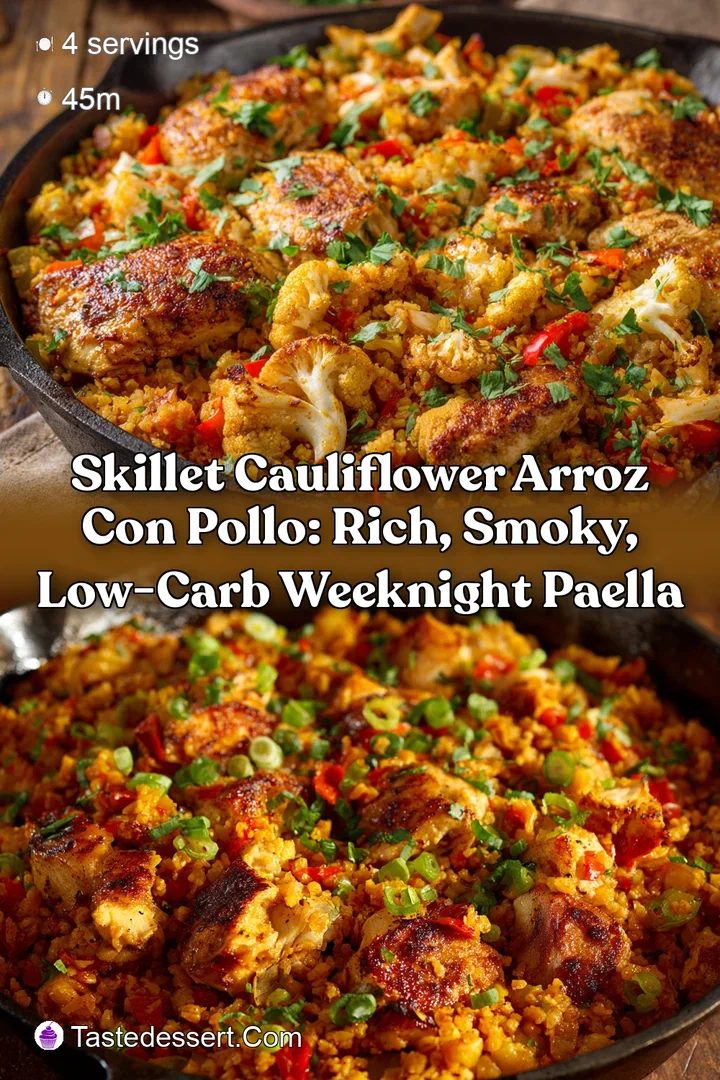
Skillet Cauliflower Arroz Con Pollo: the Speedy, One-Pan Low Carb Dinner

- The Speedy Skillet: Low-Carb Cauliflower 'Arroz' Con Pollo
- Decoding the Deliciousness: Why This Skillet Cauliflower Arroz Con Pollo Works
- Essential Components for Authentic Skillet Cauliflower Arroz Con Pollo
- Mastering the Skillet: Step-by-Step Guide to Cooking Arroz Con Pollo
- Troubleshooting and Expert Skillet Tips for a Perfect Finish
- Storage, Reheating, and Meal Prep Logistics
- Perfect Pairings: What to Serve Alongside Your Low-Carb Dish
- Recipe FAQs
- 📝 Recipe Card
The Speedy Skillet: Low-Carb Cauliflower 'Arroz' Con Pollo
When that golden, smoky aroma hits you, trust me, you won’t miss the rice even a little bit. This Skillet Cauliflower Arroz Con Pollo bursts with the deep, savoury flavours of paprika, oregano, and that essential touch of saffron (or, let’s be real, turmeric).
It's incredibly vibrant, deeply comforting, and looks utterly gorgeous piled high in your cast iron pan.
This recipe is my secret weapon for when I want something spectacular, but I only have 45 minutes and zero patience for washing dishes. Using cauliflower 'rice' instantly cuts the cooking time, making this classic Spanish inspired dish an achievable weeknight wonder.
It is genuinely fast, impressively flavourful, and happens to be gluten-free and low-carb to boot.
Right then, let's stop chatting and start cooking. We are going to build intense flavour layer by layer, ensuring the chicken is tender and the cauliflower maintains that perfect al dente texture. Get your biggest skillet ready; we’re about to create some magic.
Decoding the Deliciousness: Why This Skillet Cauliflower Arroz Con Pollo Works
This recipe isn’t just a quick swap; it’s a smart structural change designed to maximise efficiency and flavour transfer. We skip the lengthy rice cooking process, but we absolutely do not skip the foundational steps that give Arroz Con Pollo its soul.
Everything happens in order, using high heat and low simmer periods to lock in the punchy spices.
Why Cauliflower 'Rice' is the Perfect Low-Carb Swap
Traditional rice absorbs liquid and releases starch, creating a specific texture we love. Cauliflower 'rice' can't do that, but that's a good thing here! It means we control the moisture precisely, ensuring the finished dish is moist and saucy, not starchy and sticky.
You must add the cauliflower near the end to prevent it from dissolving into soup (a mistake I made once, and I cried a little).
The Joy of One-Pan Cooking: Efficiency Meets Deep Flavour
One-pan cooking isn't just about reducing dishes; it’s about flavour chaining. By searing the chicken thighs first, you create a gorgeous, sticky layer of browned bits (the fond) on the base of the pan.
Everything we cook after the onion, the pepper, the wine scrapes up that fond, injecting that deep, roasted flavour into the entire sauce. This is what separates a decent skillet meal from an amazing one.
If you love this method, you should absolutely try my [Chicken Thighs with Artichoke Hearts and Feta Chee Easy Skillet Recipe].
Achieving the Signature Sofrito Depth
The sofrito is the non-negotiable heart of this meal. It's the slow sautéed mix of onion, bell pepper, and garlic that transforms from sharp raw ingredients into a deeply sweet, complex base. Cooking the spices (paprika, oregano, turmeric) directly in the oil with the sofrito for just one minute is crucial.
This step, called "blooming," releases their fat-soluble flavour compounds, making them taste ten times stronger than just stirring them into the stock later.
Texture Contrast: Tender Chicken and Fluffy Riced Cauliflower
We use boneless, skinless chicken thighs because they are forgiving and stay incredibly moist during the simmer. The relatively short simmer time ensures the chicken is cooked perfectly before we introduce the star of the show, the cauliflower.
This two-stage cooking ensures your chicken is tender and the cauliflower is crisp tender, not mushy.
The Role of Saffron and Smoked Paprika in Colour and Aroma
Smoked paprika brings the essential smoky depth we associate with Spanish cuisine. If you can afford saffron, its aromatic, slightly metallic earthiness is unparalleled. If saffron feels like a mortgage payment, use turmeric.
It gives that requisite sunny yellow hue without dramatically altering the savoury profile, making it a brilliant budget hack.
Essential Components for Authentic Skillet Cauliflower Arroz Con Pollo
Remember, even though we’re swapping out the rice, we need maximum flavour impact from our supporting cast. This is where quality ingredients and smart swaps really shine.
The Protein: Selecting and Prepping the Chicken Thighs
I’m obsessed with boneless, skinless chicken thighs for this dish. They have enough fat to render down and keep the meat incredibly moist, which is essential for any simmering dish. Prep Tip: Cut them into chunky, uniform pieces so they sear and cook evenly.
- Substitution: If you must use chicken breast, be careful! Cut the breast into slightly larger pieces and reduce the simmer time to about 8 minutes; otherwise, it will turn into rubber.
The Base: Perfecting the Onion, Pepper, and Garlic Sofrito Ratio
You need about a 2:1:1 ratio of onion to bell pepper to garlic. Don't rush this sauté phase; patience here equals flavour depth later. Dice everything quite small so it melts into the sauce rather than staying chunky.
- Substitution: No red bell pepper? Use orange or yellow. Avoid green bell peppers here unless you like a more bitter, pronounced flavour profile.
Seasoning Deep Dive: Turmeric vs. Saffron for Hue and Taste
Saffron is the dream ingredient, but turmeric is the realistic hero for the home cook. Turmeric provides a gorgeous, vibrant golden colour that makes the dish look exactly right.
Chef’s Note: If you want a fun alternative colour source, look for annatto seeds (achiote). Soak a teaspoon in hot oil for 10 minutes, then strain; the resulting oil gives a deep reddish orange colour and a slight peppery flavour.
Low-Carb Alternatives: Pre-Riced vs. Fresh Cauliflower Preparation
I usually buy the pre-riced cauliflower because, honestly, who has time? It saves ten minutes and a massive mess. If you rice your own, make sure it’s patted very dry before use.
- Substitution: While this is a cauliflower dish, you could theoretically substitute broccoli rice or even shredded cabbage in a pinch. Adjust the final cooking time downward, as both of those cook faster than cauliflower.
Mastering the Skillet: step-by-step Guide to Cooking Arroz Con Pollo
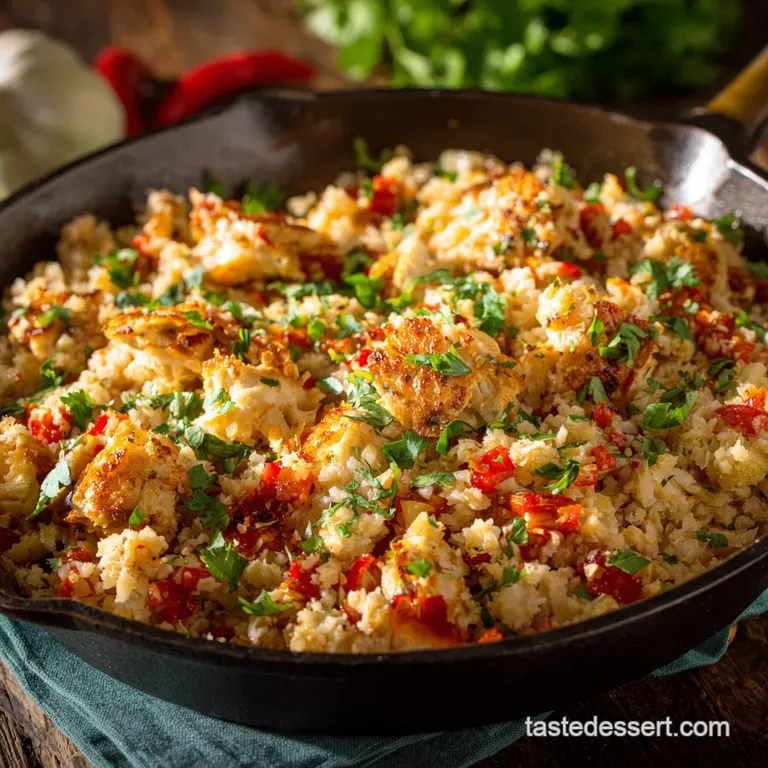
Phase One: Searing the Chicken and Building the Flavour Base
Pat the chicken pieces bone dry, then season them aggressively with salt and pepper. Get that oil screaming hot in your cast iron skillet. Sear the chicken in batches don’t crowd the pan! We want deep brown crusts, not steamed grey chicken.
Once seared, pull it out and set it aside; don't wipe out the pan.
Phase Two: Toasting the Spices and Deglazing the Pan
Reduce the heat slightly and add your onion and pepper to the hot oil. Scrape the pan base vigorously while they soften, incorporating that glorious chicken fond into the vegetables. Once they are soft and translucent, add your garlic, paprika, and turmeric.
Cook this spice mix for exactly one minute until you smell that nutty, smoky aroma. If you are using white wine, this is the moment to pour it in and deglaze, scraping up every last bit of flavour.
Phase Three: Achieving the Simmer and Cooking the Chicken Through
Add your hot chicken stock and the drained diced tomatoes. Bring this vibrant liquid to a gentle simmer. Return all the chicken and any juices from the plate back into the pan. Cover the skillet tightly and let it simmer for ten minutes.
This ensures the chicken is perfectly cooked through and fully saturated with the sofrito sauce.
Phase Four: The Final Stretch: Folding in the Cauliflower 'Rice'
This is where many recipes go wrong. We are aiming for tender crisp. Add the cauliflower rice and the frozen peas, then stir gently. You want the rice mostly submerged. Cover the pan again and cook for only 5– 7 minutes.
If you see excess water collecting, remove the lid for the final two minutes to allow some steam to escape. Once rested, the sauce should be thick, clingy, and incredibly flavorful.
Troubleshooting and Expert Skillet Tips for a Perfect Finish
Preventing Waterlogging: Managing Moisture from the Cauliflower
The biggest danger when using cauliflower rice is releasing too much water, turning your beautiful paella style dish into a watery stew. The Fix: Use frozen cauliflower rice straight from the freezer (do not thaw) or extremely dry fresh rice.
More importantly, stick to the short, covered cooking time. If it still looks wet, turn up the heat and cook uncovered for 2- 3 minutes at the very end.
Achieving Maximum Flavour Extraction from the Chicken
Did you skip the searing step? Bad idea! Skipping the sear means you missed out on building the fond, which is the cornerstone of the depth in this dish. The Fix: If you’re short on time, at least sear the chicken for two minutes per side until light brown, even if you can’t get a deep crust.
This small step makes a huge difference.
Seasoning Check: When to Adjust Salt Levels and Acidity
Because we are reducing stock, the salt concentration increases dramatically. Always taste the sauce before adding the chicken back in step 8. If it needs a lift, a squeeze of lemon juice or a tiny splash of sherry vinegar works wonders.
Storage, Reheating, and Meal Prep Logistics
Best Practices for Refrigerating Leftovers
This dish keeps brilliantly in the fridge! Store leftovers in an airtight container for up to 3 days. The flavours actually deepen overnight, which is fantastic. Just make sure the dish has cooled completely before you seal it up.
Freezing Skillet Cauliflower Arroz Con Pollo: Does It Work?
Yes, but with a caveat. You can absolutely freeze this dish. However, when cauliflower is frozen and thawed, its cellular structure breaks down a bit, meaning the texture will be slightly softer and mushier upon reheating. Freeze in single serving containers for up to 2 months.
Fresh Garnish and Citrus Zest Ideas
To reheat, place the frozen or refrigerated portion in a covered skillet over medium low heat. Add a splash (maybe 2 tablespoons) of water or stock to prevent sticking. Reheat until piping hot, about 8- 10 minutes.
Perfect Pairings: What to Serve Alongside Your Low-Carb Dish
This low-carb Arroz Con Pollo is a complete meal on its own, but sometimes you just need a little something extra.
For a fresh counterpoint, a simple green salad dressed with sharp vinegar is perfect. You want something bright to cut through the richness of the paprika. For an ultra low-carb side, consider a bowl of my incredibly creamy [Cauliflower Mac and Cheese: Ultra Creamy, Low-Carb Baked Recipe] (yes, more cauliflower, but we love it!).
If you need a spicy, punchy dipping sauce (because everything is better with a dipping sauce), a little side of homemade aioli or even my [Spicy Chipotle Ketchup: The Ultimate Homemade Gourmet Condiment] would be a bold and delicious match. Don’t forget those lemon wedges!
The burst of citrus at the end is non-negotiable it ties all those gorgeous flavours together.
Recipe FAQs
Why is my cauliflower 'rice' turning out mushy or watery?
Mushiness usually occurs if the cauliflower rice is covered while cooking or has been simmered for too long. Ensure that the chicken stock has fully reduced before you add the riced cauliflower, as excess moisture will steam the vegetable.
Cook the cauliflower uncovered on medium high heat for only 5 7 minutes until it is tender crisp.
Can I use boneless, skinless chicken thighs instead of breasts?
Absolutely; chicken thighs are a fantastic substitution that adds deeper flavor and keeps the dish moister. Thighs typically cook slightly faster than breasts, so adjust your searing and simmering times accordingly to prevent overcooking.
Always ensure the chicken reaches an internal temperature of 165°F (74°C).
I don't have saffron. What is the best substitute for color and flavor?
Saffron primarily provides that beautiful golden color and a subtle floral note. The easiest replacement is half a teaspoon of ground turmeric stirred into the hot chicken stock before adding it to the skillet.
Alternatively, a little extra smoked paprika will deepen the savory flavour, though the color will be reddish rather than yellow.
How should I store leftovers, and does this dish freeze well?
Store leftovers in an airtight container in the refrigerator for up to three days. While refrigeration is fine, freezing is not recommended for this specific recipe. Cauliflower rice has a very high water content, which causes it to become excessively watery and lose its desirable texture upon thawing.
How can I adapt this Skillet Cauliflower 'Arroz' Con Pollo to be vegetarian or vegan?
To make this dish vegan, substitute the chicken completely with canned, drained chickpeas or firm tofu cubes. Replace the chicken stock with a rich vegetable broth and ensure the quality of your sofrito base is robust, as this will carry the main flavour profile.
You may also wish to add canned artichoke hearts for extra texture.
My finished dish tastes a bit bland. How can I boost the flavor?
Blandness is often fixed by balancing salt and acidity. Ensure you are seasoning the chicken generously before searing, and taste the dish again right before serving to adjust the salt levels. A final squeeze of fresh lemon or lime juice at the end dramatically brightens all the savory notes.
I am using frozen riced cauliflower. Do I need to thaw it first?
No, you should add frozen riced cauliflower directly to the skillet after the stock has reduced. Do not thaw it, as this will release excess water and result in a mushy texture. Keep the heat relatively high to quickly boil off the moisture introduced by the frozen cauliflower, ensuring it cooks evenly.
Skillet Cauliflower Arroz Con Pollo
Ingredients:
Instructions:
Nutrition Facts:
| Calories | 278 kcal |
|---|---|
| Protein | 15.0 g |
| Fat | 11.1 g |
| Carbs | 29.7 g |
