Thanksgiving Camping Food Idea with Roasted Turkey
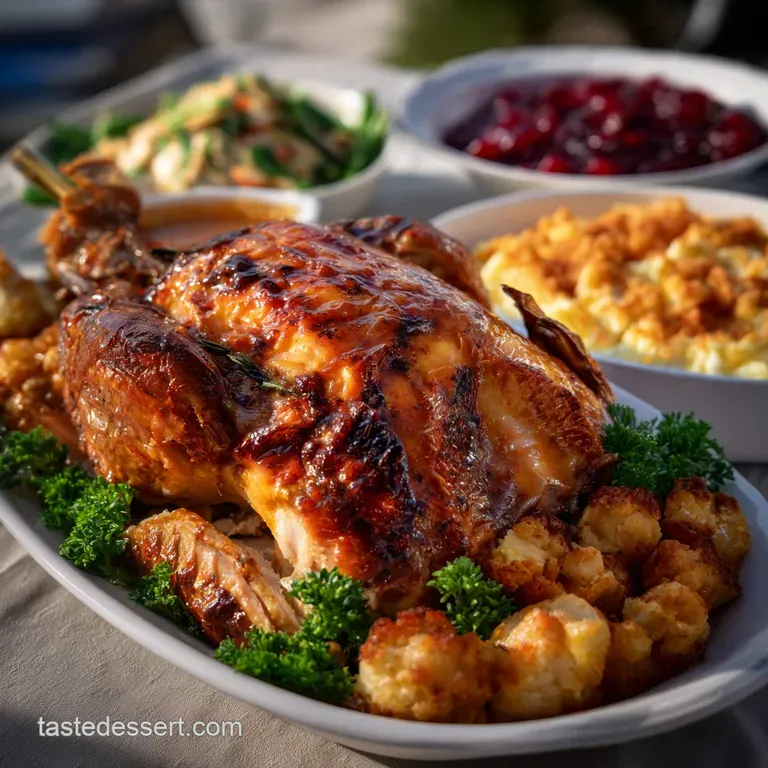
- Time: Active 45 minutes, Passive 1 hour 45 mins, Total 2 hours 30 mins
- Flavor/Texture Hook: Shatter crisp skin with a velvety, herb infused center
- Perfect for: Adventurous families and holiday campers seeking a rugged feast
- Thanksgiving Camping Food Idea for Unforgettable Memories with Roasted Turkey
- Understanding the Science of Succulent Roasting
- Deep Dive into Component Roles
- Selecting High Quality Fresh Ingredients
- Necessary Gear for Wilderness Cooking
- Your Step by Step Roasting Guide
- Professional Tricks for Smoky Success
- Comparison of Cooking Styles
- Creative Flavor Twists to Explore
- Storing Leftovers and Reducing Waste
- Beautiful Ways to Present Your Bird
- Clarifying Common Outdoor Cooking Myths
- Problem Solving for the Outdoor Cook
- Recipe FAQs
- 📝 Recipe Card
Thanksgiving Camping Food Idea for Unforgettable Memories with Roasted Turkey
Picture this: the sun is dipping behind the pines, a crisp chill is settling over the clearing, and the scent of smoldering hickory mingles with fresh sage and rosemary. There is something truly magical about stepping away from the chaotic kitchen and taking the holiday meal into the wild.
Discover how to make Thanksgiving camping truly special with this delicious roasted turkey recipe. It isn't just about the food, it's about the transformation of a simple campsite into a sanctuary of gratitude and joy.
Honestly, many people think roasting a whole bird in the woods is a recipe for disaster. I used to be one of them. I remember my first attempt involving a half frozen center and skin that looked more like charcoal than dinner.
But once you understand how to manage your heat and prepare the components beforehand, the process becomes an art form. We are going to build layers of flavor that you simply cannot get in a standard kitchen oven.
This recipe promises a centerpiece that is as beautiful to look at as it is to eat. We are going to focus on the joy of the creation, treating the bird like a canvas for our herbs and spices. It is about the crunch of the skin and the aromatic steam that rises when you finally make that first cut under the open sky.
Let’s get our fire started and create something that your family will talk about for years.
Understanding the Science of Succulent Roasting
When we take our cooking outdoors, we are dealing with thermodynamics in its purest form. The first secret is the Brine Diffusion, where the 250g Diamond Crystal Kosher Salt and 100g brown sugar create a high concentration solution.
This actually draws moisture into the protein cells through osmosis, ensuring the bird doesn't dry out when exposed to the erratic temperatures of a campfire or grill.
The second major player is the Maillard Reaction, which is the chemical dance between amino acids and reducing sugars. By coating our Honeysuckle White Whole Turkey in a mixture of 115g Kerrygold Unsalted Butter and 30ml California Olive Ranch Olive Oil, we provide the fat necessary to facilitate this browning at a lower temperature.
This creates that specific "shatter" texture on the skin that we all crave, turning a simple meal into a sensory delight.
- Thermal Mass: Using a heavy Lodge Cast Iron Dutch Oven or a thick walled grill helps maintain a steady temperature despite the wind.
- Protein Denaturation: The salt in the brine partially unravels the protein strands, allowing them to trap more water during the cooking process.
- Carryover Cooking: Even after you pull the bird from the heat, the internal energy continues to cook the center, rising about 5 to 10 degrees.
- Evaporative Cooling: Drying the skin thoroughly before roasting prevents the "steaming" effect, allowing the skin to crisp rather than turn rubbery.
Deep Dive into Component Roles
| Component | Role in the Art | Pro Secret |
|---|---|---|
| Diamond Crystal Kosher Salt | Deep hydration and seasoning | Always dissolve in warm water first, then chill completely before adding the bird. |
| Kerrygold Unsalted Butter | Fat delivery and browning agent | Mix with the herbs 2 hours before using to allow the oils to infuse the fat. |
| Smoked Paprika | Color and earthy depth | Rub it under the skin as well as on top for a stained glass appearance. |
| Fresh Sage and Thyme | Aromatic heart of the dish | Slap the herbs against your palm to release the volatile oils before mincing. |
Selecting high-quality Fresh Ingredients
The joy of this recipe starts with the selection of each element. I always recommend getting the best bird you can find, preferably one that hasn't been pre brined so you can control the salt levels yourself. If you are looking for a complete holiday spread to accompany this, you might consider how it pairs with a Classic Thanksgiving Recipe that you've prepared at home.
- 11 lb Honeysuckle White Whole Turkey: This size fits most portable grills and cooks evenly. Why this? Smaller birds are easier to manage over unpredictable outdoor heat sources.
- 8 liters Cold Water: The base for our hydration bath. Why this? Provides enough volume to completely submerge the bird.
- 250g Diamond Crystal Kosher Salt: For the brine. Why this? Large flakes dissolve easily and provide a clean, sharp seasoning.
- 100g Brown Sugar: Adds a subtle sweetness and aids in browning. Why this? Molasses notes complement the smokiness of the campfire.
- 115g Kerrygold Unsalted Butter: Softened for the rub. Why this? High fat content creates a richer, more velvety skin texture.
- 30ml California Olive Ranch Olive Oil: To prevent the butter from burning too quickly. Why this? Raises the smoke point of the rub while adding fruitiness.
- 4 sprigs Fresh Rosemary: Tossed into the brine. Why this? Infuses the moisture with a piney, forest aroma.
- 15g Smoked Paprika: For that beautiful sunset color. Why this? Provides a "fake" smoke flavor if you aren't using wood chips.
- 20g Fresh Sage: Mined for the herb butter. Why this? The quintessential flavor of the holiday season.
- 20g Fresh Thyme: Adds a delicate earthy note. Why this? Tiny leaves distribute perfectly through the butter rub.
- 4 cloves Garlic: Smashed into a paste. Why this? Adds a pungent backbone that balances the rich fat.
- 10g Coarse Black Pepper: For texture and heat. Why this? Large grinds provide little bursts of spice in every bite.
- 10g Black Peppercorns: Used whole in the brine. Why this? Gently perfumes the water without overpowering the delicate meat.
Necessary Gear for Wilderness Cooking
To make this "Thanksgiving Camping Food Idea for Unforgettable Memories with Roasted Turkey" a reality, you need the right tools. I swear by my Lodge Cast Iron Dutch Oven, but a Weber Charcoal Grill with a lid works just as well.
You’ll want a reliable instant read thermometer I use a Thermapen because guessing is the enemy of a moist bird.
You also need a sturdy pair of tongs and over high heat gloves. Dealing with a hot 11 lb turkey over an open fire is no time for flimsy kitchen mitts. If you’re planning a whole weekend of entertaining, you might even set up a charcuterie board recipe on a nearby picnic table to keep everyone snacking while the main event roasts.
Your step-by-step Roasting Guide
For the Brine (Prepare 24 Hours Advance)
Prepare this before you leave for the campsite to make your life easier.
- Dissolve the solids. Mix the 250g Diamond Crystal Kosher Salt and 100g brown sugar into 2 liters of warm water until clear. Note: This ensures the salt is fully integrated.
- Cool and dilute. Add the remaining 6 liters of cold water to the mixture along with the 4 sprigs of rosemary and 10g black peppercorns.
- Submerge the bird. Place your 11 lb turkey into a large, food grade bucket and pour the brine over it. Keep it chilled at 40°F (4°C) for at least 12 hours.
Preparing the Bird
At the campsite, this is where the art begins.
- Dry the skin. Remove the bird from the brine and pat it completely dry with paper towels. Note: Moisture is the enemy of crispy skin.
- Create the rub. Mash together the 115g Kerrygold Butter, 30ml olive oil, 15g smoked paprika, 20g sage, 20g thyme, 4 cloves of garlic, and 10g coarse pepper.
- Apply the layers. Gently loosen the skin over the breast and thighs, then slide about half of the herb butter underneath. Rub the rest all over the exterior.
Roasting and Finishing
This is the transformation phase.
- Set the heat. Prepare your coals for indirect cooking, aiming for a steady 350°F (175°C). Place a drip pan in the center.
- Begin the roast. Place the turkey on the grate over the drip pan and cover. Note: Keeping the lid on creates a convection oven effect.
- Monitor the progress. Cook for approximately 1 hour 45 mins. At the 1 hour mark, rotate the bird if your heat source is uneven.
- Check the temp. Insert the probe into the thickest part of the thigh. When it hits 165°F (74°C), the bird is finished.
- Rest for success. Transfer to a board and tent loosely with foil for 30 mins. Note: This allows juices to redistribute so they don't run out when carved.
Professional Tricks for Smoky Success
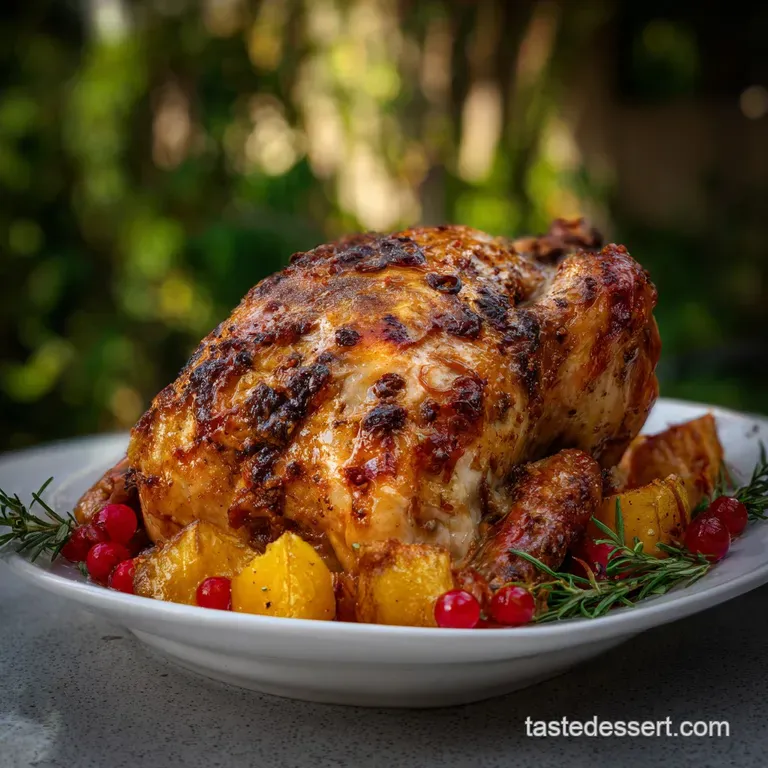
When you're out in the elements, things can go sideways quickly. One unconventional tip I always share is to freeze your herb butter for 10 minutes before applying it. This makes it easier to handle and ensures it doesn't just melt off the bird the second it hits the heat.
You want it to stay in place as long as possible to create that "velvety" texture.
Another secret is to use a small spray bottle filled with apple cider vinegar. Every 30 minutes, give the skin a light mist. The acid helps break down the skin proteins further, leading to a "shatter" crispiness that is simply divine.
But what about the sogginess that can happen if the bird sits too long? That's why the 30 minute rest is non negotiable. Don't touch it until that timer goes off!
Chef's Note: If you find the skin is browning too fast but the center is still cold, use small pieces of aluminum foil to "shield" the drumsticks and breast tips. It’s like a little suit of armor for your turkey.
Comparison of Cooking Styles
| Feature | Classic Roast (Oven) | Campfire Roast (Indirect) |
|---|---|---|
| Skin Texture | Consistent and soft | Varying, shatter crisp, and charred |
| Aroma | Sage and butter | Sage, hickory, and wild pine |
| Difficulty | Low (Set and forget) | Moderate (Heat management required) |
Creative Flavor Twists to Explore
While the herb butter is a classic, you can easily change the vibe of this "Thanksgiving Camping Food Idea for Unforgettable Memories with Roasted Turkey" by swapping out a few things. If you want something more "Desert Southwest," swap the rosemary for cilantro and the paprika for ground chipotle.
Smoked Hickory Twist
Add a handful of hickory wood chips to your coals every 20 minutes. This creates a deep, "powerhouse" of flavor that penetrates the meat without drying it out. The transformation of the aroma around the campsite will be enough to bring every neighboring camper over to see what's cooking.
Citrus and Ancho Chili
Replace the lemon zest (if using) with lime and add 20g of ground ancho chili to the butter rub. This gives the bird a dark, mahogany color and a subtle, creeping heat that feels wonderful on a cold November night. It's a joyful departure from the standard profile.
Storing Leftovers and Reducing Waste
If you actually have leftovers which is rare at a campsite keep them in a well insulated cooler. The cooked turkey will stay fresh for 3 to 4 days if kept below 40°F. For longer storage, you can slice the meat thin and freeze it in airtight bags for up to 3 months.
Don't you dare throw away the carcass! In the spirit of zero waste, toss the bones into a pot with some water, an onion, and some celery. Simmer it over the morning campfire to make a rich stock for turkey noodle soup. It’s the ultimate "day after" camping breakfast that warms your soul from the inside out.
Beautiful Ways to Present Your Bird
Since we are camping, we don't need fine china. I love serving this on a large wooden cutting board surrounded by charred lemons and fresh sprigs of rosemary. It looks rugged, authentic, and inviting. The "sizzle" of the skin as you carry it to the picnic table is the best dinner bell you'll ever ring.
Serve the slices with a simple cranberry relish or even just a squeeze of grilled lemon. The bird is so moist from the 250g salt brine that you don't really even need gravy. If you feel like being fancy, a simple Horseradish Sauce for recipe on the side adds a lovely kick that cuts through the richness of the butter.
Clarifying Common Outdoor Cooking Myths
Myth: You must baste the bird every 15 minutes. Actually, every time you open the lid of your grill or Dutch oven, you lose about 25 degrees of heat. This extends the cooking time and dries out the meat. The 115g of butter under the skin does all the "basting" for you from the inside out.
Myth: A pink tint near the bone means it's raw. Not necessarily! When cooking over wood or charcoal, a chemical reaction between the smoke and the protein can create a "smoke ring" or a slight pinkish hue even when the internal temp is a safe 165°F.
Always trust your thermometer, not your eyes.
Problem Solving for the Outdoor Cook
| Problem | Cause | Fix | Pro Tip |
|---|---|---|---|
| Skin is Burning | Direct heat too high | Move coals to the sides | Use a foil "shield" over dark spots immediately. |
| Dry Breast Meat | Overcooking | Pull at 160°F (71°C) | Carryover cooking will bring it to 165°F during the rest. |
| Rubbery Skin | Excess moisture | Pat dry with extra towels | Leave the bird uncovered in the cooler for 1 hour before roasting. |
Why Your Turkey is Taking Too Long
If the sun is down and the bird is still cold, your coals have likely lost their "thermal mass." You need to add pre lit coals (use a chimney starter) rather than unlit ones to keep the temperature steady.
Never let the temperature of your cooking vessel drop below 300°F, or you risk the "danger zone" for bacteria.
Fixing an Underdone Center
If you've carved into it and see raw spots near the joints, don't panic. Slice the remaining meat away from the bone and flash sear it in a cast iron skillet with a little bit of that 30ml olive oil. It’s a quick fix that keeps the meal on track and adds a nice little crust to the slices.
Mastery Through Scaling
- For a Larger Crowd (2x): If you need to cook two birds, do not put them in the same pot. Use two separate grills or Dutch ovens. Spices and salt should be doubled exactly, but liquids for the brine only need to increase by 1.5x to cover the volume.
- For a Smaller Group (1/2): Use a turkey breast instead of a whole bird. Reduce the roasting time by 40% and check the temp frequently, as smaller cuts dry out much faster. Beat one egg and use half if you are making a binding paste for the herbs.
This "Thanksgiving Camping Food Idea for Unforgettable Memories with Roasted Turkey" is more than a recipe. It's an invitation to slow down and find the art in the outdoors. By focusing on the "joy" of the transformation and the "sweet" success of a well managed fire, you'll create a meal that transcends the traditional holiday table.
Trust me on this one the woods make everything taste better. Let's crack on and get that fire started!
Recipe FAQs
What is the most critical step to ensure the turkey skin gets shatteringly crisp in an outdoor setting?
Thoroughly drying the skin. Moisture remaining on the surface turns to steam when heated, preventing the Maillard reaction needed for crispness. You must pat the bird completely dry before applying the herb butter rub.
Can I use a standard grocery store brine instead of making this custom salt/sugar solution?
No, this is highly discouraged. Pre-made brines often use different salts like iodized or Morton's, which result in an overly salty and unevenly seasoned bird. Mastering the principle of salt concentration here is similar to controlling texture in dough; if you enjoyed mastering the principle of solute control here, apply that precision to your brine ratios.
What is the absolute minimum internal temperature required for the turkey to be safe to eat?
165°F (74°C) in the thigh. This measurement must be taken deep in the thickest part of the thigh without touching the bone. Remember that carryover cooking will raise the temperature a few more degrees while it rests, ensuring safety and juiciness.
If I can’t maintain a steady 350°F over the campfire, what is an acceptable lower temperature?
Stay above 300°F (150°C) if possible. Cooking too low risks spending too much time in the bacterial danger zone, which is between 40°F and 140°F. If your temperature drops too low, consider moving the bird closer to the coals or adding new, hot coals to the fire setup.
Is it better to use whole herbs or minced herbs when preparing the butter rub?
Use minced herbs mixed into the fat. Minced herbs release their volatile oils better when physically mashed into the soft butter, ensuring the flavor permeates the meat evenly. This concentrated flavor application is key to the bird's aroma, much like how we blend ingredients for the Potato Leek Soup Recipe: Velvety, Easy Comfort Food Classic.
How long must the turkey rest after being removed from the heat source?
A minimum of 30 minutes is essential. This resting period allows the contracted muscle fibers to relax and reabsorb the juices before carving. Cutting immediately results in all the moisture running out onto your cutting board.
Can I prepare the brine and rub ingredients ahead of time at home?
Yes, preparing the brine 24 hours ahead is recommended. The brine can be made, chilled, and transported safely in a cooler, and the herb butter can be formed into logs and frozen. Having components ready simplifies the process dramatically, similar to using a Freezer Meals Preparation Guide: Batch Cooking Strategy for Champions.
Thanksgiving Roasting Bird Camping
Ingredients:
Instructions:
Nutrition Facts:
| Calories | 685 kcal |
|---|---|
| Protein | 78 g |
| Fat | 36 g |
| Carbs | 2 g |
| Fiber | 0.5 g |
| Sugar | 1 g |
| Sodium | 1450 mg |
