Herb Crusted Prime Rib for Christmas Eve Dinner
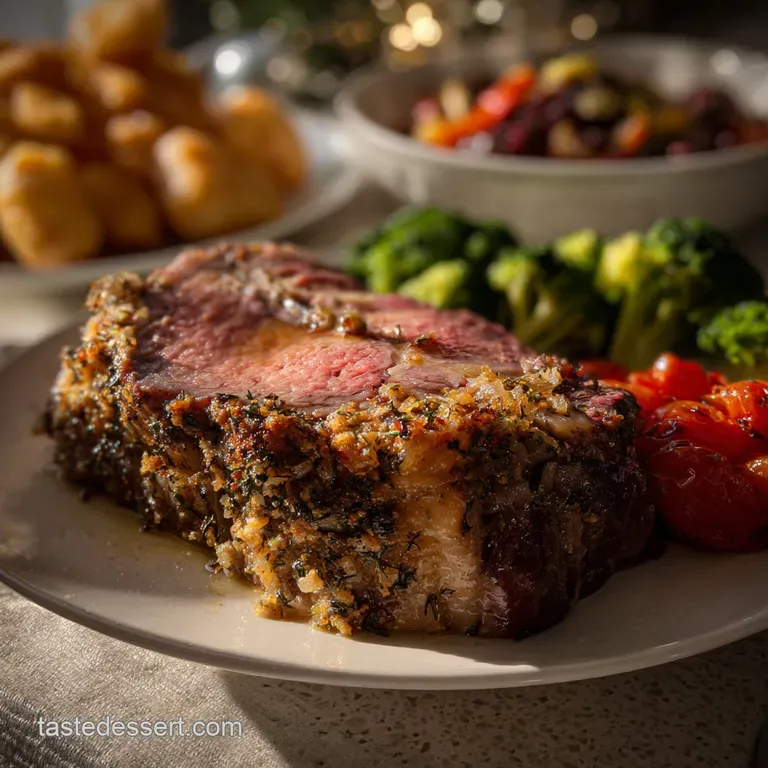
- Time: Active 30 minutes, Passive 3 hours 30 mins, Total 4 hours
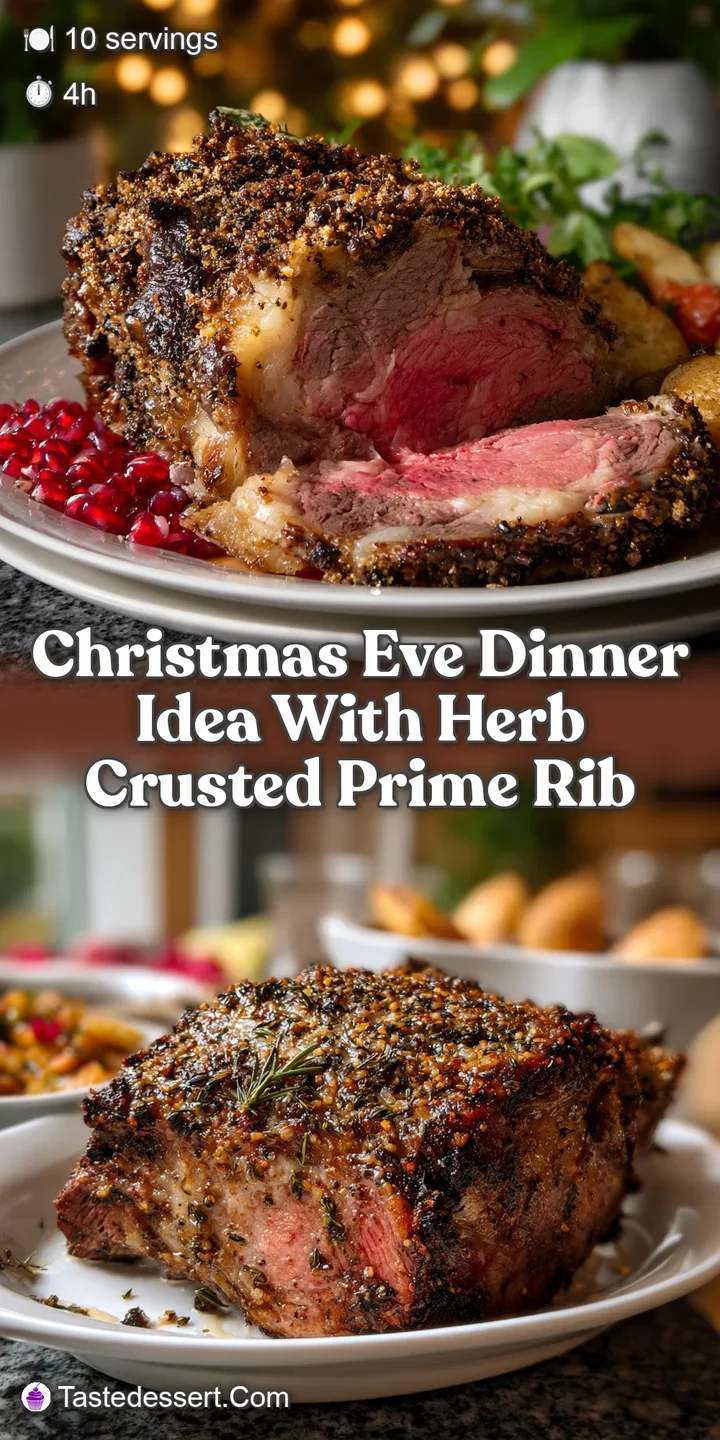
- Flavor/Texture Hook: A shatter crisp mahogany herb crust hiding a velvety, ruby red center.
- Perfect for: An impressive Christmas Eve centerpiece that practically cooks itself while you open gifts.
- Best Christmas Eve Dinner Idea: Herb Crusted Prime Rib
- Mastering Flavor Layers with Science
- Critical Roast Timing and Yield
- Shopping for Your Holiday Roast
- Preparing Your Holiday Kitchen Gear
- Executing the Perfect Holiday Roast
- Troubleshooting Common Issues
- Creative Substitution Ideas
- Storage and Leftover Tips
- Perfect Holiday Pairings
- Recipe FAQs
- 📝 Recipe Card
Imagine the kitchen filling with the woody scent of rosemary and the sharp, nose tingling aroma of roasting garlic. There is a specific kind of magic that happens when you pull a massive, sizzling roast from the oven, its exterior bubbling with a dark, herbaceous crust.
Discover an unforgettable Christmas Eve dinner idea: herb crusted prime rib. It is the kind of meal that stops conversation and makes everyone reach for their phones to snap a photo before the first slice even hits the plate.
I used to be terrified of cooking such an expensive piece of meat. What if I overcooked it? What if the crust turned into a soggy mess? But once I realized that a holiday roast is really just a simple transformation of quality ingredients, the fear turned into pure joy.
We are going to build flavors in layers, starting with a deep salt seasoning and finishing with a vibrant, punchy mustard rub that creates a crust unlike anything you have had at a steakhouse.
This guide isn't just about following steps; it's about understanding the art of the holiday roast. We will walk through the science of the sear, how to handle the "carryover" heat, and why that mustard slather is your secret weapon for a mahogany finish.
Right then, let's get the oven preheated and start this holiday tradition. Trust me on this, it’s easier than it looks and twice as rewarding.
Best Christmas Eve Dinner Idea: Herb Crusted Prime Rib
Mastering Flavor Layers with Science
The success of this holiday centerpiece depends on how we manage moisture and heat. It's not just about heat; it's about the chemistry of the crust and the internal protein structure. Understanding these few principles ensures you never end up with a grey, overcooked outer ring.
- Osmotic Diffusion: When we apply Diamond Crystal Kosher Salt to the surface, it initially draws moisture out. However, after about 45 minutes, that salt dissolves into a concentrated brine and is reabsorbed into the muscle fibers, seasoning the meat from the inside out.
- The Maillard Reaction: By coating the exterior in 4 tbsp Grey Poupon Dijon mustard and olive oil, we create a fat rich environment that encourages browning at lower temperatures. The sugars in the mustard caramelize, creating that complex, savory sweet exterior.
- Protein Denaturation Control: Cooking at a steady, moderate temperature allows the connective tissues to soften without the muscle fibers tightening too quickly and squeezing out the juices.
- Carryover Thermodynamics: Heat continues to travel toward the center of the 10 lbs Prime Rib even after it leaves the oven. This momentum can raise the internal temperature by 5 to 10 degrees, which is why we pull the roast early to hit that perfect medium rare.
| Ingredient | Science Role | Pro Secret |
|---|---|---|
| Diamond Crystal Kosher Salt | Moisture management | Apply at least 24 hours early for a "dry brine" effect that deepens flavor. |
| Grey Poupon Dijon Mustard | Surface Emulsifier | Acts as the glue for the herbs while the acidity tenderizes the surface. |
| Fresh Rosemary & Thyme | Aromatic Volatiles | Chop them finely to release essential oils that infuse the rendered fat. |
| Cabernet Sauvignon | Solvent/Acid | The tannins in the wine help dissolve the browned bits (fond) for a silkier au jus. |
Critical Roast Timing and Yield
Preparing a ten pound roast requires a bit of logistical planning, especially when you have a house full of hungry guests. This recipe is designed to yield 10 servings, assuming about one pound of bone in weight per person.
If you are serving heavy eaters or want plenty of leftovers for sandwiches the next day, this is the ideal size.
The cook time is approximately 3 hours 30 mins, but this can vary based on the shape of your roast and how cold it was when it hit the oven. Always rely on a digital thermometer rather than the clock.
I have found that a 10 lbs Prime Rib usually hits its stride around the three hour mark, leaving you plenty of time to finish the side dishes while the meat rests on the counter.
Chef's Tip: Take the meat out of the fridge two full hours before you plan to cook. A cold roast cooks unevenly, leaving you with a raw center and overcooked edges.
Shopping for Your Holiday Roast
Selecting the right meat is half the battle. When you head to the butcher, ask for a "three or four bone standing rib roast." Look for plenty of white flecks (marbling) throughout the meat, as this fat will melt during the roasting process, keeping everything succulent.
- 1 bone in Prime Rib (approx. 10 lbs): The star of the show. Why this? Bones act as an insulator, ensuring the meat cooks more evenly and stays moist.
- 2 tbsp Diamond Crystal Kosher salt: Essential for the dry brine.
- 1 tbsp cracked black peppercorns: Provides a sharp contrast to the rich fat.
- 4 tbsp Grey Poupon Dijon mustard: The "glue" for our herb crust.
- 3 tbsp Bertolli Extra virgin olive oil: Helps the herbs sizzle and brown.
- 6 cloves Garlic, minced: Fresh is non negotiable here for that pungent aroma.
- 2 tbsp Fresh rosemary, finely chopped: For that classic holiday evergreen scent.
- 2 tbsp Fresh thyme, finely chopped: Adds a subtle earthy note.
- 1 tbsp Fresh sage, minced: Provides a velvety, savory depth.
- 2 cups Kitchen Basics beef bone broth: The base for our dipping sauce.
- 1/2 cup Dry red wine (Cabernet): To deglaze the pan and add sophisticated acidity.
- 1 Shallot, minced: Adds a delicate onion flavor to the sauce.
| Original Ingredient | Substitute | Why It Works |
|---|---|---|
| Dijon Mustard | Whole Grain Mustard | Adds more texture to the crust, though it's less "sticky." |
| Beef Bone Broth | Beef Consommé | Higher protein and gelatin content; results in a thicker, richer sauce. |
| Cabernet Sauvignon | Red Wine Vinegar (2 tbsp) | Provides the necessary acidity without the alcohol content. Note: Use sparingly. |
Preparing Your Holiday Kitchen Gear
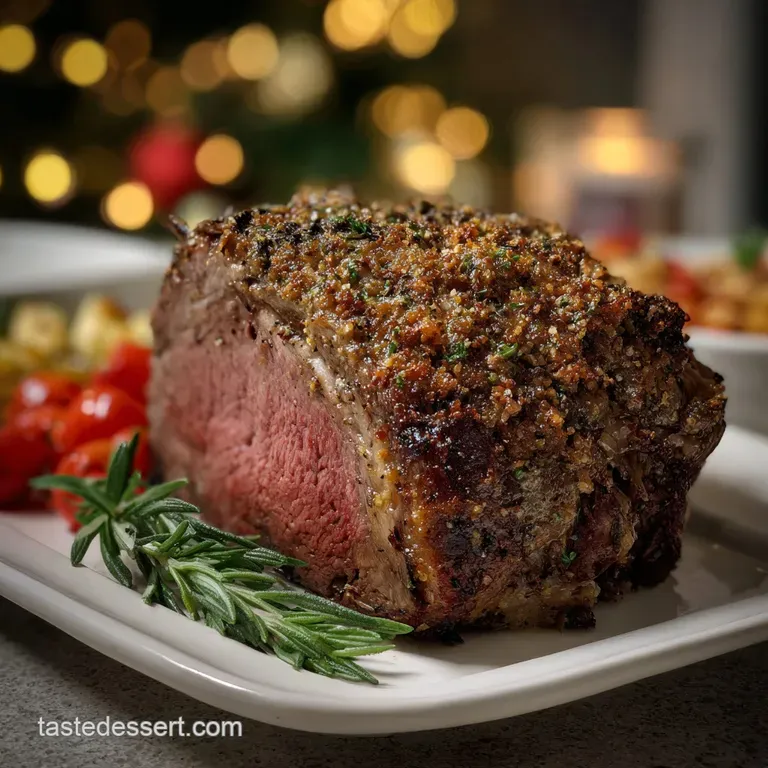
You don't need a professional kitchen to pull this off, but a few specific tools make the process much smoother. I personally love using a heavy duty All Clad Roasting Pan because it distributes heat evenly and won't warp under the weight of a ten pound roast.
A roasting rack is vital. If the meat sits directly on the bottom of the pan, the bottom will boil in its own juices rather than roasting. If you don't have one, you can create a "natural rack" by laying thick slices of onion and celery across the bottom of the pan.
Finally,, do not attempt this without a Meater Wireless Thermometer or a reliable digital probe. Guessing the internal temperature of a hundred dollar piece of meat is a recipe for heartbreak. You need to know exactly what is happening inside that roast in real time.
Executing the Perfect Holiday Roast
- Dry the meat. Pat the 10 lbs Prime Rib completely dry with paper towels. Note: Moisture on the surface prevents the crust from becoming crispy.
- Season heavily. Rub the 2 tbsp Diamond Crystal Kosher salt and 1 tbsp cracked black peppercorns over every inch of the meat. Note: Do this 24 hours ahead if possible for better penetration.
- Mix the slather. In a small bowl, whisk together the 4 tbsp Grey Poupon Dijon mustard, 3 tbsp Bertolli Extra virgin olive oil, minced garlic, and all the chopped herbs.
- Apply the crust. Slather the mustard herb mixture over the top fat cap and sides of the roast until the meat is fully blanketed.
- Set the stage. Place the roast on a rack in a roasting pan, bone side down. Note: The bones act as a natural roasting rack and flavor enhancer.
- Start the roast. Preheated oven to 450°F and blast the meat for 20 minutes until the crust begins to sizzle and brown.
- Lower the heat. Reduce the oven temperature to 325°F and continue roasting until the internal temperature hits 120°F for medium rare.
- Baste occasionally. Every hour, use a spoon to drizzle the rendered fat back over the herb crust.
- Prepare the sauce. While the meat rests, sauté the minced shallot in the roasting pan, deglaze with 1/2 cup Cabernet, then add the 2 cups Kitchen Basics beef bone broth.
- Rest the meat. Remove the roast to a cutting board and let it sit for at least 30 minutes until the juices have redistributed.
Troubleshooting Common Issues
Even with the best intentions, things can go sideways. I remember my first Christmas roast; I panicked because the outside looked charred while the inside was still cold. It turns out I had my rack too high in the oven!
Why Your Crust Is Soggy
If your herb crust feels mushy rather than crisp, it usually means the oven temperature was too low or there was too much moisture in the pan. Avoid adding water to the bottom of the roasting pan, as this creates steam. We want dry heat for a proper crust.
My Roast is Cooking Too Fast
Every oven has hot spots. If you notice the internal temperature climbing faster than expected, don't be afraid to tent the roast loosely with foil. This slows down the surface browning while allowing the middle to catch up.
| Problem | Cause | Fix | Pro Tip |
|---|---|---|---|
| Uneven Cooking | Meat was too cold | Let it sit at room temp for 2 hours | Rotate the pan 180 degrees halfway through |
| Tough Meat | No resting period | All the juice ran out on the board | Tent with foil and wait 30 full minutes |
| Salty Sauce | Reduced too much | Using standard broth instead of low sodium | Add a splash of water or a tiny pinch of sugar |
Creative Substitution Ideas
While the herb crust is classic, you can easily tweak this recipe to suit different tastes. If you want to change the profile, consider these adjustments.
- The Horseradish Kick: Add 2 tablespoons of prepared horseradish to the mustard slather. This adds a sinus clearing heat that cuts right through the rich fat of the Prime Rib.
- The Smokey Profile: Replace the sage with smoked paprika and a teaspoon of liquid smoke in the mustard rub. This gives it an "outdoor pit" flavor even though it's cooked in a standard oven.
- dairy-free and gluten-free: This recipe is naturally both! Just ensure your beef bone broth doesn't have hidden yeast extracts or thickeners.
If you are looking for a different preparation method, you might enjoy comparing this to a traditional BoneIn Rib Roast recipe. Both versions celebrate the meat, but the herb crust adds a layer of texture that is hard to beat for a festive occasion.
Storage and Leftover Tips
Prime rib is almost better the next day if handled correctly. Store any leftovers in an airtight container in the fridge for up to 4 days. Whatever you do, do not microwave the meat to reheat it; you will turn that beautiful medium rare into a rubbery grey slab.
To Reheat: Place slices in a baking dish with a splash of the leftover au jus. Cover tightly with foil and warm in a 250°F oven for about 10 to 15 minutes. This gently brings it back to temperature without cooking it further.
Zero Waste Tip: Don't toss those bones! Throw the rib bones into a large pot with some onion scraps, carrots, and water. Simmer for 4 hours to create a deeply flavored beef stock that puts store-bought versions to shame.
You can freeze this stock for up to 6 months for future soups or stews.
Perfect Holiday Pairings
A roast this magnificent deserves sides that can stand up to its bold flavors. I always serve mine with something starchy to soak up the juices and something bright to cleanse the palate. This meal pairs beautifully with a My Family's Favorite recipe for stuffing, as the herbs in both dishes complement each other perfectly.
Quick Decision Guide
- If you want a classic pairing, go with Garlic Mashed Potatoes.
- If you want to cut the richness, serve a bitter greens salad with a lemon vinaigrette.
- If you are short on oven space, use a slow cooker for your side dishes while the meat roasts.
| Fresh | Shortcut | Outcome |
|---|---|---|
| Hand Minced Garlic | Jarred Minced Garlic | Fresh garlic has a much more vibrant, spicy bite that mellows beautifully. |
| Fresh Herbs | Dried Herbs | Dried herbs can become bitter during long roasting; fresh stays aromatic. |
| Homemade Au Jus | Gravy Packet | Homemade au jus has a cleaner, more sophisticated beef flavor. |
Cooking this roast is an act of love. It takes time, patience, and a little bit of science, but the result is a transformation of simple ingredients into a memory. Every time I see the "shatter" of that herb crust under the carving knife, I’m reminded why we do this every year.
It’s about more than just the food; it’s about the joy of sharing something truly special with the people we love. Let's crack on and make this the best Christmas Eve yet!
Recipe FAQs
What is the most critical step for achieving the signature herb crust?
Searing at high heat initially. Blasting the roast at 450°F for 20 minutes activates the Maillard reaction on the mustard/herb coating before you drop the temperature for gentle cooking.
How far in advance should I salt the prime rib for the best flavor?
At least 24 hours ahead. This dry brining process allows the salt to draw moisture out and then reabsorb, seasoning the meat deep into the fibers.
Can I skip the Dijon mustard coating entirely?
No, it is strongly recommended. The mustard acts as a critical emulsifier and binder for the herbs, and its acidity helps tenderize the surface fat during the roast.
What temperature should the meat reach before I remove it from the oven?
Pull it at 120°F for a medium rare center. Because of carryover cooking, the internal temperature will rise another 5 to 10 degrees while resting, hitting that perfect ruby red finish.
How long must the prime rib rest after taking it out of the oven?
Rest for a minimum of 30 minutes. This crucial resting period allows the internal juices, which were forced to the center by the heat, to redistribute back throughout the muscle fibers.
What side dish pairs well that complements the savory roast flavors?
A starch that can soak up the au jus is ideal. This pairs wonderfully with rich, creamy sides, similar to how the savory elements complement the sweetness found in the Southern Sweet Potato Casserole Classic Recipe with Crunchy Pecan Topping.
If I am worried about overcooking, is there a technique I can use similar to other roasts?
Yes, monitor the heat gain closely. If you master the sensory doneness cues for large roasts here, apply them to ensure your next cut cooks perfectly.
Herb Crusted Prime Rib
Ingredients:
Instructions:
Nutrition Facts:
| Calories | 585 kcal |
|---|---|
| Protein | 46g |
| Fat | 42g |
| Carbs | 3g |
| Fiber | 1g |
| Sugar | 0.5g |
| Sodium | 1380mg |
