The Grand Prime Rib Roast with Horsepower Crust
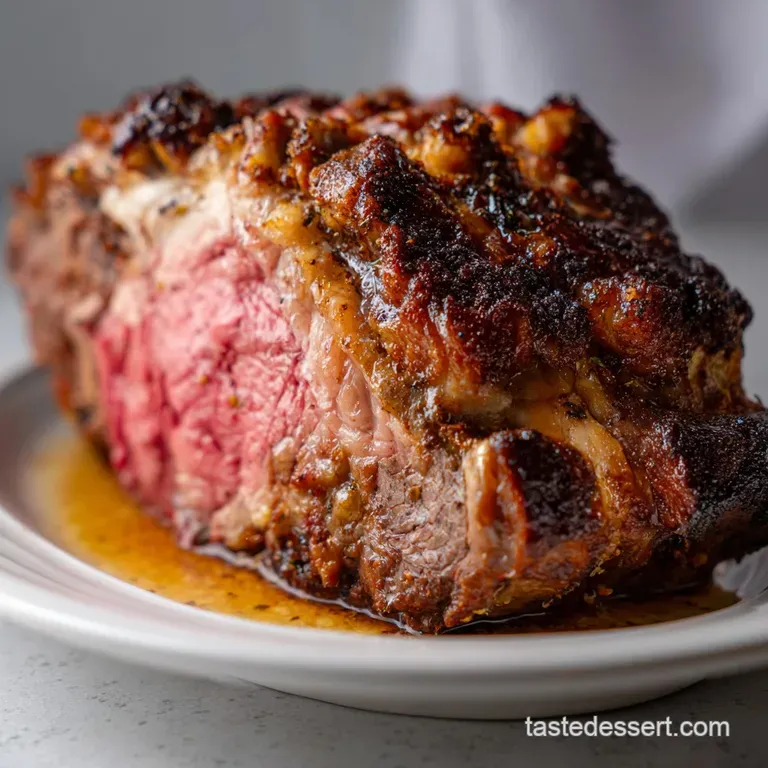
The Grand Roast: Perfect Dry-Brined Prime Rib with Horsepower Crust
The sound of a perfectly roasted crust crackling under the knife? That savory aroma of garlic, thyme, and roasting Prime Rib Roast filling your entire house? Honestly, it’s one of the most sublime cooking experiences there is.
Forget complex, hours long methods; this technique delivers a ridiculously tender interior and a crisp, herb studded outer shell every single time. If you want the centerpiece that makes every guest gasp, this is your new secret weapon.
Look, I used to think the only way to get legitimate, restaurant quality Prime Rib Roast was to spend a small fortune eating out. Turns out, making this beautiful roast at home is surprisingly straightforward, provided you nail two non-negotiable steps: dry-brining and over high heat searing.
This prime rib roast recipe ovens method is actually a lifesaver, cutting down on active cooking time and guaranteeing that coveted edge-to-edge pinkness.
So, let's stop stressing about the holidays (or any fancy Sunday dinner) and crack on with the good stuff. We're going to create a tender, juicy slab of heaven, and I promise you, the results will blow your old cooking methods right out of the water.
Why This Recipe Is Your New Holiday Tradition (And What Makes It 'Grand')
This recipe takes the best elements of a reverse sear even cooking and minimum gray band and combines it with an initial over high heat blast. Why do we start hot? Because you need that instant oven oomph to caramelize the dry-brined surface, giving you that 'Horsepower Crust' we crave. This is a crucial distinction, especially compared to slower bone-in methods like the one I detailed in my BoneIn Rib Roast: Classic Reverse Sear Prime Rib for Holidays piece.
The Science of Sizzle: How the 'Horsepower Crust' Revolutionizes Roasting
The term "Horsepower Crust" isn't just fluffy language; it reflects the intense initial blast of heat required. When you put a cold, seasoned Prime Rib Roast directly into a ripping hot oven, the high heat instantly dries up any residual moisture on the exterior.
The salt and pepper in the dry brine help draw that moisture out, and the heat then reacts with the protein, creating that deep, savory mahogany crust. This rapid searing locks in all the beautiful herb paste, ensuring the flavor is literally baked onto the surface, not just loosely resting on top.
Dry Brining Versus Traditional Seasoning: A Matter of Tenderness and Flavor
Dry brining is the secret sauce here. Unlike a quick salt rub just before cooking, dry brining involves liberally salting the Rib Roast 24 to 72 hours in advance.
The salt first pulls moisture out of the meat, then that salty moisture is reabsorbed, seasoning the roast deeply. But more importantly for the crust, sitting uncovered in the fridge dries the exterior surface completely. When you want that shatteringly crisp crust, you absolutely must start with a dry surface.
Trust me, I skipped this step once thinking I was too rushed, and the resulting crust was soft and steaming never again!
Ingredients You Need for Prime Rib Roast
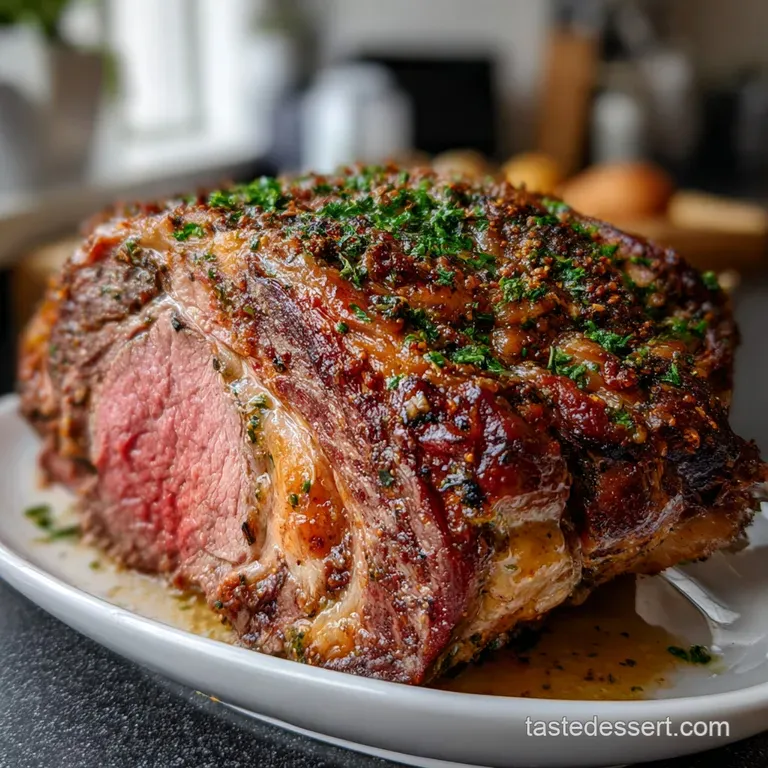
To make this incredible Prime Rib Roast , you don't need exotic shopping trips; you just need high-quality basics and time. Remember, the quality of your roast is everything when you’re shelling out for this cut, so buy the best you can afford, maybe waiting for a "Prime Rib Roast on Sale."
Main Ingredients Notes
- Standing Rib Roast (6 8 lbs): Bone-in is king. The bones act as insulation and flavor boosters. Ask your butcher to "french" the bones (scrape them clean) and tie them back onto the roast for easy carving later.
- Kosher Salt: Use a coarse salt for dry brining. Table salt is too fine and will make your roast too salty, guaranteeing a sad outcome.
- Fresh Herbs (Rosemary/Thyme): These oils are intensely fragrant. Dried herbs just won't give you the same punch for the crust.
- English Mustard Powder: This adds an acidic, savory punch to the crust, acting as a binder and helping the finished roast develop a real tang.
Easy Substitutions and Swaps
If you’re running short on time or ingredients, here are some quick solutions.
| Ingredient | Viable Substitute | Notes |
|---|---|---|
| Kosher Salt | Flaky Sea Salt | Use 30% less, as sea salt is denser. |
| Fresh Herbs | high-quality Dried Herbs | Halve the quantity to account for potency. |
| English Mustard Powder | Dijon Mustard | Use 2 tablespoons of Dijon; skip the olive oil in the rub as Dijon provides moisture. |
| Butter | Solid Coconut Oil | Use refined coconut oil to avoid a coconut flavor carry over. |
Essential Equipment
You absolutely must have an instant read thermometer for this. This is an investment meal, and guessing the temperature is the height of folly. I also use a roasting rack, because air circulating beneath the roast prevents a soggy bottom a common failure in making any big roast recipe ovens style.
How to Make Prime Rib Roast step-by-step
Preparation Steps
- Dry Brine for 24+ Hours: Pat the roast very dry. Rub the entire surface lavishly with the measured Kosher salt and pepper. Place the roast, fat-side up, on a rack inside a roasting pan. Refrigerate, uncovered , for at least 24 hours. The surface should feel tacky and look dark when ready.
- Temper the Beast: Two to three hours before cooking, pull the Prime Rib Roast from the fridge. Let it sit on the counter. It should reach 60-70°F internal temperature before it hits the oven. Cold meat equals uneven results.
- Whip Up the Crust: Combine the softened butter, minced garlic, herbs, mustard powder, and olive oil into a thick, vibrant green paste. Slather this entire mixture thickly all over the top and sides of the roast. This is the flavor armor.
Chef’s Note: Insert your leave-in meat thermometer probe now (before cooking!). Make sure the tip is lodged in the absolute center of the thickest part of the meat and is not touching any bone.
Cooking Process
-
The over High heat Sear:
Preheat your oven to a ferocious $mathbf{475^circ F (240^
circ C)}$. Slide the roast in and let that horsepower kick on for exactly 20 minutes . Listen for the robust, satisfying sizzle. -
The over Low heat Coast:
Quickly reduce the oven temperature to $mathbf{250^circ F (120^
circ C)}$. Do not open the door! Continue roasting until the internal temperature reaches 5 7 degrees below your target. Since I prefer medium rare, I pull mine at $mathbf{122^circ F (50^
circ C)}$. A 7 pound roast usually takes 1.5 to 2. 5 hours at this lower heat, but only the thermometer knows for sure. - The Mandatory Nap: Once the desired temperature is reached, remove the roast and immediately tent it loosely with foil. Let it rest on the counter for a crucial 30 to 45 minutes . This resting period allows the juices to redistribute and gives you the necessary carry over cooking, which will push the temperature up to perfectly medium rare (135°F / 57° C ).
Expert Tips for Success
- The Butcher's String Trap: If your bones are tied on, leave the string on until after the roast has rested. Removing it earlier allows the meat to slump.
- Save the Drippings: Don't discard the pan drippings! Those are the foundation for the most incredible jus or gravy. Deglaze the pan immediately while it’s still hot.
- Slicing Direction: Always slice against the grain of the meat. This shortens the muscle fibers, ensuring every piece you carve is meltingly tender.
Common Mistakes to Avoid
- Not Resting Long Enough: People always rush this. You need a full 30 minutes, minimum. If you carve too early, those beautifully tender juices will flood your cutting board instead of staying in your Prime Rib Roast. It'll be drier than the Sahara.
- Skipping the Temper: Starting with meat straight from the fridge guarantees the exterior will be overcooked before the center even warms up. The edges will be dry and grey. Stick to that 2 3 hour temper time.
- Incorrect Thermometer Placement: If your probe touches the bone, it will give you a false, usually higher, reading. Ensure it’s centered in the thickest part of the meat fibers only.
Storage, Freezing, and Reheating
You’ve invested time and money into this magnificent meal, so let’s talk preservation.
How to Store Leftovers
Leftover carved Prime Rib Roast should be cooled quickly and stored in an airtight container in the refrigerator. It will typically keep well for 3 to 4 days. If the whole roast is still largely intact, wrap it tightly in foil before chilling to prevent the surface from drying out.
Freezing Instructions
Can you freeze leftover Prime Rib? Absolutely, but manage expectations. Freeze carved slices by wrapping them tightly in plastic wrap, then placing them in a heavy duty freezer bag. Squeeze out all the air. It will keep for 2 3 months. Just know that the texture will be slightly less tender when thawed.
Best Reheating Methods
Never microwave Prime Rib! It turns expensive roast into rubber almost instantly.
The most critical factor when reheating is low and slow heat to avoid cooking the meat further.
-
Preheat your oven to a very low $mathbf{250^circ F (120^
circ C)}$. - Place the slices (or the remaining roast) into an oven safe dish. Add a splash of stock or gravy to the dish to create steam.
-
Cover tightly with foil. Heat for 20-
30
minutes, or until just warmed through. You want an internal temperature of about $100^circ F 110^
circ F$.
What to Serve With This Dish
Since the Prime Rib Roast is the star, the sides should support and complement its richness, not fight it. I always serve rich, buttery sides. For a truly elegant presentation, skip standard mashed potatoes and try a Duchess potato preparation. You could also serve it alongside some of my favorite holiday sides, which pair perfectly with the bold flavors in this Prime Rib Roast Recipe: Herb Crusted Perfection at Home . Classic pairings are mandatory here:
- Homemade Yorkshire Puddings (non-negotiable, really)
- Creamy Horseradish Sauce
- Garlic and Rosemary Roasted Potatoes or perhaps some hasselback potatoes
- Simple Glazed Carrots or Green Beans
I hope this recipe gives you the confidence to conquer your next grand dinner. Making a truly magnificent Prime Rib Roast using this over high heat, over low heat method is simple, satisfying, and utterly delicious.
It's the most comforting and impressive Christmas Lunch Recipes Main Courses you can serve!
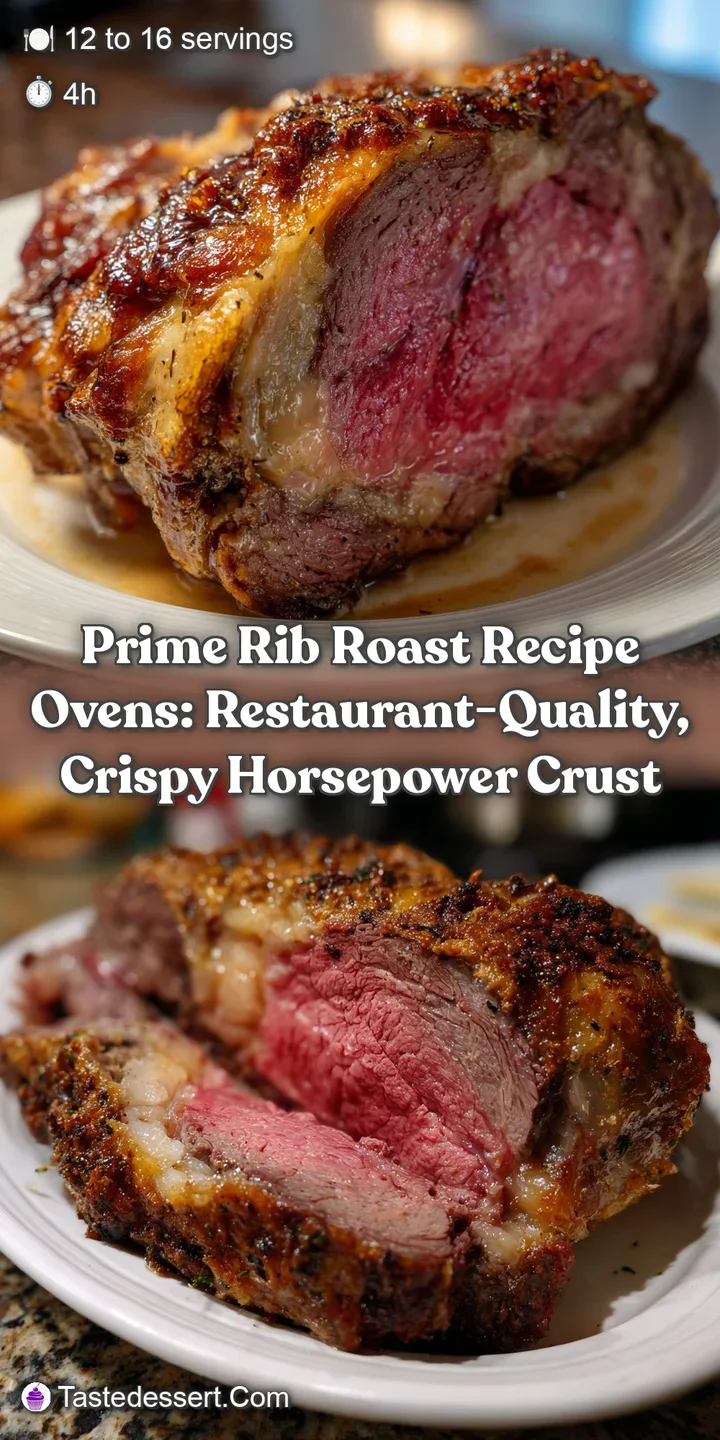
Your culinary expertise is shining through. Here is the detailed FAQ section formatted exactly as requested in HTML for "The Grand Roast: Perfect Dry-Brined Prime Rib."
A crispy crust usually fails due to insufficient heat dissipation or lack of surface dryness. Ensure the roast is dried very thoroughly with paper towels before applying the rub, and guarantee your oven reaches and maintains the initial high temperature (500°F). Do not overcrowd the oven, as that can trap steam and inhibit crust formation. The dry-brine step is crucial for both flavor and texture; skipping it will result in a less flavorful roast and a less crispy crust. The salt needs time to draw moisture out of the meat, dissolve, and then be reabsorbed, which tenderizes the muscle fibers. We highly recommend adhering to the 12-24 hour window for optimal results. If the internal temperature is reached sooner than anticipated, remove the roast, wrap it tightly in aluminum foil, and then wrap that entire package in a thick towel. This method allows the roast to rest slowly while maintaining heat for up to one hour. Avoid slicing until 15 minutes before serving for the best texture. Yes, you can substitute a boneless roast, but be aware that it may cook slightly faster and lack the insulation the bones provide. If using boneless, definitely truss it tightly with butcher's twine to ensure an even shape, which promotes uniform cooking throughout. Monitor the internal temperature closely, aiming for the same target temperatures. Leftovers should be cooled quickly and stored in an airtight container in the refrigerator for up to 3-4 days. Freezing is possible, although it may impact the texture slightly; wrap individual slices tightly in plastic wrap followed by aluminum foil or use a vacuum seal bag. Thaw them overnight in the refrigerator before gently reheating. The best method is to use a high-quality, leave-in probe thermometer placed directly in the true center of the roast, away from bone and fat pockets. You can also cover the thinner end-sections with small pieces of aluminum foil once the internal temperature hits around 100°F. This reflects the heat, slowing the cooking rate for the ends.Recipe FAQs
Why is my "Horsepower Crust" not forming (the outside is not crispy)?
Is it necessary to dry-brine the roast for 12-24 hours, or can I do it just before cooking?
What should I do if the roast is done too early?
Can I use a boneless rib roast instead of a standing (bone-in) roast?
What is the best way to handle leftovers, and can I freeze slices?
How do I prevent the end cuts from being overcooked while aiming for a rare center?
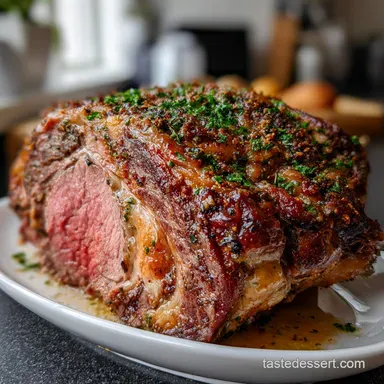
Perfect Dry Brined Prime Rib Roast
Ingredients:
Instructions:
Nutrition Facts:
| Calories | 1055 kcal |
|---|---|
| Protein | 95.3 g |
| Fat | 70.5 g |
| Carbs | 11.5 g |
